Need help?
Do you have a question about the AMOT B Series and is the answer not in the manual?
Details installation, operation, and maintenance of AMOT Model B Valve range.
Explains potential hazards, warnings, cautions, and notes for safe operation.
Provides information on seeking assistance for settings, alterations, and service.
Directs users to the AMOT website for end-of-life product statements.
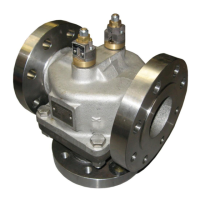
Describes the Model B Valve's function, applications, thermostatic element, and availability.
Explains the optional manual override for driving elements and its emergency use.
Lists typical applications and key benefits of the Model B Valve.
Explains the PED applicability, valve classification, and nameplate requirements.
Addresses requirements for operating the valve in hazardous environments.
Details ATEX Directive applicability, assessment, and equipment designation for hazardous areas.
Outlines special conditions for safe operation, including ambient temperature and fluid handling.
Explains the classification of the Model B Valve as a component under the Machinery Directive.
Covers the overall process of installing the valve.
Lists essential checks and preparations before beginning valve installation.
Details proper methods for mounting the valve within the piping system.
Guides on the initial start-up procedures and monitoring after installation.
Describes the automatic operation principle based on thermostatic elements.
Explains the valve's function in diverting fluid flow based on temperature.
Details the valve's operation in mixing hot and cold fluid supplies.
Provides instructions and cautions for using the manual override feature.
Details the steps and diagrams for safely dismantling the valve.
Explains the procedures for correctly reassembling the valve after maintenance.
Lists part numbers for spare element assemblies and the number of elements per valve.
Lists potential causes and solutions when the system temperature is too low.
Lists potential causes and solutions when the system temperature is too high.
Covers general specifications including body materials, internal materials, and seal material.
Lists the various materials used for valve bodies, internal parts, and seals.
Provides a table of maximum working pressures for different valve types and materials.
Explains how the maximum operating temperature is determined by the fitted element.
Provides guidance on safe handling practices for valves of different sizes and weights.
Details recommended conditions for storing the valves to maintain their integrity.
 General
| Input Voltage | N/A (Thermostatic Valve) |
|---|---|
| Output Voltage | N/A (Thermostatic Valve) |
| Operating Temperature | Same as Temperature Range: 0-138°C (32-280°F) |
| Protection Class | N/A (Thermostatic Valve) |
| Dimensions | Varies depending on valve size. Refer to manufacturer's datasheet. |
| Weight | Varies depending on valve size and material. Refer to manufacturer's datasheet. |

 To Next Page