3.5 Electrochemical Sensors
3.5.1 Oxygen and Carbon Monoxide Gas Sensors
Oxygen and Carbon Monoxide Gas Sensors work on the principles of chemical oxidation and
reduction. Electrochemical gas sensors contain electrodes, which promote a chemical reaction with the
target gas when an electrical potential is applied. The chemical reaction of target gas within the sensor
creates a current, which is proportional to the rate of target gas consumption. By measuring this
current, the volume fraction of target gas can be calculated and converted into a digital value by the
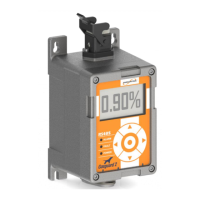
integrated sensor electronics. The GG2 Detector is temperature compensated and provides a linear
output.
3.5.2 Humidity
Electrochemical sensors contain an electrolyte, which is a key component of sensor operation. Under
low humidity conditions, the electrolyte can dry out leading to permanent sensor failure. Under high
humidity conditions, the electrolyte can absorb too much water and leak from the sensor.
For Oxygen and Carbon Monoxide, the sensor can be operated in a non-condensing relative humidity
of 15% to 90% continuously.
3.5.3 Pressure Effects
Electrochemical sensors are sensitive to the effects of pressure and should not be operated outside of
their stated range of ±20 kPa.
3.5.4 Air Velocity
Electrochemical sensors are insensitive to typical air velocities.


 To Next Page
 Loading...