Need help?
Do you have a question about the arcelik 6220 T and is the answer not in the manual?
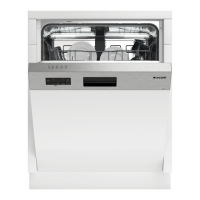
This document is the User's Manual for an Arçelik 6220 T Dishwasher. It provides comprehensive information on the product's function, technical specifications, usage, and maintenance.
The Arçelik 6220 T Dishwasher is designed for domestic use, specifically for washing domestic-type dishes. It operates by using dishwasher-safe detergents, rinse aids, and additives to clean and dry dishes. The machine features a water softening system to reduce water hardness, which is crucial for optimal washing, shining, and drying performance. It offers various washing programs, including "Eco" for medium-soiled daily dishes and "Intensive" for heavily soiled dishes, pots, and pans. The dishwasher also includes a "Half Load" function for saving water, electricity, and time when the machine is not fully loaded. A "Tablet detergent function" is available to enhance drying performance with multi-purpose detergents.
The dishwasher operates on a power input of 220-240 V at 50 Hz. Its total power consumption ranges from 1800-2100 W, with a heater power consumption of 1800 W. The total current draw is 10 A, and the drain pump power consumption is 30 W. The recommended water pressure for operation is between 0.3-10 bar (equivalent to 3-100 N/cm² or 0.01-1.0 Mpa). The permitted water temperature for supply is up to 25°C. The product complies with EU directives 2014/35/EU, 2014/30/EU, 93/68/EC, IEC 60436/DIN 44990, and EN 50242, and is RoHS compliant (2011/65/EU). The service life of the product is stated as 10 years, with original spare parts available during this period.
Installation: The dishwasher should be placed on a solid, flat floor with sufficient load-carrying capacity, at least 1 cm away from other furniture, and not in areas where temperatures may fall below 0°C. Water supply connection requires a ³½ inch external thread tap, with water pressure between 0.3 and 10 bars. A pressure relief valve is recommended if pressure exceeds 10 bars. The water inlet hose should be new and connected directly to the tap. The drain hose should be between 50 cm and 100 cm from the floor, connected to the drain hole or sink's drainage without bending. Electrical connection requires a grounded outlet protected by a fuse complying with the "Technical specifications" table. The feet are adjustable to ensure proper door closure and stability.
Initial Use: Before first use, the salt reservoir should be filled with 1 litre of water, followed by softening salt. The machine should then be run empty on the shortest program with detergent to dissolve and wash away any scattered salt.
Water Softening System: The system needs regeneration using special softening salts. The water hardness level can be adjusted using a test strip and the Programme Selection key on the control panel. The regeneration adjustment switch should also be set to the corresponding level. If water hardness is below 13°dF, salt is not necessary, and the "No Salt Warning Indicator" may illuminate continuously.
Detergent and Rinse Aid: Only dishwasher-specific powder, liquid/gel, or tablet detergents should be used. The detergent dispenser has level markings (15 cm³ or 25 cm³) and a maximum capacity of 40 cm³. For dishes with dried residues, the 5 cm³ compartment can also be filled. The rinse aid reservoir should be filled to the "MAX" level, and the amount adjuster can be set between 1 and 6 (factory default is 4). Combined tablet detergents offer water softening and/or rinse aid effects, but for optimal performance, individual detergent, rinse aid, and salt are recommended.
Loading Dishes: Dishes should be placed in an orderly way for optimal energy consumption and cleaning. Coarse food remnants should be wiped off. Heavily soiled and larger items go in the lower basket, while smaller, delicate, and light items go in the upper basket. Hollowed dishes should be placed upside down to prevent water accumulation. Sharp and pointed items should be placed upside down or horizontally in the dish basket to prevent injuries.
Basket Features:
Operating the Machine:
Cancelling a Programme: Press the Start/Stop key for 3 seconds. The machine will drain water for 45 seconds, and the program will be cancelled when the light goes off.
End of Programme: The End progress indicator light illuminates. Open the door, turn off the machine, close the tap, and unplug. It's recommended to leave dishes in the machine for about 15 minutes after washing with the door ajar to cool down and improve drying.
Cleaning the Outer Surface: Clean gently with a mild cleaning material and a damp cloth. The control panel should only be wiped with a damp cloth.
Cleaning the Interior: Run a prewash program without detergent or a long washing program with detergent. If water remains, drain it by cancelling a program or cleaning any deposits blocking the water path.
Cleaning the Filters: Filters should be cleaned at least once a week.
Cleaning the Hose Filter: The filter attached to the water inlet hose prevents damage from impurities. Check and clean regularly.
Cleaning the Impellers: Impellers should be cleaned at least once a week.
 General
| Brand | arcelik |
|---|---|
| Model | 6220 T |
| Category | Dishwasher |
| Language | English |

 To Next Page