P92x/EN CM/E11 Techncal Guide
Commissioning Guide
Page 6/28 MiCOM P921-P922-P923
abcd
2. SETTING FAMILIARISATION
When commissioning a MiCOM P921, P922 or P923 relay for the first time, sufficient
time should be allowed to become familiar with various menus containing the
settings.
The “User Guide” section (Chapter P92x/EN FT) of this technical guide gives a
detailed description of the menu structures for the MiCOM P921, P922 and P923
relays.
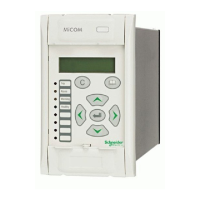
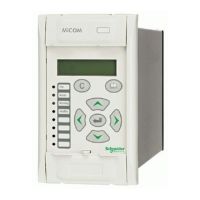
With the plastic front cover in place all keys except the 5 key are accessible. All
menu cells can be read. LEDs and alarms can be reset. However, no protection or
configuration settings can be changed.
Removing the cover allows access to all keys so that settings can be changed.
However, certain settings with protected access will require the appropriate password
to be entered before changes can be made.
Alternatively, if a portable PC is available together with suitable setting software (such
as MiCOM S1), the settings can be viewed a page at a time and printed. This
software also allows settings to be entered more easily, saved to a file on disk for
future reference or printed to produce a setting record.
3. EQUIPMENT REQUIRED FOR COMMISSIONING
3.1 Minimum equipment required
Voltmeter test set with chronometer (range: 0 to 240 VAC).
Supply voltage of 48-125 VDC or 220 VAC.
Multimeter with suitable AC current range, and AC/DC voltage ranges of 0 - 250V
respectively.
Continuity tester (if not included in multimeter)
Phasemeter.
Indicates the order of succession of phases.
NOTE: Modern test equipment may contain many of the above features
in one unit.
3.2 Optional equipment
Multi-finger test plug type MMLB01 (if test block type MMLG installed).
An electronic or brushless insulation tester with a dc output not exceeding 500V (for
insulation resistance testing when required).
A portable PC, with appropriate software (this enables the rear communications port
to be tested, if this is to be used, and will also save considerable time during
commissioning).
KITZ K-Bus to RS232 protocol converter (if RS485 K-Bus port is being tested and one
is not already installed).
RS485 to RS232 converter (if RS485 Modbus port is being tested). Part numbers RS-
CONV1 or RS-CONV32 (please contact us for more information).
A printer (for printing a setting record from the portable PC).



 To Next Page