17
The patient’s head and shoulders could be raised on
pillows for comfort, if required, but this is not
essential when connecting up the sling to the
spreader bar.
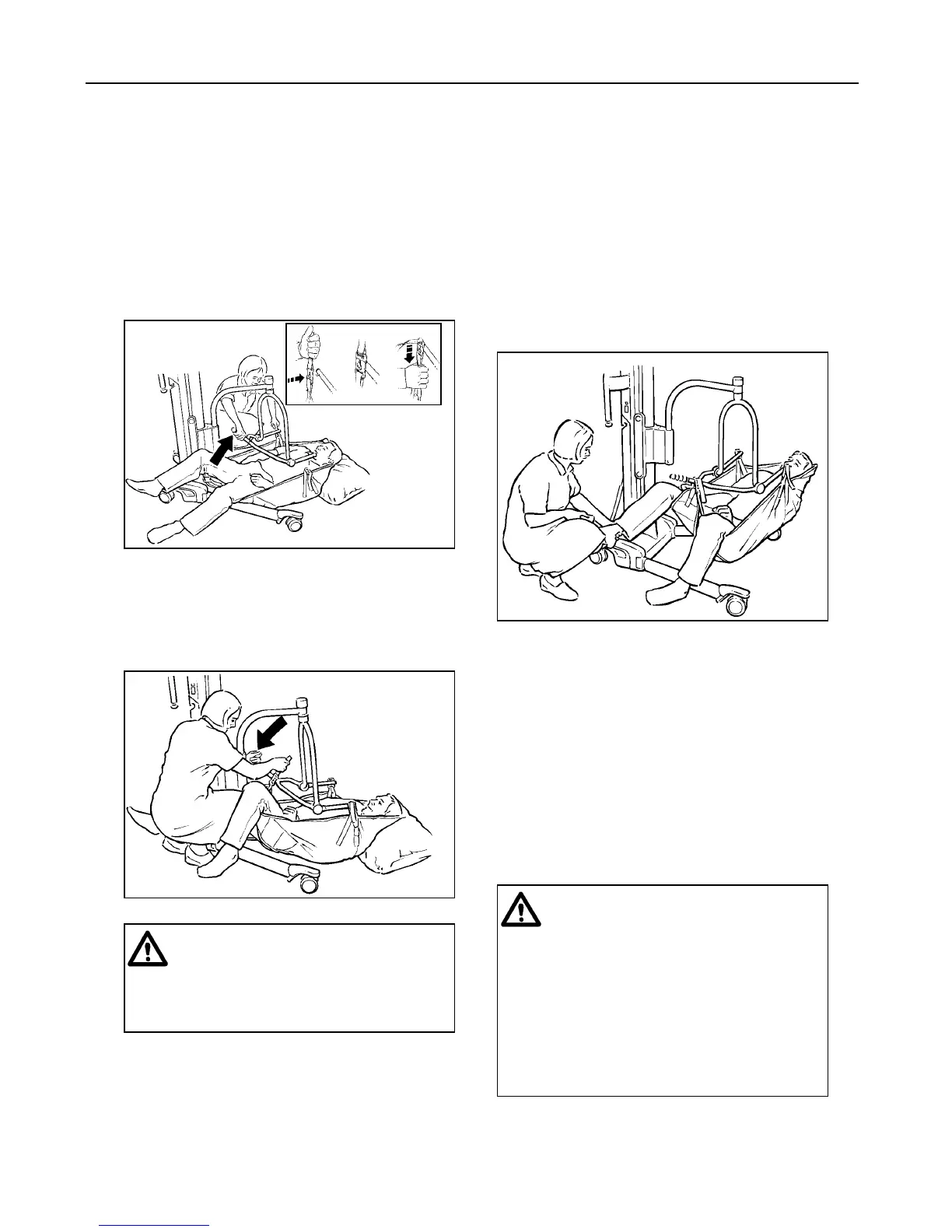
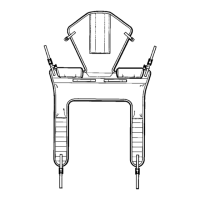
With the open part of the spreader bar pointing
down towards the shoulders, attach the shoulder
strap attachment clips, as shown in figure 22 and
inset.
Once connected, raise the hip and knee into
maximum flexion, and push down on the
positioning handle in order to connect the leg strap
attachment clips as shown in figure 23. This will
have the effect of raising the patient’s head and
shoulders slightly.
When lifting from the floor, some attendants prefer
to connect the leg pieces first. This in particular
applies to the very large patient with large thighs. In
this case, raise the hip and knee into maximum
flexion, and attach the leg straps first, then tilt the
spreader bar towards the shoulders to enable the
shoulder straps to be connected.
When all the straps have been properly connected,
raise the patient from the floor in a semi-recumbent
position. Supporting the head can be comfortable
and reassuring for the patient. Once raised from the
floor, ensure the patient’s legs are clear of the
chassis before continuing to lift. (See fig. 24). The
leg sections of the sling will tend to be fairly high
in the crotch, so straighten them out for added
comfort. The patient may be positioned in a chair,
or placed onto a bed. If the patient is prone to
extensor spasm, he/she may be lifted by the Tempo,
but special attention should be paid to supporting
the legs during the early part of the lift.
When lifting patient’s with leg amputations, use the
double amputee sling (available as an accessory
from ARJO Ltd). This sling is specially designed to
accommodate the differing patient centre of
gravity.
Fig. 22
P1428a, P1002 a,b,c
Fig. 23
P1428b
Warning: IMPORTANT: Always
check that the sling attachment clips are
fully in position before and during the
commencement of the lifting cycle, and in
tension as the patient’s weight is
gradually taken up.
Fig. 24
P1427d
Warning: When lowering the lifter
ensure that the patient’s or attendant’s
legs and feet are well clear of the moving
jib mounting carriage.
Transportation of a patient should always
be done with the chassis legs parallel
(closed) manoeuvrability will be easier,
especially through doorways, with the
chassis legs closed. The patient should be
positioned facing the attendant. (See fig.
17). Apply the chassis brakes if leaving
the patient unattended.
Using your Tempo



 To Next Page