Page: 20 Rev Date: 11/22/2019 Doc Number: D1092 Initials: RF
5.1 MAINTENANCE AND INSPECTION -
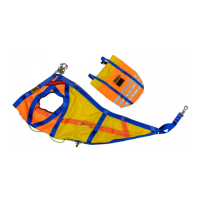
• Before and after each use, inspect the ARV-QC to ensure that it is in a serviceable
condition.
• Check for worn or damaged parts.
• Ensure all hardware (D-Rings, Key-Lock Plates, etc) are present.
• Inspect all hardware to ensure they do not have any sharp edges, burrs, cracks,
or corrosion.
• Inspect webbing for wear, cuts, burns, frayed edges, or any other damage.
• Inspect all stitching for abrasion, discoloration, and wear to ensure integrity.
• Thoroughly inspect ARV-QC after any period of storage greater than 30 days.
Discontinue use of this device, remove from service, and contact ARS
if inspection reveals any doubt about the safety or
serviceability of this device.
5.2 ADVANCED INSPECTION -
• For advanced inspections contact: Air Rescue Systems at info@airrescuesystems.com
Phone: 541-488-0941 Fax: 1-800-944-4135
5.3 STORAGE INSTRUCTIONS -
• Store ARV-QC in a cool, dry, and clean environment out of direct sunlight.
• Do not expose ARV-QC to ame or high temperature environments.
• Avoid contact with any corrosive or caustic chemical agents to include but not limited
to acids, bases, or petroleum products.
• Avoid storage and use of ARV-QC in areas where chemical vapours may exist.
5.4 CLEANING INSTRUCTIONS -
• Discontinue use of product and contact ARS for advanced inspection if it has come
into contact with any of the above listed or other suspect chemical agents.
• Clean product with warm water in a mild detergent solution. Do not use bleach or products
containing bleach.
• Wipe o hardware with a clean dry cloth and hang device to air dry.
• Dry in ventilated, cool, and shaded area. Do not force dry with heat.
5.5 POST SALT WATER EXPOSURE -
• Follow standard post salt water exposure decon practices. Use an air source to blow-
out metal connections. Apply a LIGHT coat of a penetrating oil, water-displacment lubricant
(WD-40, AC-F 50 etc). DO NOT allow the lubricant to contact the Software components.
Wipe-o all excess. Light corrosion can be cleaned with a “Scotch-Brite” type pad.
5.0 PRODUCT CARE


 To Next Page