Need help?
Do you have a question about the Aspire EMST150 and is the answer not in the manual?
Process to determine maximum exhalation pressure (ADmax) using the EMST device by adjusting the knob and performing exhalation.
Instructions for the first week of training, starting at approximately 75% of maximum strength with specific breath counts and rest periods.
Guidance for training weeks 2 through 5, involving weekly increases in resistance and continuing the exercise routine.
Post-training program to maintain function by training three days per week at the achieved final setting.
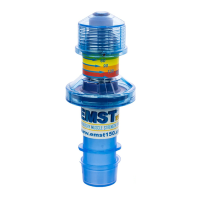
The EMST150 is a training device designed to improve breathing and swallowing function, as well as overall quality of life and physical fitness. It is intended for personal use and features a rotary knob, a calibrated scale, a comfort mouthpiece, and a nose clip.
The primary function of the EMST150 is to provide expiratory muscle strength training. By exhaling forcefully through the device, users engage and strengthen their chest and stomach muscles. The resistance of the valve, which is controlled by the rotary knob, makes exhalation more challenging. Turning the knob clockwise increases resistance, making it harder to exhale, while turning it counterclockwise loosens the valve, making exhalation easier. The position of a small metal screw at the bottom of the knob indicates the specific expiratory pressure required to open the valve. This adjustable resistance allows users to gradually increase the intensity of their training as their muscle strength improves. The device is designed to facilitate a training regimen that involves a series of forceful exhalations, interspersed with rest periods, to build and maintain expiratory muscle strength.
Before beginning training, users must determine their maximum expiratory pressure (ADmax) using the EMST150 itself. This involves a series of steps: closing the nose with the nose clip, setting the knob to a specific number on the scale, taking a deep breath, securely positioning the mouthpiece in the mouth, and exhaling quickly and vigorously through the device until the valve opens. If this is easily achieved, the knob is adjusted clockwise in quarter turns, and the process is repeated until the user can no longer pass air through the valve without extreme effort. This final setting represents the user's ADmax and serves as the starting point for the first week of training.
The training program typically spans five weeks, followed by a maintenance program. In the first week, users begin training at approximately 75% of their determined maximum strength, achieved by turning the knob a quarter turn counterclockwise from their ADmax setting. The training involves placing the nose clips, taking a deep breath, securing the mouthpiece in the mouth, and exhaling hard and fast using chest and stomach muscles. Each forceful exhalation should last only a couple of seconds. Rest periods of 15-30 seconds are crucial between breaths. A typical training session consists of five 5-breath trials, with a 1-minute break between each trial, totaling 25 training breaths per day. Users are advised to stop if they feel lightheaded.
From Week 2 until Week 5, users increase the resistance by turning the knob a quarter turn clockwise at the end of each week. They can further adjust the knob to a higher level if comfortable, but the key is to ensure air moves freely through the device without extreme effort. It is important to note the training value each week to track progress. The maintenance program, initiated after the five weeks of intensive training, involves training three days per week, with 25 breaths into the device, at the final setting achieved in Week 5. Users can continue to increase resistance during maintenance if they feel capable, but always without causing extreme breathing effort or fatigue.
The EMST150 should be used in a seated position for greater comfort. Training should ideally be performed at the same time each day, when the user is not tired, and typically takes 20-30 minutes per day. It is crucial to consult a doctor or therapist before using the device, especially if pregnant, having untreated hypertension, a recent stroke, elevated intracranial or intra-ocular pressure, cardiac problems, asthma, emphysema, chronic obstructive lung disease, a history of collapsed lung, head/neck surgery or trauma, untreated gastroesophageal reflux, esophageal surgery, a ruptured drum or recent ear surgery, or if Valsalva-like maneuvers might be detrimental for health.
The only removable part of the EMST150 is the mouthpiece. The remaining parts of the trainer are not designed for disassembly, and users should never attempt to take the rest of the device apart. To remove the mouthpiece, it should be pulled gently until loosened.
The mouthpiece should be cleaned weekly. Since the trainer is intended for sole use, warm water and mild soap can be used to rinse the mouthpiece. It should never be placed in a dishwasher or microwave and should be air-dried before re-using. The trainer should not be shared with any other person. The lifespan of the trainer depends on actual usage and appropriate cleansing. Harmful cleaning agents, such as bleach, and ultrasonic cleaning are not recommended. Exposure to extreme heat is also detrimental to the trainer. The device should always be kept in a clean place, away from small children, as small pieces could be swallowed.
 General
| Channels | 2 |
|---|---|
| Modes | Burst, Modulation |
| Pulse Width | 50-250 microseconds |
| Frequency | 1-150 Hz |
| Power Source | Battery |
| Battery Type | 9V battery |
| Electrodes | Self-adhesive electrodes |
| Warranty | 1 year |

 To Next Page