
 Need help?
Do you have a question about the AT-OS AWD655-2 and is the answer not in the manual?
Warns about potential damage to the machine if operations are not performed correctly.
Warns about potential serious injury, death, or long-term health risks if operations are not performed correctly.
Warns about serious injury, death, or long-term health risks if operations are not performed correctly.
Indicates hot surfaces and danger of burns.
Indicates a potential risk of electric shock causing serious injury, death, or long-term health risks.
Advises to carefully read and memorize the information.
Introduces the countertop (TT) and under-the-counter (UC) models of disinfectors.
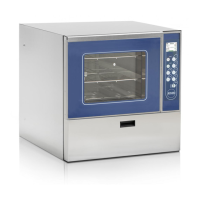
Describes the TT and UC models and their typical placement.
Warns that failure to comply with instructions voids warranty.
Classifies the machine as a Class IIb medical device according to Directive 93/42/EEC.
Emphasizes the need for personnel to be trained and aware of machine features.
Describes the information found on the machine's identification plates.
Details requirements for hot, cold, and DI-water pressure.
Covers the manufacturer's warranty for 12 months from commissioning, including spare parts.
Outlines conditions for warranty service recognition and exclusions.
Lists conditions under which the warranty lapses, including non-compliance and misuse.
Details user obligations regarding personnel training, electrical setup, and preventing unauthorized use.
Outlines installer duties, including checking for transport damage and environmental suitability.
Lists operator duties for safe operation, competence, and correct use of the machine.
Defines technician responsibilities for periodic checks and safety compliance.
Details the IEC EN 61010-2-040 standard applied for testing.
Specifies operational parameters like altitude, temperature, humidity, and voltage fluctuations.
Explains the importance of water quality for cleaning results and machine longevity.
Discusses water hardness, ionic contaminants, and microbial contaminants.
Recommends drinking quality water and demi water for rinsing and disinfection.
Provides technical specifications for machine dimensions and weight.
Lists washing tank dimensions, sound level, and protection ratings.
Informs that the machine is supplied without accessories and users must request them.
Shows examples of common accessories for the machine.
Stresses the importance of instructing operators on risks and safety devices.
Provides general warnings for safe operation and maintenance.
Outlines user responsibilities for training, electrical setup, and preventing unauthorized use.
Details installer duties regarding installation, environment, and connections.
Lists operator duties for safe operation, competence, and correct use of the machine.
Advises on safe practices like checking cables, using specific detergents, and handling chemicals.
Defines technician responsibilities for periodic checks and safety compliance.
Describes procedures for transport, delivery, and checking the machine upon arrival.
Provides guidelines for storing the machine temporarily.
Details how to temporarily store the packaged machine safely.
Advises on positioning furniture around the machine to prevent leakage issues.
Warns against installing in flammable/explosive atmospheres.
Specifies floor load capacity and machine stability checks.
States that connections must be done by specialized personnel.
Lists checks required before positioning the machine and connecting components.
Describes the niche requirements for built-in installation and air circulation.
Advises to fix the machine to the ground for stability.
States that electrical connections must be made by qualified personnel.
Specifies requirements for the main switch in single-phase versions.
Specifies requirements for the main switch in three-phase versions.
Details checks for voltage, frequency, and earthing connections.
Mentions that the socket must be accessible for safety checks.
States that the power supply cable must be adapted to the environment.
Reinforces checking electrical specifications against the label.
Stresses the need for proper earthing and equipotential circuits.
Explains connecting the earth conductor to the terminal.
Advises connecting the machine with a suitable safety device.
Discusses EMC testing and suitability for institutes.
Advises on floor material and humidity levels to minimize electrostatic discharges.
Reiterates water quality compatibility with materials and chemicals.
Details connecting the drain trap to the building's drain system.
Warns about environmental pollution due to incorrect use.
Explains how to insert and clean the filters.
Details how to install and check the spray arms.
Explains the correct positioning of spray arms with rotation control.
Explains the purpose and introduction of regeneration salt.
Provides step-by-step instructions for refilling the salt tank.
Explains the automatic water softening regeneration process.
Describes the chemical dosing system and its components.
Warns about handling liquids with caution and using protective measures.
Details the refill procedure for the countertop model's chemical containers.
Details the refill procedure for the under-the-counter model's chemical tanks.
Emphasizes regular maintenance of the dosing system for efficiency.
Provides guidelines for storing and disposing of chemical substances.
Lists tested liquid combinations for compatibility.
Explains the warning message for low chemical disinfectant levels.
Advises on calibrating flow meters for new liquids.
Stresses that operators must read the manual and check the machine before use.
Instructs to open the water tap and check for leaks or backward flow.
Advises checking the insertion of suction tubes into liquid containers.
Details connecting power and water supply hoses.
Instructions on starting the machine using the ON-OFF switch.
Recommends checking liquid levels at the start of the first cycle.
Explains manual filling of the hydraulic circuit to prevent air bubbles.
Describes how to access the manual emergency release mechanism.
Warns of hot water and chemical leakage if emergency release is used during a program.
Specifies the maximum weight and volume for the open door and baskets.
Guides on placing instruments in baskets, avoiding overlap and ensuring proper washing.
Instructs on inserting hollow instruments into appropriate injectors.
Advises on using suitable materials like stainless steel and thermostable plastics.
Provides a sequence for loading handpieces into baskets.
Provides a sequence for loading trays using a tray holder insert.
Details the sequence for loading surgical instruments using an instrument holder insert.
Emphasizes using only instruments suitable for automatic treatment.
Lists checks to perform before treating dental instruments.
Recommends drying channels after cleaning and disinfection.
Stresses using only instruments designed for automatic thermodisinfection.
Highlights the requirement for purified water for ophthalmic instruments.
Specifies recommended liquids for cleaning, neutralisation, and rinsing.
Explains how to select available programs based on dirt level.
Describes the SHORT program for normal dirt and daily use.
Describes the STANDARD program for additive dosing and rinsing.
Describes the INTENSIVE program for stubborn dirt.
Details the structure of programs including Drain, Pre-wash, Wash, Rinse, Disinfection, Drying.
Warns about risks associated with inattentive use of electrical devices.
Outlines checks before starting the machine, like filters and spray arms.
Specifies checking and cleaning filters and spray arm nozzles.
Advises correct arrangement of baskets and products.
Emphasizes checking the free rotation of rinse arms.
Reminds to check liquid container levels before starting.
Instructs to close the door tightly until a click is heard for the program to start.
Explains using keys 1, 2, 3, and P+ to select programs.
Warns about risks of inattentive use of electrical devices.
Explains how program progress is shown on the display.
Describes the pre-wash phase, its purpose, and temperature.
Advises on drying instruments with hot air and additional drying for small internal diameters.
Warns about program interruption and restart procedures.
Provides specific notes for the EcoDrying version regarding manual drying and hygiene.
Explains the 'Successfully completed' message and door unlocking.
Lists checks to perform after the program ends, including instrument cleanliness and dryness.
Warns not to force the door open and about hot instruments.
Explains how the LCD display shows machine status, phases, and operations.
Details the function of each numbered element on the display.
Describes messages indicating low liquid levels in product tanks.
Explains messages shown when a program is interrupted due to alarms or power failure.
Describes the screen shown after starting, inviting basket insertion.
Details the screen for selecting programs after the door is closed.
Describes the first phase of the STANDARD program, draining residual water.
Details the self-loading of cold water and temperature maintenance.
Describes the third phase, draining residual water.
Details the self-loading of cold water and temperature maintenance.
Describes the draining phase.
Explains loading purified water for rinsing.
Details the rinsing process using purified water.
Explains the peristaltic pump dosing detergent.
Describes draining purified water.
Explains loading purified water for the sterilization operation.
Details rinsing instruments with purified water.
Describes drying instruments with hot air.
Explains how to access the user settings menu via PRG and password.
Details how to navigate and change parameters using keys.
Describes the alarm system with audible signals and screen messages.
Explains how alarm images and text alternate on the display.
Lists general settings like buzzer, temperatures, and clock.
Covers settings related to cycle counters, user PIN, maintenance, and validation.
Refers to Annex A for detailed settings information.
Explains how to change the display language via PRG and password.
Describes the message appearing when a USB stick is plugged in.
Highlights the importance of routine maintenance for functionality and cost-effectiveness.
Lists daily checks and cleaning tasks for containers, filters, and panels.
Outlines weekly checks for spray arms, panels, and nozzles.
Provides steps for cleaning the wash tank filters.
Details the procedure for cleaning the spray arms.
States that special maintenance operations must be performed by authorized technicians.
Lists scheduled maintenance checks like electrical safety and dosing systems.
Advises on replacing the air suction filter after a certain number of hours or cycles.
Refers to Annex D for a table of malfunctions, causes, and solutions.
Emphasizes respecting laws for product disposal and machine decontamination.
Advises disposing of chemical residues according to applicable legislation.
Instructs to deliver the machine to a suitable collection center after decontamination.
Mentions the obligation to delete stored data according to regulations.
Advises keeping old equipment out of reach of children until disposal.
Details the data required for requesting spare parts from the manufacturer.
Explains shipping methods, delays, costs, and manufacturer liability.
Covers parameters for buzzer, device settings, water, and door unlock.
Details parameters for font table, language selection, and reset mode.
Explains parameters for combining programs with keys 1, 2, and 3.
Covers printer language settings and mandatory reports.
Details the parameter for enabling or disabling the drying stage.
Covers fan activation temperature and tank light time.
Details parameters for detergent and neutraliser pumps and flow meters.
Covers rinse aid pump/flow meter and cold water flow meter settings.
Explains the setting for water hardness, important for water softener.
Covers probe calibration, clock setting, and chemical calibration.
Details cycle counter, user PIN management, and maintenance settings.
Covers maintenance scheduling and validation parameters.
Explains resetting to factory defaults and printing the last cycle.
Lists alarms for power loss and door status, with actions.
Details alarms for door lock, dirty water, and water supply issues.
Covers alarms related to the drying fan and printer.
Lists alarms for flow meters and timeouts.
Details alarms related to temperature deviations during phases.
Lists alarms for high air temperature and phase temperature limits.
Details alarms for faulty or disconnected probes (working, control, air).
Covers alarms for bus cable faults and heating problems.
Lists alarms for condenser water level and pump pressure.
Details alarms for HEPA filter issues and empty chemical tanks.
Covers the alarm for insufficient disinfection (low A0 value).
Provides steps for reloading the salt bowl.
Advises contacting service for maintenance and validation.
Refers to sections for liquid product reserve warnings.
Lists causes and solutions for the machine not starting.
Lists causes and solutions for the program not starting.
Lists causes and solutions when the program stops due to lack of chemicals.
Lists causes and solutions when the operating temperature is not reached.
Lists causes and solutions when the machine does not dry properly.
Lists causes and solutions for white deposits, often related to salt.
 General
| Brand | AT-OS |
|---|---|
| Model | AWD655-2 |
| Category | Medical Equipment |
| Language | English |

 To Next Page