Need help?
Do you have a question about the ATAGO Pen - Urine S.G and is the answer not in the manual?
A quick and easy instrument for advanced on-site hydration monitoring.
Highlights ease of use, dip/touch/read functionality, and accurate, rapid results.
Table correlating urine SG readings with comments and suggested actions.
Details on reduced, moderate, dehydrated, and severe dehydration based on SG values.
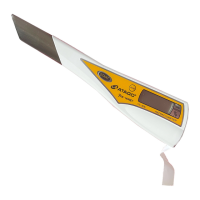
This document describes a portable device designed for the rapid and accurate assessment of hydration levels through urine specific gravity (SG) measurement. The device, referred to as a "Pen Refractometer," is a quality Japanese-made instrument that utilizes the refractive index method to determine the concentration of urine, which directly correlates to its specific gravity.
The primary function of this device is to detect dehydration by measuring the specific gravity of a urine sample. Urine specific gravity is a key indicator of hydration status, as its value varies according to the concentration of solutes in the urine. A higher specific gravity generally indicates more concentrated urine, which can be a sign of dehydration, while a lower specific gravity suggests more dilute urine.
The device employs the refractive index method, a scientific principle that measures how light bends when passing through a substance. In the context of urine, the degree to which light refracts is proportional to the concentration of dissolved substances. By precisely measuring this refractive index, the Pen Refractometer can accurately calculate and display the urine specific gravity.
A crucial feature of this instrument is its automatic temperature compensation (ATC) capability. Urine specific gravity can be affected by temperature variations; however, the Pen Refractometer is designed to automatically adjust its readings for temperatures up to 40°C. This ensures that the results remain accurate and reliable regardless of minor fluctuations in the sample's temperature, eliminating the need for manual temperature corrections and simplifying the testing process.
The device provides a digital reading of the urine specific gravity, which can then be interpreted using a provided chart that correlates SG values with different hydration statuses. This chart categorizes readings into ranges such as "Below normal range," "Within normal range," "Above normal range," and "Abnormal," offering suggested actions for each category, from "No action required" to "DANGER - seek medical assistance."
The Pen Refractometer is designed for ease of use, delivering instant results with minimal effort. Its portable, pen-like form factor makes it suitable for on-site hydration testing in various environments, including workplaces.
Simple Operation: The testing process is straightforward and involves just a few steps:
Instant and Accurate Results: The device is engineered to provide accurate results in seconds, making it highly efficient for situations where rapid assessment is critical. This speed is particularly beneficial in environments where multiple individuals need to be tested or where immediate intervention for dehydration is necessary.
Digital Display: The clear digital display ensures that readings are easy to read and interpret, reducing the potential for human error associated with analog scales. The display shows the specific gravity value, allowing for precise monitoring.
Portability: Its compact, pen-like design makes the refractometer highly portable. It can be easily carried and used in various locations, facilitating on-site testing without the need for bulky laboratory equipment. This portability is ideal for workplace drug and alcohol testing services that also offer hydration monitoring.
While the document does not explicitly detail a comprehensive maintenance section, it implies certain maintenance practices through its usage instructions and the nature of the device.
Easy Cleaning/Rinsing: After each use, the device requires rinsing. The instruction "Dip/touch, read result, then rinse" suggests that the sensor tip can be easily cleaned by rinsing it with water. This simple cleaning procedure is crucial for maintaining hygiene and preventing cross-contamination between samples, as well as ensuring the accuracy of subsequent readings by removing any residue. Regular rinsing after each test helps to keep the sensor free from dried urine, which could otherwise interfere with the refractive index measurement.
Durability: As a "quality Japanese made instrument," the device is expected to be robust and durable, designed for repeated use in various settings. This implies a certain level of build quality that contributes to its longevity and consistent performance with proper care.
Calibration (Implied): Although not explicitly stated as a user-performed maintenance task, refractometers typically require periodic calibration to ensure continued accuracy. The presence of a "ZERO" button on the device's interface suggests a potential user-accessible zero-point adjustment or calibration function, which would be a key maintenance feature to ensure the device remains precisely calibrated over time. This would involve using distilled water or a known standard to set the baseline reading.
In summary, the Pen Refractometer is a user-friendly, portable, and accurate tool for assessing hydration levels through urine specific gravity. Its simple operation, instant digital results, and easy cleaning make it an efficient solution for on-site hydration monitoring, supported by automatic temperature compensation for reliable measurements.
 General
| Model | Pen - Urine S.G. |
|---|---|
| Minimum Scale | 0.001 |
| Measurement Accuracy | ±0.001 |
| Temperature Compensation | Automatic |
| Ambient Temperature | 10 to 40°C |
| Temperature Range | 10 to 40°C |
| International Protection Class | IP65 |
| Dimensions | 16 × 3.8 × 1.8 cm |
| Sample Volume | 0.3 mL |
| Scale | Urine Specific Gravity |
| Temperature Compensation Range | 10 to 30°C |
| Battery Life | Approx. 5, 000 measurements |
| Weight | 70 g |
| Measurement Range | 1.000 to 1.060 |


 To Next Page