Driving safety
to incorrect positioning of the safety belt
and improper seating position.
- Children must always ride in child seats
c> page 166. Special precautions apply
when installing a child seat on the front
passenger seat
c> page 142.
Proper seating positions for passengers in
rear seats
Rear seat passengers must sit upright with both
feet on the floor consistent with their physical
size and be properly restrained whenever the ve-
hicle is in use.
To reduce the risk of injury caused by an incorrect
seating position in the event of a sudden braking
maneuver or an accident, your passengers on the
rear bench seat must always observe the follow-
ing:
• For adjustable head restra ints: adjust the head
restraint so the upper edge is as even as possi-
ble with the top of your head. If that is not pos-
sible, try to adjust the head restraint so that it
is as close to th is position as poss ible
c>page 128 .
• Keep both feet flat in the footwell in front of
the rear seat.
• Fasten and wear safety belts properly
c>page 137.
• Make sure that children are always properly re-
strained in a child restraint that is appropriate
for their size and age
c::> page 166.
_& WARNING
Passengers who are improperly seated on the
rear seat can be seriously injured in a crash.
- Each passenger must always sit on a seat of
their own and properly fasten and wear the
safety belt belonging to that seat .
- Safety belts only offer maximum protection
when the safety belts are properly posi-
tioned on the body and securely latch ed . By
not sitting upright, a rear seat passenger in-
creases the risk of personal injury from im-
properly positioned safety belts!
128
- For adjustable head restraints: always ad-
just the head restraint properly so that it
can give maximum protection.
Proper adjustment of head restraints
Applies to : vehicles with adjustable head restra ints
Correctly adjusted head restraints are an impor-
tant part of your vehicle's occupant restraint sys-
tem and can help to reduce the risk of injuries in
accident situations.
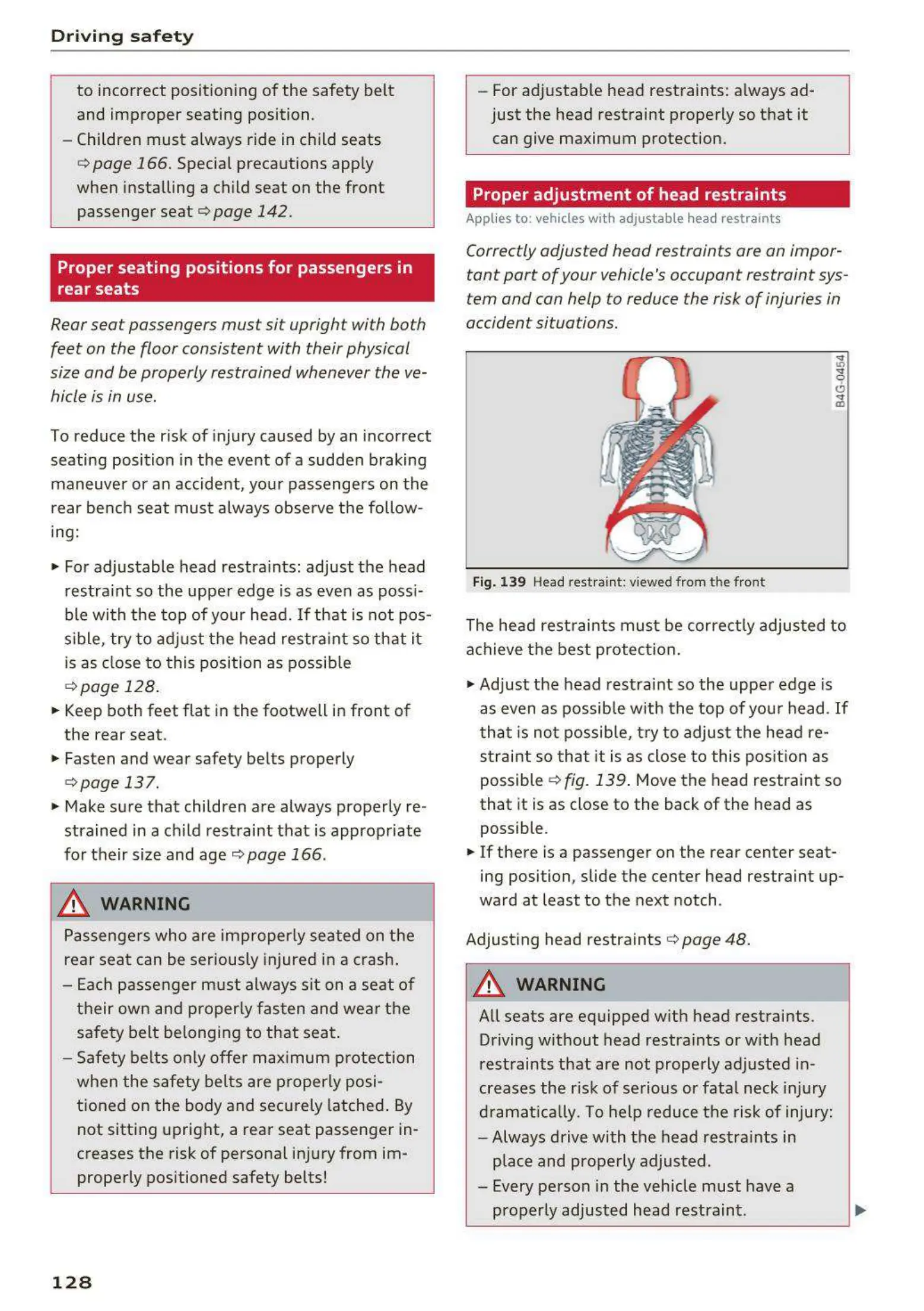
Fig. 139 Head restra int: viewed from the front
The head restraints must be correctly adjusted to
achieve the best protection.
• Adjust the head restraint so the upper edge is
as even as possib le with the top of your head . If
that is not possible, try to adjust the head re-
straint so that it is as close to this posit ion as
possible
c> fig. 139 . Move the head restraint so
that it is as close to the back of the head as
possible.
• If the re is a passenger on the rear center seat-
ing position, slide the center head restraint up-
ward at least to the next notch.
Adjusting head restra ints
c> page 48.
_& WARNING
All seats are equipped with head restraints.
Driving without head restraints or with head
restraints that are not properly adjusted in-
creases the risk of serious or fata l neck injury
dramatically . To help reduce the risk of injury:
-Always drive with the head restraints in
place and properly adjusted.
- Every person in the vehicle must have a
properly adjusted head restraint.
-









 To Next Page