®
AVALLON.COM
©2022 Ferguson Enterprises, LLC V1.2-11202022
20
AVALLON.COM
®
21
©2022 Ferguson Enterprises, LLC V1.2-11202022
Condenser Cleaning
The condenser should be cleaned monthly to remove dust and hair in order to maintain proper air flow.
Clean the condenser with a household or portable vacuum cleaner with a brush attachment.
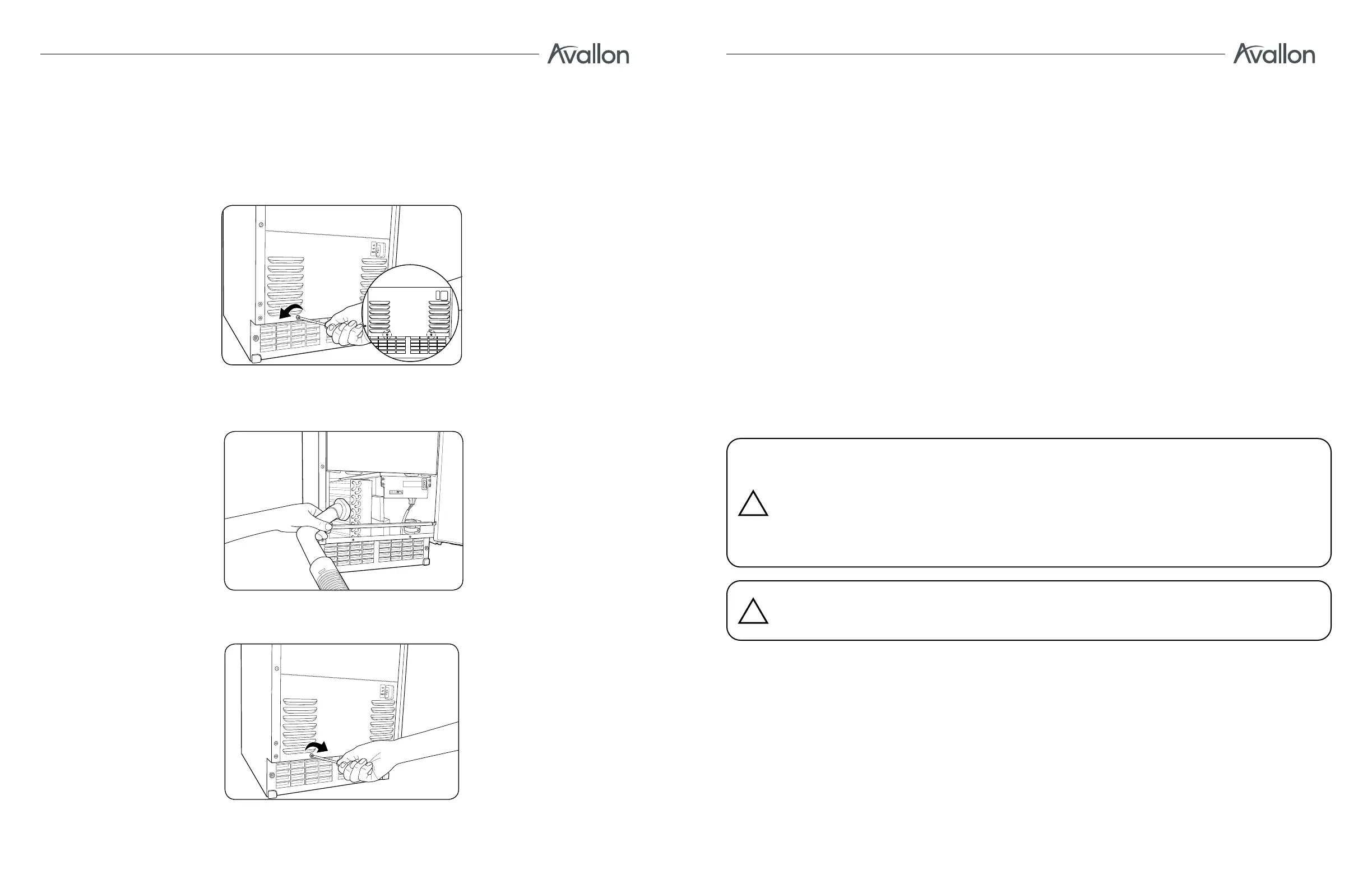
1. Open the door and remove the two screws on the bottom of the front panel with a Phillips
screwdriver. Remove the front panel to expose the condenser.
2. Using a household or portable vacuum with a brush attachment, gently vacuum the surface of the
condenser to remove all dust and hair.
3. Replace the front panel and tighten the screws. Do not over tighten.
Deep Cleaning and Sanitizing the Ice Maker
It is necessary to remove mineral build-up and sanitize the ice maker at least every 6 months to
maintain proper operation of the unit and keep it free from slime and bacteria so the ice is safe for
consumption. Minerals that are removed from the water during ice making will eventually form hard,
scaly deposits in the system, which will aect the unit’s performance. Slime and bacteria build-up will
aect the taste and cleanliness of the ice. Deep cleaning and sanitizing the system regularly helps
remove mineral deposits and unhealthy bacteria. Your ice maker may need to be deep cleaned and
sanitized more often depending on your water and environmental conditions.
To deep clean the ice maker, a Nickle-Safe Ice Maker Cleaner must be used to remove the mineral
deposits in the system. Do not use harsh or abrasive cleaners as they can damage the ice maker and
leave behind harmful residue. Alternatively, vinegar may be used to remove mineral deposits and is
food safe. Vinegar concentration will vary depending on the amount of mineral build up.
To sanitize the ice maker, a commercial ice maker disinfectant should be used. As a substitute, a
solution of 1 part 5.25% Sodium Hypochlorite (bleach) to 25 parts water may be used.
DO NOT get the cleaning or disinfectant solutions on any of the exterior surfaces as the solutions will
damage them. Follow all instructions on the cleaner and disinfectant containers. Always wear rubber
gloves when cleaning and disinfecting the ice maker.
Cauon:
1) DO NOT spill cleaning or disinfectant solutions on exterior surfaces as they will
cause damage to the finish.
2) DO NOT use harsh or abrasive cleaners.
3) Follow all manufacturer instructions on the cleaner and disinfectant containers.
4) Wear rubber gloves to protect your hands.
5) Discard the first batch of ice produced after cleaning.
Important:
• Do not touch the power plug when your hands are wet.
• Never unplug the unit by pulling on the cord.
!
!


 To Next Page