Need help?
Do you have a question about the aventon Pace 350/500 and is the answer not in the manual?
Provides general details on the e-bike, assembly, and accessories.
Ensuring correct assembly and fit for safety, performance, and comfort.
Checking local laws for required safety equipment and riding areas for e-bikes.
Impact of non-original parts on safety, warranty, and compliance.
Familiarizing with ebike electrical system and checking component operation before rides.
Ensuring brake system is free from damage, properly secured, and working correctly.
Checking wheel trueness, spoke tension, tire condition, and air pressure.
Ensuring all hardware is secured and approved accessories are properly attached.
Adjusting suspension, handlebar alignment, grips, and seat for proper fit and control.
Understanding and using the throttle feature for acceleration and assistance.
Adhering to road laws, riding predictably, and using defensive riding techniques.
Importance of wearing a properly fitted helmet for forehead coverage and compliance.
Understanding risks of bicycling and responsible riding and maintenance practices.
Parental responsibility for child's safety and age restrictions for e-bike use.
Precautions for riding in wet conditions, including speed and visibility.
Recommendations for riding safely at night, focusing on visibility and lighting.
Identifies the specific model of the electric bicycle.
The maximum weight the e-bike can safely carry.
The maximum speed the e-bike can achieve.
Details of the e-bike's motor, including voltage and wattage.
Specifications of the e-bike's battery, including voltage and capacity.
Estimated distance the e-bike can travel on a single charge.
The diameter and width of the bike's wheels.
Recommended air pressure for the e-bike tires.
Specifications of the battery charger.
Estimated time required to fully charge the battery.
The e-bike's rating for resistance to water ingress.
The total weight of the e-bike.
Lists all components included in the e-bike package for assembly.
Instructions for safely opening the box and removing the e-bike.
Guidance on clearing away all packaging materials from the bike.
Procedure for loosening stem bolts and rotating the handlebar stem.
Ensuring handlebar alignment and cable routing during installation.
Removing stem faceplate bolts for handlebar attachment.
Centering and attaching the handlebar to the stem with bolts.
Steps for correctly installing the front wheel into the fork dropouts.
Positioning the kickstand to stabilize the bike during assembly.
Centering and tightening the stem and handlebar for proper alignment.
Adjusting handlebar height/angle and securing it with screws.
Tightening the display clamp to achieve the desired angle.
Instructions for correctly installing the left and right pedals onto the cranks.
Removing motor protectors and installing guards on the rear wheel.
Inflating tires to the recommended pressure for safe operation.
Adjusting the seatpost height and securing the seatpost clamp.
Adjusting the horizontal position and tilt angle of the bike saddle.
Verifying the serial number match between the key and battery lock.
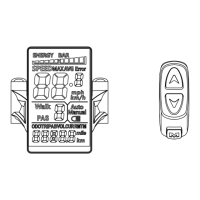
Performing initial checks on the battery and display unit.
Step-by-step guide for charging the e-bike battery correctly and safely.
Instructions for safely removing the battery from the bike frame.
Essential safety guidelines for using the e-bike charger.
Initial steps to power on and prepare the e-bike for riding.
Recommendations for charging the e-bike battery indoors.
Importance of maintenance for e-bike longevity and smooth operation.
Mandatory safety precautions, including wearing a helmet and obeying laws.
Explanation of factors affecting the e-bike's travel distance on a single charge.
General recommendations for maintaining the e-bike's condition and safety.
Guidelines for regular inspections, service, and component replacements.
Ensuring front and rear brakes function properly, checking pads and cables.
Checking tire inflation, tread, bulges, and wheel trueness.
Ensuring correct handlebar and stem adjustment and tightening.
Checking chain cleanliness, lubrication, and smooth operation.
Verifying lubrication and smooth operation of all bearings.
Ensuring pedals and cranks are securely tightened and not bent.
Checking derailleur function, cable security, and lubrication.
Inspecting frame, fork for damage, and seat adjustment security.
Checking motor smooth operation, cable security, and torque arm.
Ensuring battery is charged, secured, and undamaged.
Checking electrical cable connections for security and damage.
Ensuring accessories like lights and reflectors are secured and functional.
Information on the e-bike's error detection system and common error codes.
Understanding component wear and the importance of timely replacement.
Information on accessing warranty terms and conditions online.
Links to additional resources like assembly videos and best practices.
Contact information for customer support and help center.


 To Next Page
 General