Need help?
Do you have a question about the Axis M3016 and is the answer not in the manual?
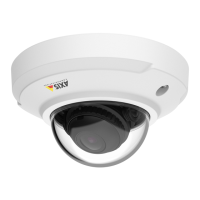
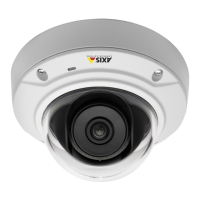
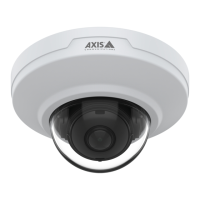
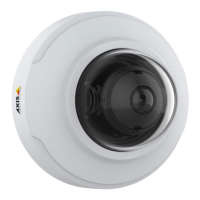
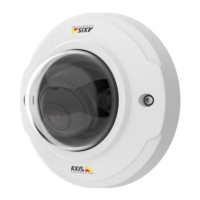
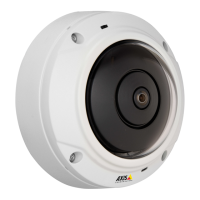
This document serves as a user manual for the AXIS M30 Network Camera Series, encompassing models such as the AXIS M3015 Network Camera, AXIS M3016 Network Camera, and the ExCam XF M3016 Explosion-protected Camera. It provides comprehensive instructions for setting up, operating, and maintaining these network cameras.
The AXIS M30 Network Camera Series consists of network cameras designed for surveillance applications. These devices capture video streams and offer various functionalities to enhance monitoring and security. They are equipped with an SD card slot for local storage, a status LED to indicate operational status, an RJ45 connector for network connectivity, and a control button for specific device operations. The cameras support different video compression formats, including Motion JPEG, H.264, and H.265, allowing users to choose the most suitable format based on their viewing requirements and network properties.
The cameras are capable of streaming and storing video, with options to configure network storage or utilize an SD card. They support event-triggered actions, enabling the device to perform specific tasks, such as starting a recording or sending an email, when certain conditions are met, like motion detection. The AXIS Camera Application Platform (ACAP) allows for the installation of third-party analytics and other applications, expanding the camera's capabilities. An example application, AXIS People Counter, is mentioned, designed for retail environments to count people.
The manual details how to find and access the device on a network using AXIS IP Utility or AXIS Device Manager. Initial access requires setting a root password, and the document emphasizes the importance of secure passwords and encrypted HTTPS connections for data protection.
Image Quality and View Configuration: Users can adjust image quality settings, including capture modes that define resolution and frame rate, affecting the camera's field of view and aspect ratio. The manual explains how to reduce noise in low-light conditions by adjusting settings like the Blur-noise trade-off, exposure mode, max shutter, max gain, and aperture. Corridor format is a feature that optimizes the field of view for long and narrow areas like hallways or staircases, allowing the camera's view to be rotated 90° or 270°. The pixel counter helps verify that a defined part of the image contains enough pixels for specific recognition tasks, such as facial recognition. View areas can be set up to crop parts of the full view, reducing bandwidth and storage needs, and supporting pan, tilt, and zoom within the defined area. Wide Dynamic Range (WDR) is available to handle scenes with strong backlighting, ensuring both dark and bright areas of an image are visible.
Overlays and Event Management: Overlays can be superimposed on the video stream to provide additional information, such as timestamps or custom text like "Motion detected" when an event occurs. The manual provides a step-by-step guide on how to set up a text overlay triggered by AXIS Video Motion Detection. Rules can be created to define conditions and actions for events, allowing for automated responses like starting video recordings.
Streaming and Storage Optimization: The cameras support various video compression formats to manage bandwidth and storage efficiently. H.264 and H.265 are highlighted for their ability to significantly reduce file sizes compared to Motion JPEG without compromising image quality. The manual provides tips for reducing bandwidth and storage, including using zipstream settings, dynamic GOP, increased compression, and dynamic FPS. Instructions are given for setting up network storage and recording/watching video, either to network storage or an SD card.
Applications: The AXIS Camera Application Platform (ACAP) enables the installation of third-party applications, extending the camera's functionality. The AXIS People Counter application is specifically mentioned as an embedded analytic tool for counting people in retail or similar environments.
The manual includes a dedicated troubleshooting section to address common issues and provides solutions.
Reset and Firmware Management: Users can reset the device to factory default settings, which is useful for resolving configuration issues or when the root password is lost. This process involves disconnecting power, pressing and holding the control button while reconnecting power, and waiting for the status LED to flash amber before releasing. The manual also guides users on how to check the current firmware version and upgrade it. Firmware upgrades are crucial for accessing the latest functionalities and bug fixes. It's important to note that preconfigured settings are generally saved during an upgrade, but this is not guaranteed. Users are advised to read upgrade instructions and release notes before proceeding.
Troubleshooting Common Problems: The document covers various troubleshooting scenarios, including:
Performance Considerations: The manual outlines factors that affect system performance, such as image resolution, compression levels, image rotation, the number of clients accessing streams, simultaneous viewing of different streams, heavy event setting usage, HTTPS usage, network utilization, and client computer performance. It also mentions that running multiple ACAP applications can impact frame rate and overall performance.
LED Indicators: A table describes the meaning of different status LED indications (Unlit, Green, Amber, Amber/Red, Red), which are crucial for diagnosing device status and issues like firmware upgrade failures or network connection problems.
SD Card Management: Important notices are provided regarding the SD card slot, including warnings against using sharp tools or excessive force, and the risk of data loss if the SD card is removed while the product is running. Users are instructed to unmount the SD card from the product's webpage before removal.
 General
| Model | Axis M3016 |
|---|---|
| Environment | Indoor |
| Sensor Type | CMOS |
| Resolution | 1920x1080 |
| Maximum Resolution | 1920 x 1080 |
| Frame Rate | Up to 30 fps |
| Maximum Frame Rate | 30 fps |
| Lens | Fixed |
| Focal Length | 2.8 mm |
| Aperture | F2.0 |
| Minimum Illumination | 0.5 lux |
| Day/Night | Yes |
| Wide Dynamic Range | Yes |
| Video Compression | H.264, MJPEG |
| Audio | Two-way audio |
| Power Source | PoE or 12V DC |
| Ingress Protection | IP42 |
| Image Sensor Size | 1/3 |
| Edge Storage | microSD card |
| Power over Ethernet | IEEE 802.3af |
| Operating Temperature | -10 °C to 50 °C |
| Operating Conditions | 0 °C to 50 °C (32 °F to 122 °F) |
| Dimensions | Ø 101 x 56 mm |
| Weight | 160 g |


 To Next Page