Need help?
Do you have a question about the Axis M7116 and is the answer not in the manual?
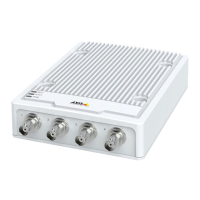
The AXIS M7116 Video Encoder is a device designed to convert analog video signals into digital streams, enabling integration of analog cameras into an IP-based surveillance system. It supports up to 16 analog video inputs, allowing for a comprehensive upgrade of existing analog setups without replacing all cameras.
The primary function of the AXIS M7116 is to encode video from connected analog cameras into H.264, H.265, or Motion JPEG formats. This allows the video to be viewed, recorded, and managed using standard IP network infrastructure and video management systems (VMS). The device automatically detects video inputs upon initial setup, simplifying the configuration process. Users can manually adjust video input settings for each channel if needed, and the device will restart to apply these changes.
The encoder supports various image adjustment features, including a leveling guide for precise camera orientation. This is particularly useful for aligning the camera view with a reference area or object. For monitoring long and narrow spaces like staircases or hallways, the corridor format can be utilized, optimizing the field of view.
Privacy masks can be created to hide sensitive areas within the video stream, appearing as solid color blocks or mosaic patterns in all snapshots, recorded video, and live streams. These masks can be managed through the device's webpage, allowing for adjustments in size, color, and name. Image overlays can also be added to the video stream, providing additional information such as timestamps or custom images. Text overlays can be configured to appear based on specific events, such as motion detection, displaying messages like "Motion detected" in the video stream.
The device integrates with AXIS Camera Application Platform (ACAP), an open platform that allows third-party developers to create analytics and other applications. This expands the encoder's capabilities beyond basic video encoding, enabling features like advanced video analytics.
The AXIS M7116 offers a user-friendly web interface for configuration and management. Upon first access, users are guided to set a root password, with recommendations for secure password practices. The webpage overview provides a clear layout, including a live view, control bars, product information, and settings toggles.
For video recording, the device supports both network storage and SD card storage. Users can set up network storage by providing the IP address of a host server and the shared location, with options for login credentials. Once storage is configured, video can be recorded directly from the live view. Recordings can be easily accessed and played back through the storage settings.
To optimize bandwidth and storage, the encoder allows for adjustments to streaming settings. Users can enable dynamic GOP (Group of Pictures), increase compression, and turn on dynamic FPS (Frames Per Second). While these adjustments can reduce bandwidth, it's important to note that they might result in some loss of detail in the picture. The device also supports H.265 decoding, although web browsers typically do not, requiring a VMS or application that supports H.265.
The encoder supports Pan, Tilt, and Zoom (PTZ) functionality for connected PTZ cameras. This requires installing the appropriate PTZ driver and configuring device ID and type. Guard tours can be created, allowing the device to display video streams from different preset positions in a predetermined or random order for configurable periods. This feature is useful for automated surveillance patrols.
Event management is a key feature, allowing users to create rules that trigger specific actions based on various conditions. For example, a rule can be set to start recording to an SD card five seconds before motion is detected and stop one minute after. Another example includes sending an email notification if the camera lens is spray-painted or covered, utilizing the "Trigger on dark images" detector. These rules can be scheduled, recurring, or triggered by specific events like AXIS Video Motion Detection.
The AXIS M7116 includes several maintenance features to ensure reliable operation and troubleshooting. The device can be reset to factory default settings, which is useful for resolving configuration issues or regaining control after a security attack. This can be done by pressing and holding the control button during power-up or through the web interface. Resetting restores all settings, including the IP address, to their default values.
Firmware management is supported, with options for active track or long-term support (LTS) tracks. The active track provides access to the latest features, while LTS tracks offer a stable platform with a focus on bug fixes and security updates, recommended for third-party integrations. Users can check the current firmware version through the web interface and upgrade it by downloading the firmware file from Axis's support website. Preconfigured and customized settings are generally preserved during firmware upgrades.
Troubleshooting guidance is provided for common issues such as IP address conflicts, inability to log in, or problems with streaming. For instance, if the IP address is being used by another device, steps are outlined to diagnose and resolve the conflict. If the device cannot be accessed from a browser, checks for HTTPS protocol and password resets are suggested. Streaming issues, such as multicast H.264 accessibility or poor rendering, are addressed with advice on checking router settings, network administrator configurations, and graphics card drivers.
Performance considerations are also detailed, highlighting factors that can affect bandwidth and frame rate, such as image resolution, compression levels, the number of simultaneous viewers, and the use of HTTPS. Recommendations include reducing image resolution, limiting simultaneous viewers, and ensuring sufficient network bandwidth. The device also provides LED indicators for status and network activity, offering quick visual cues for operational status and connection health.
The SD card slot includes important notices regarding proper handling to prevent damage and data loss, emphasizing the need to unmount the SD card from the product's webpage before removal. This ensures the integrity of recordings and the longevity of the SD card.
 General
| Video compression | H.264 |
|---|---|
| Audio | Two-way audio, Audio input/output |
| Edge storage | microSD card slot |
| Connectors | RJ-45 |
| Ethernet Ports | RJ-45 10BASE-T/100BASE-TX |

 To Next Page