Battery
A minimum of 650 cold cranking amps is the recommended battery size.
Do not connect
battery cables to
incorrect Terminal
Post ±. Doing so may cause a
reverse polarity current to run
through your electrical system
and cause damage to your engine
and other electrical components.
Damage done to your boat due to
incorrect terminal placement is
not covered under your Axis
warranty.
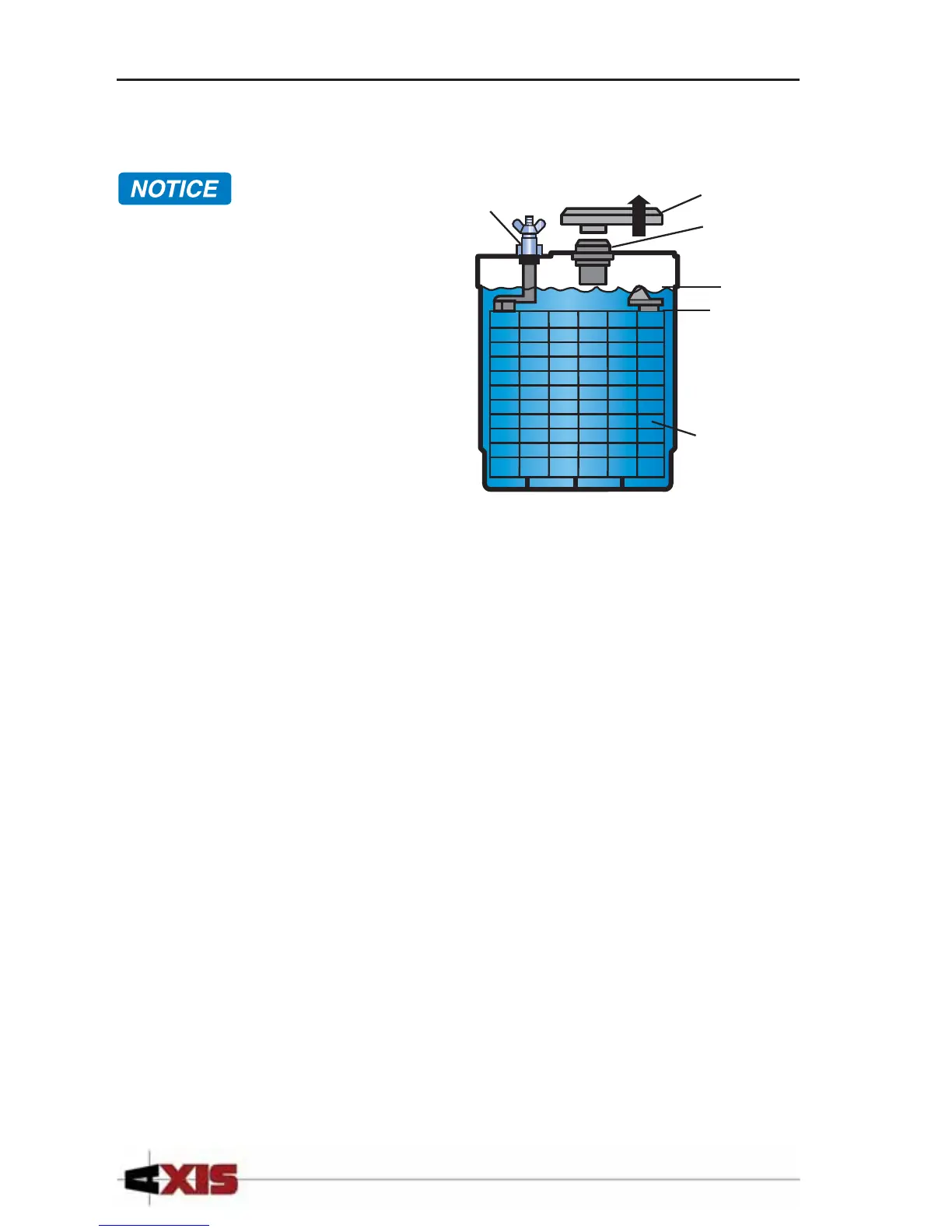
Check your battery terminals frequently for
corrosion and tightness. Clean terminals
with a baking soda and water solution and a
wire brush. Also, check the fluid levels in
the cells. Usually, a level approximately 1/4
to 1/2 in. above the plates is sufficient. If
needed, fill with distilled water. Some
batteries are sealed and this process is not
necessary. Read directions when applicable.
Electrical Distribution-Battery Switches:
All main engine battery cables are the larger, 2/0 size. Always use a Starter/Cranking battery,
minimum size of 650 Cold Cranking Amps on the big cable. This is the starter or cranking circuit.
There are also a set of smaller #2 AWG battery cables with the positive/red coming from an 80-
AMP main circuit breaker (on the smaller boats, a #6 AWG cable and a 60-AMP main breaker).
These smaller cables are the feeder circuit to the boats breakers and switches. These are referred
as the House circuit.
#1 on a Single Battery System:
Both the cranking circuit and the house circuit are connected to the same battery. One battery
running everything all connected together.
#2 on a Dual Battery System:
With a battery selector switch commonly called a “battery isolator switch”; both the house and the
cranking circuits are always connected together at the selector switch. You have the ability to
switch between 1-2 or all of the batteries to connect to the house and starter circuits. The current to
charge the batteries, will come from the starter circuit, flowing from the engine alternator to the
battery switch common terminal. When the engine is running you will have the ability to charge
ether #1 or #2 or both of the batteries at the same time. When the engine is off, you will pull
current for both the house and cranking circuit on which ever battery you have selected or
both batteries.
Care and Maintenance
4-8
Figure 4-7. Battery Level



 To Next Page