EasyManua.ls Logo

Bauer 19743E-B - User Manual

Bauer 19743E-B
19 pages
Print Icon
To Next Page IconTo Next Page
Loading...
!"#"$%&'(%)*+#"$*%,$-%.$$/-00)))1.,(+&(2(*"3.$14&5
65,"7%&'(%$*4.8"4,7%#'//&($%,$-%/(&9'4$#'//&($:.,(+&(2(*"3.$14&5
Owners Manual & Safety Instructions
Save This Manual Keep this manual for the safety warnings and precautions, assembly,
operating, inspection, maintenance and cleaning procedures. Write the product’s serial number in the
back of the manual near the assembly diagram (or month and year of purchase if product has no number).
Keep this manual and the receipt in a safe and dry place for future reference. 20h
When unpacking, make sure that the product is intact
and undamaged. If any parts are missing or broken,
please call 1-888-866-5797 as soon as possible.
Copyright
©
2020 by Harbor Freight Tools
®
. All rights reserved.
No portion of this manual or any artwork contained herein may be reproduced in
any shape or form without the express written consent of Harbor Freight Tools.
Diagrams within this manual may not be drawn proportionally. Due to continuing
improvements, actual product may differ slightly from the product described herein.
Tools required for assembly an d se rv ic e may n ot b e in cl uded.
Read this material before using this product.
Failure to do so can result in serious injury.
SAVE THIS MANUAL.
Question and Answer IconNeed help?

Do you have a question about the Bauer 19743E-B and is the answer not in the manual?

Summary

IMPORTANT SAFETY INFORMATION

WARNING SYMBOLS AND DEFINITIONS

Explains the meaning of safety alert symbols used in the manual.

General Power Tool Safety Warnings

Crucial safety instructions for operating power tools.

IMPORTANT SAFETY INFORMATION

Electrical Safety

Precautions to prevent electric shock when using power tools.

Personal Safety

Guidelines for operator alertness, protective equipment, and safe practices.

IMPORTANT SAFETY INFORMATION

Power Tool Use and Care

Proper methods for using and maintaining power tools.

Service Guidelines

Requirements for tool service and replacement parts to ensure safety.

Mitre Saw Safety Instructions

Specific safety rules tailored for mitre saw operation.

IMPORTANT SAFETY INFORMATION

Vibration Safety

Measures to reduce health risks associated with tool vibration exposure.

Grounding

Grounded Tools: Three Prong Plugs

Explanation of grounding requirements for tools with three-prong plugs.

Double Insulated Tools: Two Prong Plugs

Information on double insulated tools and their grounding requirements.

Extension Cords

Extension Cord Selection and Use

Guidance on choosing and using extension cords for optimal performance and safety.

Symbology

Definitions of symbols found on the tool and in the manual.

Specifications

Product Specifications

Technical details and capacities of the miter saw.

Setup - Before Use

Mounting Procedures

Instructions for securely mounting the miter saw to a stable surface.

Assembly Steps

Steps for attaching initial components like the dust collection bag and fence.

Functions

Component and Control Overview

Identification of all parts, controls, and features of the miter saw.

Work Area

Preparing the Work Area

Guidelines for setting up a safe and efficient workspace.

Saw Blade Selection

How to choose the appropriate saw blade for the material being cut.

Guard Setup

Ensuring the lower blade guard is correctly installed and functional.

Dust Extraction Setup

Instructions for connecting dust collection systems to the saw.

Operating Instructions

Tool Changing Procedure

Step-by-step instructions for safely changing the saw blade.

Setting and Testing

Adjusting the Miter Angle

Procedure for setting and adjusting the miter angle for precise cuts.

Adjusting the Bevel Angle

Procedure for setting and adjusting the bevel angle for angled cuts.

Setting and Testing

Aligning the Fence

Steps to ensure the fence is perpendicular to the saw blade.

Using the Depth Stop

How to control the depth of cut using the depth stop feature.

Kerf Board Adjustment

Instructions for adjusting kerf boards for blade clearance.

Workpiece Set Up

Securing Workpieces

Methods for securing workpieces using clamps or other devices.

Using Extension Supports

How to utilize table extensions for supporting longer workpieces.

General Operating Instructions

Initial steps and general advice before operating the saw.

Sliding Miter Saw Cutting Procedure

Detailed steps for performing cuts with the sliding miter saw.

Workpiece Set Up

Cutting Operations Overview

Explains various cutting types like cross, miter, bevel, and compound cuts.

Maintenance and Servicing Instructions

Cleaning, Maintenance, and Lubrication

Procedures for cleaning, lubricating, and maintaining the tool.

Checking and Calibrating the Fence

How to check and adjust the fence for accurate 90-degree cuts.

Maintenance and Servicing Instructions

Calibrating the Bevel Angle

Steps to calibrate the saw's bevel angle for precise vertical and angled cuts.

Maintenance and Servicing Instructions

Calibrating the Miter Angle Indicator

How to adjust the miter angle indicator for accurate readings.

Troubleshooting

Common Problems and Solutions

Identifies common issues with the tool and provides solutions.

Summary

IMPORTANT SAFETY INFORMATION

WARNING SYMBOLS AND DEFINITIONS

Explains the meaning of safety alert symbols used in the manual.

General Power Tool Safety Warnings

Crucial safety instructions for operating power tools.

IMPORTANT SAFETY INFORMATION

Electrical Safety

Precautions to prevent electric shock when using power tools.

Personal Safety

Guidelines for operator alertness, protective equipment, and safe practices.

IMPORTANT SAFETY INFORMATION

Power Tool Use and Care

Proper methods for using and maintaining power tools.

Service Guidelines

Requirements for tool service and replacement parts to ensure safety.

Mitre Saw Safety Instructions

Specific safety rules tailored for mitre saw operation.

IMPORTANT SAFETY INFORMATION

Vibration Safety

Measures to reduce health risks associated with tool vibration exposure.

Grounding

Grounded Tools: Three Prong Plugs

Explanation of grounding requirements for tools with three-prong plugs.

Double Insulated Tools: Two Prong Plugs

Information on double insulated tools and their grounding requirements.

Extension Cords

Extension Cord Selection and Use

Guidance on choosing and using extension cords for optimal performance and safety.

Symbology

Definitions of symbols found on the tool and in the manual.

Specifications

Product Specifications

Technical details and capacities of the miter saw.

Setup - Before Use

Mounting Procedures

Instructions for securely mounting the miter saw to a stable surface.

Assembly Steps

Steps for attaching initial components like the dust collection bag and fence.

Functions

Component and Control Overview

Identification of all parts, controls, and features of the miter saw.

Work Area

Preparing the Work Area

Guidelines for setting up a safe and efficient workspace.

Saw Blade Selection

How to choose the appropriate saw blade for the material being cut.

Guard Setup

Ensuring the lower blade guard is correctly installed and functional.

Dust Extraction Setup

Instructions for connecting dust collection systems to the saw.

Operating Instructions

Tool Changing Procedure

Step-by-step instructions for safely changing the saw blade.

Setting and Testing

Adjusting the Miter Angle

Procedure for setting and adjusting the miter angle for precise cuts.

Adjusting the Bevel Angle

Procedure for setting and adjusting the bevel angle for angled cuts.

Setting and Testing

Aligning the Fence

Steps to ensure the fence is perpendicular to the saw blade.

Using the Depth Stop

How to control the depth of cut using the depth stop feature.

Kerf Board Adjustment

Instructions for adjusting kerf boards for blade clearance.

Workpiece Set Up

Securing Workpieces

Methods for securing workpieces using clamps or other devices.

Using Extension Supports

How to utilize table extensions for supporting longer workpieces.

General Operating Instructions

Initial steps and general advice before operating the saw.

Sliding Miter Saw Cutting Procedure

Detailed steps for performing cuts with the sliding miter saw.

Workpiece Set Up

Cutting Operations Overview

Explains various cutting types like cross, miter, bevel, and compound cuts.

Maintenance and Servicing Instructions

Cleaning, Maintenance, and Lubrication

Procedures for cleaning, lubricating, and maintaining the tool.

Checking and Calibrating the Fence

How to check and adjust the fence for accurate 90-degree cuts.

Maintenance and Servicing Instructions

Calibrating the Bevel Angle

Steps to calibrate the saw's bevel angle for precise vertical and angled cuts.

Maintenance and Servicing Instructions

Calibrating the Miter Angle Indicator

How to adjust the miter angle indicator for accurate readings.

Troubleshooting

Common Problems and Solutions

Identifies common issues with the tool and provides solutions.

Overview

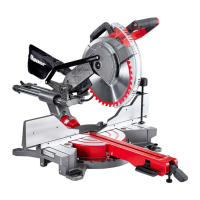
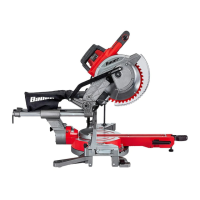
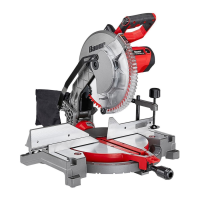
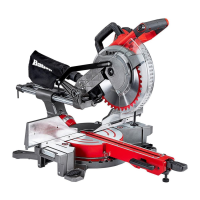
This document is an Owner's Manual & Safety Instructions for a Bauer 10" Dual-Bevel Sliding Compound Miter Saw, model number 19743E-B (Item 57179).

The manual emphasizes the importance of reading all safety warnings and instructions to prevent electric shock, fire, and serious injury. It covers general power tool safety, specific miter saw safety instructions, electrical safety (including grounding and extension cord usage), personal safety, power tool use and care, vibration safety, and maintenance.

Function Description:

The Bauer 10" Dual-Bevel Sliding Compound Miter Saw is designed for cutting wood and wood-like products. It is capable of making various types of cuts, including cross cuts, miter cuts, bevel cuts, and compound cuts. The "sliding" feature allows the saw head to move forward and backward, increasing the cross-cut capacity for wider workpieces. The "dual-bevel" capability means the saw head can tilt both left and right, allowing for bevel cuts without reorienting the workpiece. The saw is intended for precise angle cuts in materials such as dimensional lumber, plywood, particle board, and plastic. It is not to be used with abrasive cut-off wheels for cutting ferrous materials.
Important Technical Specifications:

  • Electrical Rating: 120VAC / 60Hz / 15A
  • Rated No Load Speed: 4500 RPM
  • 45° Cross Cut Capacity: 3-1/2" x 9"
  • 90° Cross Cut Capacity: 3-1/2" x 12-1/2"
  • Maximum Bevel: 48° Left and Right
  • Maximum Miter: 52° Left - 60° Right
  • Saw Blade: 10" Diameter, 5/8" Round Arbor, 4500 Minimum RPM Rating

Usage Features:

  • Mounting: The saw has four bolt holes in its base for mounting to a stable support (e.g., a workbench) to ensure stability and security during operation.
  • Dust Collection: It includes a Dust Collection Bag that slides over the Dust Outlet at the rear of the Saw Head Assembly. Alternatively, the Dust Outlet accepts a 1-1/2" vacuum hose for connection to a dust collection system.
  • Saw Blade Selection: Users must ensure any saw blade used is suitable for the material to be cut, matches the specified diameter (10"), bore diameter (5/8"), and has a speed rating equal to or higher than the tool's 4500 RPM.
  • Lower Blade Guard: The saw features a lower blade guard that must be in place, move freely, and close instantly for safety.
  • Miter Angle Adjustment:
    • The miter table can be adjusted for angles from 52° Left to 60° Right.
    • A Miter Lock Handle is used to unlock and lock the table.
    • A Miter Latch Lever provides detents (stops) at common angles (0°, 15°, 22.5°, 31.6°, 45°, 60° Right).
    • A Detent Latch Button allows overriding these detents for micro-adjustments to any angle on the miter scale.
    • The Miter Angle Indicator can be calibrated for accuracy.
  • Bevel Angle Adjustment:
    • The saw head assembly can be tilted for bevel cuts from 48° Left to 48° Right.
    • A Bevel Lock Handle unlocks and locks the saw head.
    • A Bevel Angle Lock Button enables right bevel angle adjustments or angles greater than 45°.
    • The Bevel Angle Indicator and Bevel Scale show the selected angle.
    • Calibration procedures are provided for 0° and 45° bevel angles using set bolts.
  • Depth Stop: This feature allows for kerfing or rabbet cuts that do not cut entirely through the workpiece. It involves a Depth Adjustment Bolt and Lock Nut to control the cutting depth, and the Depth Stop can be rotated up to disengage.
  • Sliding Fence: The saw has a Right Sliding Fence that can be adjusted and locked with a Fence Lock Knob to support the workpiece and ensure clearance from the blade. Both sides of the fence must be adjusted clear of the blade's cutting path after any angle adjustments.
  • Workpiece Extension Supports: Table Extensions are located on each side of the table, locked by Table Extension Lock Levers. They provide a wider support surface for workpieces and include a Cut Stop Lever for repetitive cuts.
  • Workpiece Clamping: Workpieces should always be clamped or held against both the fence and the table, never cut freehand. Clamps (not included) are recommended.
  • Shadow Cut Line Guide System: This system uses a shadow of the blade to indicate the cut line on the workpiece, aiding in alignment. It can be turned on/off.
  • Cutting Procedure:
    • Always ensure the Trigger is in the off-position before plugging in.
    • Unlock the Head Lock-Down Pin and raise the Saw Head Assembly.
    • Check all adjustment knobs (Miter Lock Handle, Bevel Lock Handle, Fence Lock Knobs, Table Extension Lock Levers) are tight.
    • Place material against the Fence.
    • Align the cut using the Shadow Cut Line Guide System or by aligning the blade with the marked cut line on the waste side.
    • Hold the workpiece securely with the Clamp.
    • Grip the Saw Handle, press the Trigger Lock Button, and squeeze the Trigger to start the saw.
    • Allow the blade to reach full speed before contacting the workpiece.
    • For narrow material, press down lightly ("chopping"). For wide material, pull the Saw Head Assembly forward, press down, and push it toward the rear to make the cut (sliding action).
    • Do not force the saw; use light downward and lateral pressure.
    • After the cut, release the switch, hold the saw head down, and wait for the blade to stop before removing the cut-off piece.
  • Spindle Lock: Used to hold the spindle stationary when changing the saw blade.
  • Carrying Handle: Located on top of the motor for easy transport.
  • Head Lock-Down Pin: Secures the saw head in the down position for storage or transport.

Maintenance Features:

  • General Inspection: Before each use, inspect the tool for loose hardware, misalignment or binding of moving parts, damaged cord/electrical wiring, cracked or broken parts, or any other condition affecting safe operation.
  • Cleaning: After use, wipe external surfaces with a clean cloth. Carefully clean the dust collection chute and the area around the Lower Blade Guard, ensuring it moves smoothly without sticking. Periodically, blow dust out of motor vents using dry compressed air while wearing appropriate PPE.
  • Saw Blade Replacement: The manual provides detailed instructions for safely replacing the 10" saw blade, including loosening the Guard Plate Bolt, removing the Arbor Bolt (which has a left-handed thread), and ensuring the new blade's rotation arrow matches the guard's.
  • Kerf Board Replacement/Adjustment: Instructions are provided for replacing damaged Kerf Boards and adjusting them to ensure blade clearance.
  • Fence Calibration: Procedures are outlined for checking and adjusting the fence to ensure it is perpendicular (90°) to the saw blade for accurate cuts. This involves loosening Fence Adjusting Bolts and gently tapping the fence into position.
  • Troubleshooting Guide: A table lists common problems (e.g., tool not starting, operating slowly, performance decrease, excessive noise, overheating), possible causes, and likely solutions.
  • Service: Any procedures not explained in the manual should be performed by a qualified technician. Damaged power cords or plugs must be replaced by a qualified service technician.

Bauer 19743E-B Specifications

General IconGeneral
BrandBauer
Model19743E-B
CategorySaw
LanguageEnglish

Related product manuals