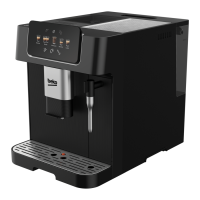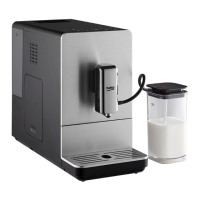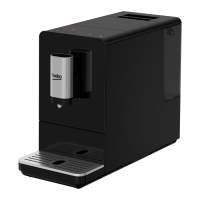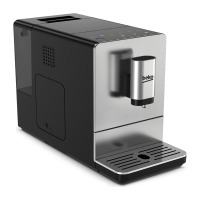
Why is the milk froth from my Beko CEG5331X of poor quality?
- Zzachary63Sep 4, 2025
If the milk froth is of poor quality, the type of milk used may not be suitable for frothing. Semi-skimmed or full-fat cow’s milk generally gives good results.
Why is the milk froth from my Beko CEG5331X of poor quality?
If the milk froth is of poor quality, the type of milk used may not be suitable for frothing. Semi-skimmed or full-fat cow’s milk generally gives good results.
Why does the coffee from my Beko CEG5331X cannot come out from spout?
If the coffee cannot come out from the spout, the empty system function may have been used previously. Press the hot water button until water comes out from the spout.
Why does my Beko Coffee Maker coffee have no cream?
If your coffee has no cream, the coffee beans might not be fresh. Change or use an appropriate brand of coffee beans.
Why is the first cup of coffee from my Beko Coffee Maker poor quality?
The first run of the grinder might not pour a sufficient quantity of coffee powder into the brewing unit. Throw the first cup away; subsequent coffees will be of good quality.
What to do if the hole of Milk tube connector of my Beko CEG5331X is blocked by milk residues?
If the hole of the milk tube connector is blocked by milk residues which are hard to clean, it may be that the milk tube connector has not been cleaned for a long time. Soak the connection milk tube into warm water for an hour, keep using the frothing milk function to clean until water comes from dispenser smoothly. Use a needle or bristle brush to clean the hole.
What to do if coffee is delivered too slowly from my Beko CEG5331X?
If coffee is delivered too slowly or just a drop at a time, the coffee powder might be too fine, blocking the water flow. Adjust the coffee fineness to a bigger dot during grinder operation.
What to do if the internal drip tray of my Beko Coffee Maker is filled with a lot of water?
If the internal drip tray is filled with a lot of water, the coffee powder might be too fine, blocking the water flow. Adjust the coffee fineness to a bigger dot during grinder operation.
Why is my Beko Coffee Maker taking too long to warm up?
If your Beko Coffee Maker is taking too long to warm up, it could be due to excessive scale buildup. Descale the appliance to resolve this issue.
What to do if the coffee from my Beko CEG5331X Coffee Maker is not hot enough?
If the coffee from your Beko Coffee Maker isn't hot enough, the cups or the brewing unit might be too cold. Rinse the appliance at least three times before making coffee to preheat these components.
What to do if Beko CEG5331X Coffee Maker function key is not responding?
If your Beko Coffee Maker panel isn't responding, it might be due to electromagnetic interference or dirt. Try unplugging the appliance and restarting it after a few minutes. Also, clean the panel with the provided cloth.
Safety precautions to avoid electric shocks from live wires or components.
Precautions against hot parts, dispensed drinks, and escaping steam.
General safety measures for handling the appliance and packaging material.
Defines proper usage scenarios and warns against improper use.
Manufacturer's disclaimer regarding damage from misuse or unauthorized actions.
Information on product compliance and environmentally friendly disposal.
Statement on product's compliance with restrictions on hazardous substances.
Guidance on disposing of recyclable packaging materials responsibly.
Instructions for correctly wiring the appliance plug and fuse.
Explains the meaning of various symbols and indicators on the control panel.
Details the functions of the Hot Water, Espresso, Cappuccino, and Latte Macchiato buttons.
Steps to prepare the appliance for first use, including removing protective films.
Instructions on how and when to fill the water tank, with safety warnings.
How to memorize and reset the desired volume for drinks and hot water.
Instructions on how to use the hot water function.
Explanation of operating modes (ECO, Speed, Default) and their settings.
Guidelines for daily cleaning and maintenance of the coffee machine parts.
Steps for initiating and completing the automatic self-cleaning cycle.
Procedure for emptying the system for frost protection or repair.
How to perform a manual rinse cycle for the coffee nozzle.
Advanced settings for customizing coffee and hot water quantities.
A list of issues, their causes, and recommended solutions for appliance malfunctions.
Addresses problems like unresponsive buttons, slow warm-up, and milk frothing issues.
Details the terms, coverage, and exclusions of the manufacturer's guarantee.
Information on how to get customer support and contact details.
| Timer | No |
|---|---|
| Control type | Touch |
| Display type | LCD |
| Product color | Silver |
| Water level indicator | Yes |
| Product type | Espresso machine |
| Capacity in cups | 1 cups |
| Grinder capacity | 125 g |
| Hot water system | - |
| Coffee input type | Coffee beans |
| Coffee maker type | Fully-auto |
| Appliance placement | Countertop |
| Water tank capacity | 1.5 L |
| Coffee beans capacity | 150 g |
| Maximum operating pressure | 19 bar |
| Number of grinder settings | 19 |
| Reservoir for brewed coffee | Cup |
| Number of coffee strength settings | 2 |
| AC input voltage | 220 - 240 V |
| AC input frequency | 50 - 60 Hz |
| Package depth | 240 mm |
| Package width | 385 mm |
| Package height | 440 mm |
| Package weight | 8800 g |
| Harmonized System (HS) code | 8516710000 |
| Depth | 180 mm |
|---|---|
| Width | 410 mm |
| Height | 320 mm |
| Weight | 7500 g |