37 / EN
Refrigerator / User manual
6.2. Protecting plastic surfaces
Oil spilled on plastic surfaces may
damage the surface and must be cleaned
immediately with warm water.
6.3. Door glass
For routine cleaning works, it is
recommended to use water-based cleaning
products that are non-alkali and non-
abrasive.
In order to increase the durability of this
glass against impact and breaking, it has
gone through a tempering process.
Product life extends if it is cleaned regularly
B
WARNING: Cut off power before
cleanng your refrgerator.
• Do not use sharp and abrasve tools, soap,
house cleanng materals, detergents, gas,
gasolne, varnsh and smlar substances
for cleanng.
• Melt a teaspoonful of carbonate n the
water. Mosten a pece of cloth n the water
and wrng out. Wpe the devce wth ths
cloth and dry off thoroughly.
• Take care to keep water away from the
lamp’s cover and other electrcal parts.
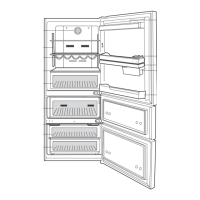
• Clean the door wth a damp cloth. Remove
all contents to remove the door and body
racks. Remove the door racks by lftng
them upwards. Clean and dry the shelves,
then attach back n place by sldng from
above.
• Do not use chlorc water or cleanng
products on the exteror surface and
chrome-coated parts of the product.
Chlorne causes rust n such metal
surfaces.
6.1. Preventing malodour
The product s manufactured free of any
odorous materals. However, keepng
the food n napproprate sectons and
mproper cleanng of nternal surfaces may
lead to malodour.
To avod ths, clean the nsde wth
carbonated water every 15 days.
• Keep the foods n sealed holders. Mcro-
organsms may spread out of unsealed
food tems and cause malodour.
• Do not keep expred and spolt foods n
the refrgerator.
C
Tea s one of the best known
odour-removers.
Place the pulp of the brewed tea
n the product nsde an open
contaner and remove t after 12
hours at the latest. If you keep
the tea pulp nsde the product
for longer than 12 hours, t wll
collect the organsms that cause
the odour so t can be the source
of odour tself.
6 Mantenance and cleanng


 To Next Page