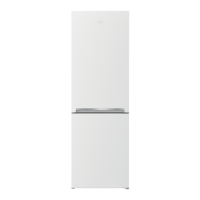
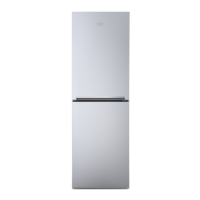
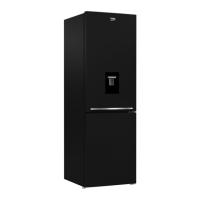
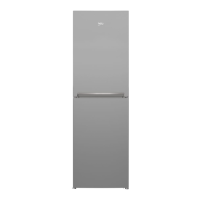
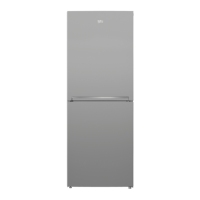
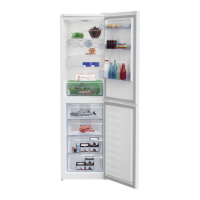
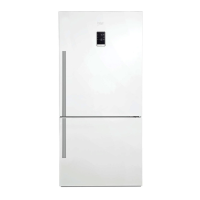
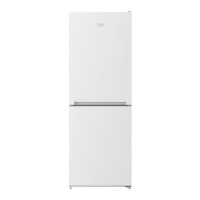
This document is a user manual for Beko refrigerators, covering models CCFM1552W, CRFG1552W, CXFG1552W, CXFG3552W, CRFG3552W, and CCFM3552W. It provides essential information for safe operation, installation, usage, and maintenance of the appliance.
Function Description:
The Beko refrigerator is designed for the storage and freezing of edible foodstuffs. It features a fridge compartment for short-term storage of fresh food and drinks, and a freezer compartment for frozen food storage. The appliance utilizes a cooling system with natural substances (R600a) and cyclopentane insulation, making it environmentally friendly. It is equipped with a temperature setting knob for controlling the internal temperature and various storage components like cabinet shelves, door shelves, a salad crisper, frozen food storage drawers, an egg tray, and a bottle shelf. Some models may also include a fan for improved air circulation.
Important Technical Specifications:
- Refrigerant: The cooling system uses non-CFC/HFC natural substances (R600a).
- Insulation: The insulation uses cyclopentane. Both substances are potentially flammable if exposed to fire, emphasizing the importance of not damaging the cooling circuit.
- Electrical Requirements: The appliance requires connection to a grounded socket with appropriate fuse capacity. The voltage and frequency must match those shown on the rating plate. A 13 A fuse is incorporated in the moulded plug.
- Ambient Temperature: The product is designed to function at ambient temperatures up to 43 °C (90 °F). It can operate even if the ambient temperature falls to -15 °C, with frozen food in the freezer thawing thanks to its Freezer Guard technology. However, temperatures below 0°C may cause freezing in the fridge compartment, so its use is not recommended under such conditions.
- Energy Efficiency: The condenser, located at the back, should be pulled forward as illustrated in the manual to achieve better energy efficiency and lower energy consumption. Energy consumption is measured with the freezer compartment loaded without the top shelf lid and only the bottom drawer in use to achieve maximum loading capacity.
- Illumination: The appliance uses a Bulb/LED for illumination, which is not suitable for household room illumination but is intended to assist users in placing foodstuffs. These lamps are designed to withstand extreme physical conditions, including temperatures below -20 °C (only for chest and upright freezers).
Usage Features:
- Temperature Control: The internal temperature is regulated by a thermostat setting knob, with numbers indicating cooling degrees. Setting 1 is the lowest cooling (warmest setting), and 5 is the highest cooling (coldest setting). The average fridge temperature should be around +5°C.
- Defrosting: The fridge compartment defrosts automatically, with water running to a drain tube via a collection container. The freezer compartment is frost-free and does not require defrosting.
- Food Storage:
- Milk products should be stored in their intended compartment.
- Bottles can be stored in the bottle holder or door shelf.
- Raw meat is best kept in a polyethylene bag at the bottom of the cooler/freezer.
- Hot foods and beverages must cool to room temperature before placing them inside.
- Concentrated alcohol should be stored upright and tightly closed.
- Explosive substances or containers with flammable propellant gases (e.g., canned cream, spray cans) must not be stored in the device due to explosion risk.
- Fridge compartment shelves are suitable for food in pans, covered plates, and closed containers.
- Door shelves are for small and packaged food or drinks (milk, fruit juice, beer).
- The crisper is for vegetables and fruits.
- Door Reversal: The manual provides detailed instructions for reversing the doors, allowing for flexible installation.
- Adjustable Feet: The front legs are adjustable to balance the refrigerator on uneven surfaces.
Maintenance Features:
- Cleaning: Regular cleaning extends the product's service life.
- Always unplug the product before cleaning.
- Do not use gasoline, benzene, sharp tools, abrasive cleaners, soap, or wax polish.
- For non-No Frost products, do not clean water drops or frost on the rear wall of the fridge compartment; do not apply oil or similar agents.
- Use slightly damp microfiber cloths for outer surfaces; avoid sponges or other cloths that may scratch.
- Clean the interior with a solution of one teaspoon of bicarbonate in half a litre of water, then dry thoroughly.
- Ensure no water enters the lamp housing or other electrical items.
- If not used for a long time, unplug, remove food, clean, and leave the door ajar.
- Regularly check and clean door gaskets.
- Remove door and body shelves by pulling them up for cleaning, then slide them back down to install.
- Avoid chlorine-containing cleaning agents on outer surfaces and chromium-coated parts to prevent corrosion.
- Avoiding Bad Odours:
- Keep the refrigerator clean; food residuals and stains can cause odour. Clean with bicarbonate solution every few months.
- Store food in closed containers to prevent microorganisms from spreading.
- Do not keep expired or spoiled food.
- Protecting Plastic Surfaces:
- Avoid placing liquid oils or oil-cooked meals in unsealed containers as they can damage plastic surfaces.
- Clean any spilled oil or smeared oil from plastic surfaces immediately with warm water.
- Troubleshooting: The manual includes a comprehensive troubleshooting guide to address common issues such as the refrigerator not working, condensation, compressor not working, increased operating noise, frequent running, freezing of food items, high temperatures, and shaking/noise. It advises contacting an Authorized Service agent if problems persist after following the instructions.



 To Next Page
 General