Need help?
Do you have a question about the Beko WTL 90019 G and is the answer not in the manual?
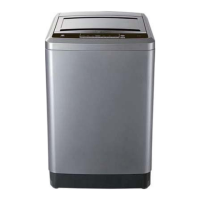
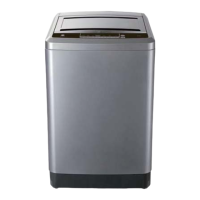
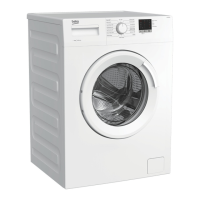
This document serves as a user manual for a Beko Washing Machine, model WTL 90019 G, providing comprehensive instructions for its safe operation, installation, maintenance, and troubleshooting.
The Beko Washing Machine is designed for domestic use, specifically for washing and rinsing laundry. It operates by automatically adjusting the water level based on the laundry weight for optimal washing performance. The machine offers various main programs tailored to different fabric types, soiling levels, and water temperatures, including Auto, Delicate, Blanket, Eco, Normal, Quick, Heavy, and Tub Clean. The "Auto" program automatically selects the best water level and wash course for cotton and blended items, while "Delicate" is suited for machine-washable delicate items like sweaters and cardigans, recommending special purpose detergents. "Blanket" is for bulky items such as blankets and bed sheets, and "Eco" is for smaller loads of lightly soiled laundry, using minimal water. "Normal" and "Quick" programs are for durable cotton and blended clothes with varying soiling levels, with "Quick" being for lightly soiled items in a shorter time. "Heavy" is for heavily soiled durable cotton and blended clothes, automatically setting soaking and hot water functions. The "Tub Clean" program is designed for sanitizing and cleaning the machine itself, recommending no laundry during this cycle.
Beyond main programs, the machine features auxiliary functions such as "Wash," "Soaking," "Rinse," and "Spin." The "Wash" function allows for a standalone wash cycle. "Soaking" is recommended for heavily soiled laundry and can be combined with normal detergent, though it's not available for Eco, Fuzzy, Tub Clean, and Wool programs. "Rinse" is for rinsing or starching laundry separately. "Spin" provides an additional spin cycle or drains water from the machine. The "Air Turbo" button allows for speed drying of laundry, active only if a spin cycle is set and can be adjusted before or during operation. A "Rinse Hold" function is also available, which keeps water in the machine after the last rinse, with the option to drain by pressing the start/pause button to continue spinning. The machine also incorporates a "Child Lock" function to prevent accidental operation by children, activated and deactivated by pressing the "Water level" and "Function" buttons simultaneously for 3 seconds.
Before using the washing machine, users are advised to read the manual thoroughly and ensure proper electrical, water supply, and drainage connections. Laundry should be sorted by fabric type, color, soiling degree, and water temperature, adhering to garment tags. Preparatory steps for laundry include removing metal attachments, emptying pockets, placing small items in laundry bags, fastening zippers, mending tears, and turning trousers and delicate laundry inside out. For energy saving, it's recommended to operate the machine at its highest allowed capacity without overloading, follow detergent instructions, wash lightly soiled laundry with warm or cold water, use faster programs for small loads, avoid soaking and hot water for lightly soiled items, select longer spin times if using a dryer, and avoid excessive detergent.
Detergent and softener usage is detailed, emphasizing adding them before starting a program and never leaving the detergent drawer open during operation. Different detergents are recommended for colored and white laundry, and special detergents for delicate items and woolens. The amount of detergent should be adjusted based on laundry amount, soiling, and water hardness, avoiding overuse. The detergent drawer has compartments for main wash, softener, and bleach. For advanced detergent drawers, there are specific sections for main wash and softener, with a siphon piece in the softener compartment. Simple detergent drawers typically have one compartment for main wash. Liquid, gel, and tablet detergents have specific instructions for placement, with gel and tablet detergents sometimes placed directly into the drum. Starch can be added to the softener compartment, but not with softener, and the machine should be wiped clean after use. Bleaching agents should be added to a dedicated compartment, not mixed with detergent, used sparingly, and not poured directly onto clothes or used for colored items.
The control panel features an On/Off button, Start/Pause button, Air Turbo button, Auxiliary Function button, Water Level button, Delayed Start Time button, and Function button, along with a display for remaining time, delay start time, and error messages. The Start/Pause button allows pausing and restarting operations, and changing the washing procedure mid-cycle. The Water Level button enables manual selection of water levels, active during standby or adjustable during operation by pausing and restarting. The Program Select button cycles through available washing programs.
Regular maintenance and cleaning are crucial for extending the product's service life and preventing common issues. The detergent drawer should be cleaned regularly (every 4-5 washing cycles) to prevent powder accumulation. This involves pulling the drawer forward, turning it upwards, taking it out, and cleaning it with water. The machine's body and control panel should be wiped with soapy water or mild gel detergents and dried with a soft cloth.
Water intake filters, located at the end of each water intake valve and hose, need cleaning when dirty. This process involves closing the taps, removing hose nuts to access filters, cleaning them with a brush (or pliers if very dirty), cleaning filters on the flat ends of hoses with gaskets under running water, and then replacing them and tightening nuts by hand.
Draining remaining water and cleaning the pump filter is also essential, especially if the machine fails to drain water or every 3 months. This prevents solid items from clogging the pump impeller. The procedure involves unplugging the machine, opening the filter cap by pressing a tab and pulling the cover, placing a container to catch water, loosening the pump filter anticlockwise until water flows, removing the filter completely once water is drained, cleaning residues and fibers around the impeller, and then reinstalling the filter.
For the fuzz collector, maintenance involves pushing it out, opening and cleaning it, ensuring the filter rubber is in its original position, and reassembling it.
Troubleshooting guidance is provided for common problems such as power cuts, water not draining, the machine not starting, frozen hoses, water leaks, water not being supplied, and loud noises/vibrations during spinning. Error messages like E1 (Water intake over time), E2 (Water pumping over time), E3 (Unbalance), E4 (Over flow), E5 (Frequency out of range), and E6 (Door open) are explained with corresponding solutions. Users are warned against attempting to repair non-functional products themselves and advised to consult a dealer or Authorized Service Agent if problems persist.
 General
| Capacity | 9 kg |
|---|---|
| Spin Speed | 1400 rpm |
| Dimensions (H x W x D) | 84 cm x 60 cm x 59 cm |
| Energy Efficiency Class | A+++ |
| Maximum Spin Speed (rpm) | 1400 rpm |

 To Next Page