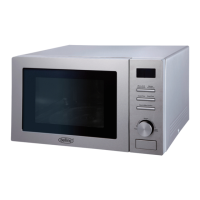
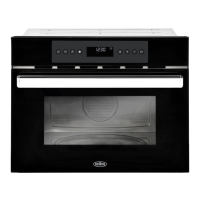
· When the oven door is open and in standby mode – (if the oven door is left open the light will automatically switch off after
ten minutes to save energy).
Cooking guidelines
Warning – always read the safety precautions before using the microwave.
Always follow these recommendations when cooking with a microwave oven:
• Always prick foods with a peel or skin (baking potatoes, sausages, etc.) to prevent them bursting,
• Only use containers or dishes which are suitable for microwave cooking (e.g. heatproof glass).
• Microwave cooking works by making water molecules in food vibrate against each other to create heat. Therefore
foods which contain little water (like bread or popcorn) may cease cooking and start burning very quickly which
the risk of fire and damage to the appliance. You should, therefore, not exceed recommended cooking times and
should monitor the cooking process closely.
• Do not heat oil in the microwave.
• If cooking in several containers at once, space the containers out evenly on the turntable.
• Do not use metal wire twist tags; use plastic clips if required for closing cooking bags. Prick cooking bags to allow
steam and pressure to escape.
• Foods will require turning and stirring to ensure even heating.
• It is normal for steam to condense to water on the oven door glass, especially when the kitchen is cold. This will
not affect the cooking results. Simply wipe the water away after cooking when the appliance has cooled.
• When heating liquids, bear in mind that using a wider container can help steam to evaporate more easily. Bubbles
can form unevenly when liquids are microwaved, resulting in delayed eruptive boiling. This means that the cup or
container could suddenly boil over when removed from the oven with the associated risk of scalding. Placing a
plastic boiling rod (available from kitchenware stores) in the cup or container during microwaving will help to
reduce this risk, but you should still exercise caution when removing the cup or container from the oven.
• The greater the amount of food, the longer the cooking time will be. As a general rule: double the quantity =
double the time; half the quantity = half the time.
• The lower the temperature of the food, or the lower the microwave power level, the longer the cooking time will
be.
• Foods containing a lot of liquid (water) will heat up more quickly.
• Always distribute food evenly on the turntable; denser foods should be placed on the outer part of the turntable
and less dense foods on the inner part of the turntable.
• When you need to stir or turn the food, simply open the door and the microwave function will pause
automatically. The microwave function will start again when the door is closed and ‘start’ is touched.
• Covering foods with a plastic cover or microwave-safe cling film will reduce cooking times and retain moisture and
flavours, but the cover or cling film must have vents to allow steam and pressure to escape.
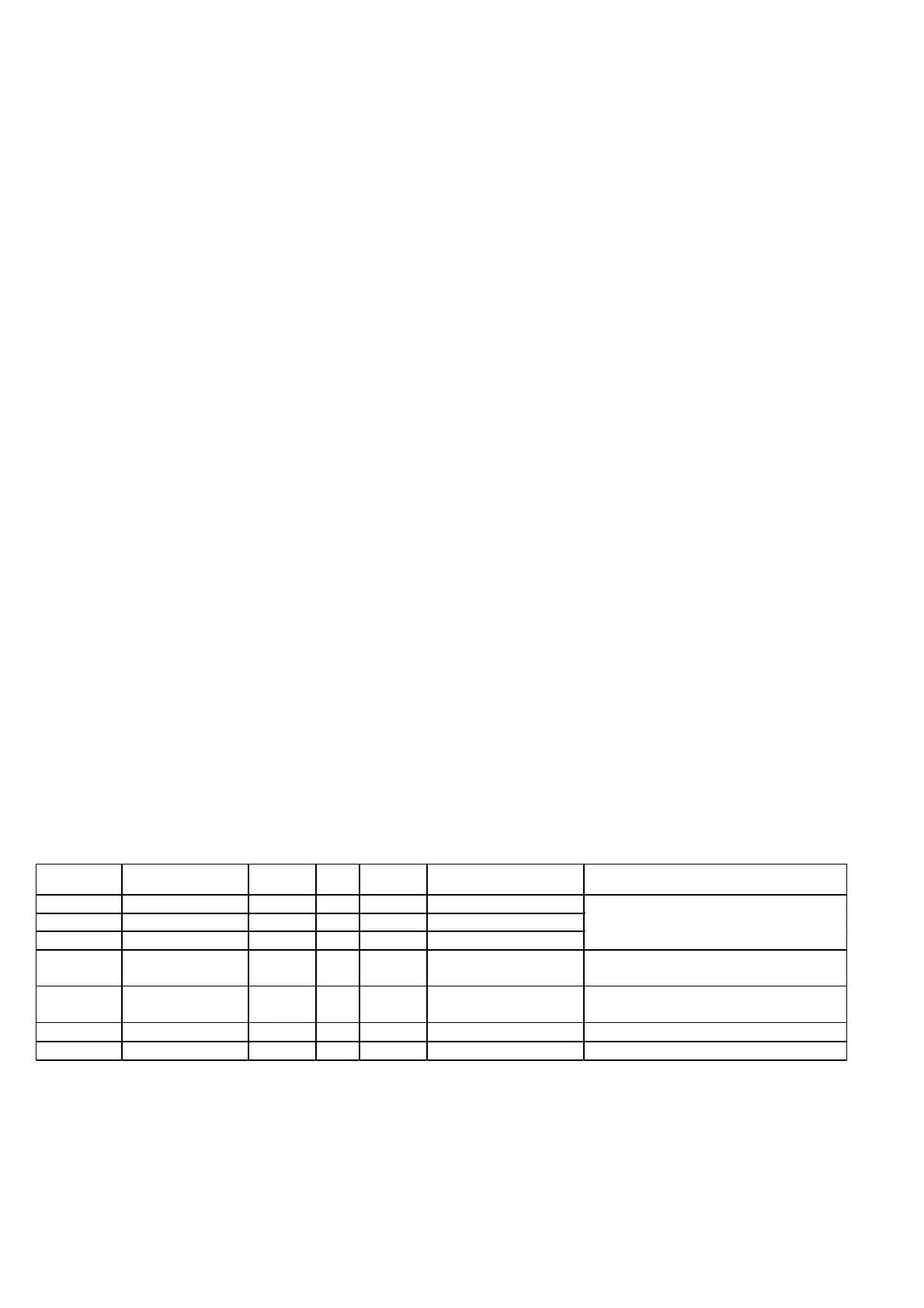
• The following table gives guidance on cooking vegetables in the microwave.
• Please bear in mind that these figures are only for guidance, and actual required cooking times may vary
depending on the initial temperature, moisture content and quantity of the food. It may be necessary to adjust the
cooking duration times and/or microwave power level a little.
When defrosting, use only dishes that are appropriate for microwaves, i.e. glass.
• The defrosting time depends on the quantity and thickness of the food. Because of this, it is useful to freeze food
in smaller, more convenient portions.
• Distribute the food well. You can use aluminium foil to shield delicate parts of the food, provided that the pieces of
aluminium foil are relatively small relative to the size of the food. Important: The aluminium foil should not come
into contact with the inner cavity of the oven as this may cause electrical arcing.
• Thick portions of food should be turned over several times in the process of defrosting.
• Distribute the frozen food as evenly as possible since narrow and thin portions defrost more quickly than the
thicker and broader parts.
Food Weight (gm) Water (ml) Power Time (Min)
Additional Standing Time
(min)
Cauliflower 500 100 800 9 -11 2 - 3
Broccoli 300 50 800 6 - 8 2 - 3
Mushroom 250 25 800 6 - 8 2 - 3
Peas, Carrots,
Frozen Carrots
7 - 9
8 - 10
2 - 3
2 -3
Cut into slices, cover well
Potatoes 250 25 800 8 - 10 2 - 3
Peel a nd cut i nto rea s onabl e s i ze, cover wel l
Chi ves 250 25 800 5 - 7 2 - 3
Cut into slices, cover well
Frozen cabbage
300 50 800 6 - 8
2 - 3
Cover wel l
Cut into slices, cover well


 To Next Page
 Loading...