REV E 4-4 119293
4. Reconnect the negative battery cable.
5. Close seat platform and re-install seat platform hard-
ware.
Transaxle Drive Belt
Inspect belts frequently for wear and serviceability.
Replace a belt that shows signs of:
• severe cuts
• tears
• separation
• weather checking
• cracking
• burns caused by slipping.
Slight raveling of belt covering does not indicate failure,
trim ravelings with a sharp knife.
Inspect the belt pulley grooves and flanges for wear. A new
belt, or one in good condition, should never run against the
bottom of the groove. Replace the pulley when this is the
case, otherwise, the belt will lose power and slip excessively.
Never pry a belt to get it on a pulley as this will cut or dam-
age the fibers of the belt covering.
Keep oil and grease away from belts, and never use belt
dressings. Any of these will destroy the belt composition in a
very short time.
Belt adjustment
The transaxle drive belt tension remains constant by
means of a tension idler and spring. There is no tension
adjustment of this belt. Figure 4-9
NOTE: Inspect the belt every month and replace as
needed. Replace the belt every two (2) years.
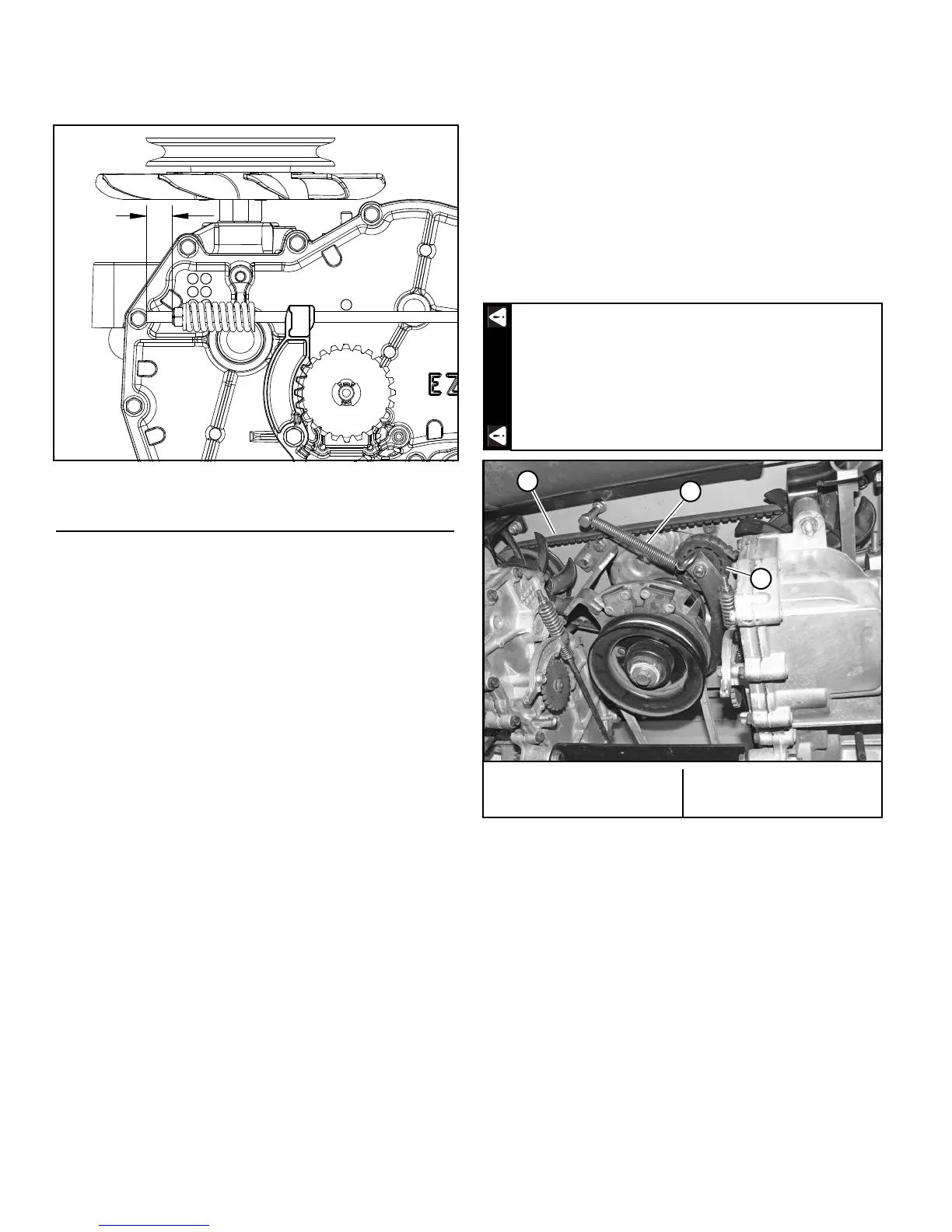
Figure 4-8
If the transaxle belt fails, loss of control will occur
especially when operating on a slope. If you lose
steering control while operating the machine, place
the steering control levers in the park brake position
immediately. Inspect the machine and involve your
dealer to resolve the problem.
A. Transaxle drive belt
B. Spring
C. Tension idler
Figure 4-9


 To Next Page