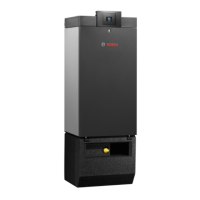
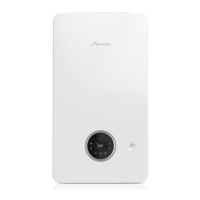
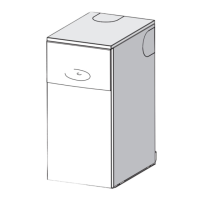
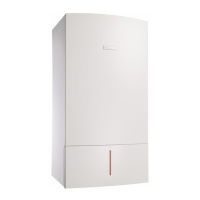
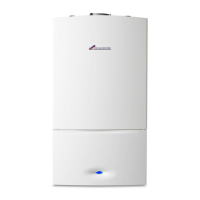
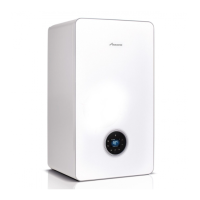
This document serves as an operation manual for the Bosch Condens 7000 WP series of wall-mounted gas condensing boilers. It provides comprehensive instructions for operators on how to safely and efficiently use, maintain, and troubleshoot the heating system.
Function Description
The Condens 7000 WP boiler is designed for the heating of boiler water and for domestic hot water (DHW) heating. It operates as a gas condensing boiler, which is an energy-efficient technology that recovers heat from flue gases, leading to improved efficiency compared to conventional boilers. The boiler is intended for use with Bosch control units to ensure optimal performance and system integration.
The boiler features a control panel with a display that provides an overview of its operational status, including heating mode, hot water status, and any diagnosis codes. It also shows the heating water pressure and burner activity. The system includes various symbols on the display to indicate different operational states, such as internet connection, connection with a wireless controller, heating on/off, hot water on/off, holiday program, cleaning function, and manual mode.
The boiler incorporates frost protection, which activates in summer mode or if heating mode is blocked, to prevent the system from freezing. Additionally, an anti-seizing function is present to prevent the heating pump from seizing up during long periods of inactivity, although this function is not active when the device is switched off.
The system is designed to comply with European and national requirements, and its energy data display provides estimates of energy consumption for gas and electricity, which can be used for comparative purposes over different timeframes.
Usage Features
Operators can turn the unit on and off using a dedicated switch. Upon switching on, if "Siphon fill. prog." appears on the display, the appliance will operate at minimum heat output for 15 minutes to fill the condensate trap.
The manual details how to open and close the gas valve and service shut-off valves, which are crucial steps for preparing the boiler for operation or for decommissioning.
The boiler allows for setting the maximum flow temperature for heating, with options suitable for underfloor heating systems (approx. 50 °C), radiator heating systems (approx. 75 °C), and convector heating systems (approx. 80 °C). The current flow temperature is displayed, and operators can adjust it using the control panel keys.
For domestic hot water, operators can set the desired DHW temperature. The manual includes a warning about the risk of scalding when changing the maximum DHW temperature. It also advises setting the DHW temperature to 60 °C if the water is calcareous (hard water) to protect against limescale and reduce service work.
The boiler features a menu system for various settings. Operators can access the menu, navigate through items using arrow keys, select items with an OK key, and change values. Settings include heating mode (On/Off/Preheat/Eco), DHW operation, and information display (system pressure, hot water temp, weather compensation, key for internet connection). The menu also provides access to energy consumption data (gas and electricity for different periods), time and date settings, parental lock, display brightness, key illumination, and language selection. A cleaning function and emergency mode are also accessible through the menu.
For standard decommissioning, the unit can be switched off, and the gas valve below the boiler should be closed. In situations where there is a risk of frost and the appliance remains switched off, it is important to ensure a sufficient flow rate at all radiators, close the gas valve, and drain the entire heating system.
Maintenance Features
The operation manual emphasizes the importance of regular inspection and service to ensure the safe and environmentally sustainable operation of the heating system. The system operator is responsible for ensuring that maintenance or inspections are not omitted or incorrectly carried out, as this can lead to personal injury or material damage.
Maintenance work, including modifications or repairs, must only be carried out by an approved contractor. The manual specifies an annual inspection and maintenance every 2 years or after 4000 hours of burner runtime, whichever occurs first. Any defects in the heating system should be rectified immediately, regardless of the annual inspection schedule.
For cleaning and care, operators are advised not to use abrasive or aggressive cleaning agents and to clean the casing with a damp cloth (soapy solution).
The manual provides guidance on troubleshooting faults. When a fault occurs, a fault code (e.g., 228) and text are displayed. The recommended first step is to switch the device off and back on again, or to press the arrow keys until "Reset" is displayed. If the fault persists, operators should contact an approved contractor or customer service, providing them with the displayed fault code and device data (device designation, serial number, commissioning date, and system installer, which can be found on the underside of the appliance).
Regarding topping up heating water, the manual states that this process varies by system and advises operators to ask their specialist for instructions. It warns against topping up a hot boiler with cold water due to the risk of thermal stresses and recommends filling the system only when cold, with a maximum flow temperature of 40 °C. The maximum pressure of 3 bar at maximum heating water temperature should not be exceeded.
For bleeding radiators, if they heat up at different rates, operators are instructed to bleed them.
The document also includes important safety instructions related to gas leaks, flue gas poisoning, and carbon monoxide, stressing the need to contact approved contractors for any suspected issues and to never modify parts through which flue gas is routed. It also highlights the importance of adequate ventilation for open flue operation.


 To Next Page
 General