EasyManua.ls Logo

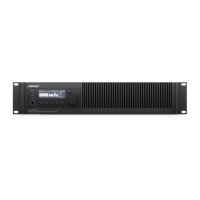
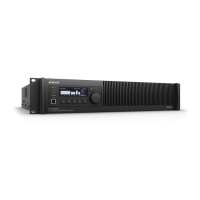
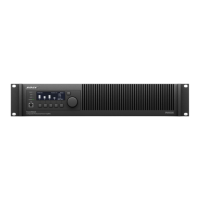
Bose PM8500 / PM8500N PM8250 - User Manual

Bose PM8500 / PM8500N PM8250
52 pages
Print Icon
To Next Page IconTo Next Page
Loading...
PowerMatch
®
Configurable Professional Power Amplifiers
Installation and Operating Guide
PM8500 / PM8500N
PM8250 / PM8250N
PM4500 / PM4500N
PM4250 / PM4250N

Table of Contents

Questions and Answers

  • A
    Alec RodriguezAug 4, 2025
    How to troubleshoot a Bose Amplifier with no power?
    • M
      michael16Aug 4, 2025
      To resolve a no power issue with your Bose Amplifier, first, turn on the power switch. The Clip, Limit, and Signal LEDs should light up for about 15 seconds, after which the amplifier should be ready. The LCD screen will display the firmware version for approximately 10 seconds, then switch to the operating screen. Also, check the power cable and ensure the retaining clip is secure, and verify the mains circuit.
  • S
    Steven SanchezAug 7, 2025
    What to do if my Bose PM8500 / PM8500N PM8250 has power but no sound?
    • R
      Robert ChristianAug 8, 2025
      If your Bose Amplifier has power but no sound, start by checking the LCD screen for output meter activity. If there's no signal, check the Input Meter screen for a signal. If there's still no signal, troubleshoot the source or cabling. Also, ensure that input and output signals are not muted, the Input Routing is configured properly, the Input Source is set to the correct signal type (analog or digital), the Output Attenuate is not set too low, the loudspeakers are correctly wired, the Output Configuration is correctly set, and Standby Mode is not active.
  • J
    Jennifer MeadowsAug 12, 2025
    Why is the sound so low on my Bose PM8500 / PM8500N PM8250?
    • B
      Brooke SmithAug 12, 2025
      If your Bose Amplifier has power, but the sound is low, verify the source level by monitoring the Input Meter. Also, ensure that Input Routing and Input Sensitivity are set for optimal gain. Then, check that Output Attenuate is not set too low, the loudspeakers are wired correctly, the Output Configuration is correct, and Limiting parameters are set properly.
  • R
    Russell PriceAug 16, 2025
    What to do if USB is connected to PC but Bose ControlSpace Designer software doesn't find the Amplifier?
    • Q
      qbarnettAug 16, 2025
      If the ControlSpace Designer software isn't detecting your Bose Amplifier when connected via USB, try these steps: 1. Unplug and replug the USB connector. 2. Uninstall the ControlSpace Designer software, download the latest version, and reinstall it. 3. Restart your PC and try again. 4. Try a different USB port on your computer. 5. Try a different USB cable.
  • S
    Susan ThomasAug 21, 2025
    Why isn't my Bose PM8500 / PM8500N PM8250 Amplifier found by ControlSpace Designer software over Ethernet?
    • A
      Aaron DiazAug 21, 2025
      If your PowerMatch Bose Amplifier isn't being found by the ControlSpace Designer software over the network, check the amplifier's IP address. Ensure no other device on the network has the same address and that ControlSpace Designer is connected to the same subnet as the amplifier. Try a different CAT5/6 cable. You can also launch a Windows Command prompt and "ping" the amplifier's IP address to check for successful replies.
  • T
    Timothy FarrellAug 25, 2025
    Why does my Bose PM8500 / PM8500N PM8250 sound unnatural?
    • W
      William DavidsonAug 26, 2025
      If the sound from your Bose Amplifier is unnatural, check that all DSP functions (EQs, Limiter, Band Pass, Delay) are set appropriately.
  • E
    Erik WalkerAug 29, 2025
    How to unlock the front panel of a Bose PM8500 / PM8500N PM8250 if the combination is lost?
    • W
      whitekatrinaAug 29, 2025
      To unlock the front panel of your Bose Amplifier when the combination is lost, use ControlSpace® Designer™ software to connect to the amplifier.

Summary

Introduction to PowerMatch Amplifiers

Product Features Overview

Details the key features of the PowerMatch amplifier series, including channel options and power levels.

Amplifier Line Overview

Provides a summary of the PowerMatch amplifier models and their differences, including connectivity.

Controls, Display, and Connectors

Front Panel Elements

Describes the front panel controls, display, LEDs, and connectors for operating the amplifier.

Rear Panel Connectors

Details the various input, output, and communication connectors found on the rear panel.

Hardware Installation

Unpacking and Contents

Lists the items included in the product box and accessory packs for initial setup.

Rack Mounting and Ventilation

Guides on properly mounting the amplifier in a rack and ensuring adequate airflow for cooling.

AC Mains Requirements

Specifies the necessary AC power outlet requirements and considerations for optimal operation.

Making Connections

Connection and Configuration Steps

Outlines the sequential steps for setting up a PowerMatch amplifier for the first time.

Power and Standby Connections

Covers the procedure for connecting the amplifier to AC power and managing standby mode.

Wiring Input and Output Connectors

Input Connector Details

Explains how to connect balanced and unbalanced analog input signals using terminal block connectors.

Output Connector Modes

Details the QuadBridge™ technology and available output modes for loudspeaker connections.

System Communication and Faults

Fault Notification and Serial Communication

Describes the fault notification output circuit and serial data communication via Ethernet.

Setup and Configuration Process

DSP Signal Flow and Configuration Methods

Illustrates the DSP signal flow and outlines the three methods for amplifier configuration.

Front Panel Controls and Operation

Front Panel Components Description

Details the function of each control, indicator, and the LCD screen on the front panel.

Front Panel Menu Navigation

Explains the hierarchical structure of the front panel menu system for navigation.

DSP Configuration Details

Speaker Presets, Array EQ, and Delay

Details how to configure speaker presets, array EQ parameters, and output delay settings.

Configuration Parameters

Limiting and Digital Input Range

Covers adjusting limiter parameters for loudspeaker protection and setting digital input ranges.

Input Routing and Output Modes

Guides on assigning input signals to output channels and configuring various output modes.

Utility and System Settings

Standby Mode and Alarm Management

Explains how to control standby mode and access the alarm log for system monitoring.

Network, Device ID, and Panel Lock

Covers network setup, device identification, and front panel control locking mechanisms.

Display and Factory Reset

Details how to adjust display settings and restore factory default configurations.

Firmware Version Information

Describes how to view the amplifier's firmware version and related software details.

Advanced Configuration

Setting Limiter for 3 rd Party Loudspeakers

Provides steps and formulas for setting the limiter function for non-Bose loudspeakers.

Sample Output Configurations

Illustrates example configurations for specific loudspeaker setups like RoomMatch arrays and subwoofers.

Maintenance Operations

Updating Firmware and EQ Presets

Guides on how to update amplifier firmware and loudspeaker EQ files using ControlSpace Designer.

Saving and Recalling Amplifier Settings

Explains how to save and load amplifier settings via PC, USB, or network connections.

Alarm Log and Fault Indicator

Fault Condition Analysis

Details common fault texts, their meanings, and suggested resolutions for troubleshooting.

Troubleshooting Common Issues

Power and Sound Problems

Provides solutions for issues related to no power, no sound, or low sound output from the amplifier.

Connectivity and Panel Issues

Offers troubleshooting steps for PC connectivity problems and front panel lockout issues.

Appendices and Specifications

Interface Comparison Table

Compares the functionality available via the front panel versus ControlSpace Designer software.

Common Technical Specifications

Lists general audio performance, DSP, and control specifications common to all PowerMatch models.

Model-Specific Specifications

Provides detailed technical specifications for each PowerMatch amplifier model (PM8500, PM8250, PM4500, PM4250).

AC Current Draw and Thermal Dissipation

Power Level Data Tables

Presents data on AC current draw and thermal dissipation for various power levels and load configurations.

Additional Resources

Bose PM8500 / PM8500N PM8250 Specifications

General IconGeneral
Amplifier TypeClass D
Gain32 dB
Frequency Response20Hz - 20kHz (±0.5dB)
Signal to Noise Ratio>100dB
THD+N<0.05%
Power Requirements100-240V ~ 50/60 Hz
Power Output (per channel, PM8250)250W

Related product manuals