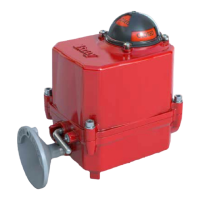
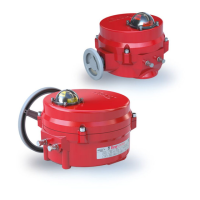
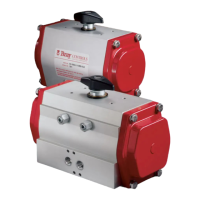
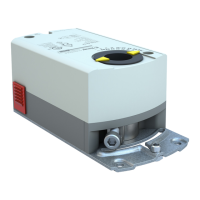
The Bray Series 71 Electric Actuator is a quarter-turn electric actuator designed for the automated control of valves and other quarter-turn devices. It is available in various configurations to suit different applications and control requirements.
Function Description:
The primary function of the Series 71 actuator is to provide automated, reliable, and precise control over quarter-turn valves (such as ball, butterfly, and plug valves) and other quarter-turn devices. It converts electrical energy into mechanical torque to open, close, or modulate the position of the connected device. The actuator is designed for continuous duty and can be operated manually via a declutchable handwheel in the event of power failure or for maintenance.
Important Technical Specifications:
- Torque Output: The actuator offers a standard operating speed of 30 seconds for single-phase line-powered units, with an operational speed of 24VAC/DC units rated for 50% duty. Torque output is rated up to 531 lb-in (60 Nm).
- Voltage Options: Available in 120VAC, 24VAC/VDC, 230VAC, and 24VDC/AC power options, catering to different electrical system requirements.
- Control Options:
- On/Off Control: Standard for basic open/close operations.
- Modulating Control: Allows for precise positioning of the valve at intermediate points between fully open and fully closed, often used in process control applications.
- Interposing Relay Board (IRB): For 120VAC On/Off actuators, the IRB provides a simple and effective means of controlling the actuator's direction (open/close) using a single direction terminal. It includes a time delay to prevent "drop-out" and "pull-in" issues.
- On/Off Controller: For 24VAC/DC actuators, this controller provides a reference direction signal and DC power to an H-bridge for power and control. It handles instantaneous switching of the command signal and enforces a short timing delay.
- S71 Servo Controller: For modulating applications, this controller provides precise control over the actuator's position based on an analog input signal (e.g., 4-20mA, 0-10V). It includes an onboard protective fuse and is available for both 120/230V and 24V power supplies.
- Electrical Connections: Features terminal strips for easy wiring. Auxiliary switches are available for remote indication of valve position.
- Enclosure: The actuator is designed to be weatherproof and robust, with a high-quality polyester powder coat that offers exceptional UV protection and chemical resistance.
- Indicator: A visual indicator (dome or flat) provides a clear indication of the valve's position (open/closed).
- Limit Switches: Internal limit switches are adjustable to set the desired open and closed positions of the valve, offering 90° travel between open and close positions.
- Heater (Optional): An optional heater is available to prevent condensation from forming inside the actuator, especially in environments with fluctuating temperatures.
- Receptacles (Optional): Plug-in receptacles are available for simplified wiring and connection to control systems.
Usage Features:
- Manual Override: All Series 71 actuators are equipped with a declutchable manual override handwheel. This allows for manual operation of the valve in case of power failure, during commissioning, or for maintenance. To engage the handwheel, the declutchable lever is pushed in, and the handwheel is turned to the desired position.
- Easy Installation: The actuator is designed for direct mounting on Bray valves. Proper mounting hardware and the S71 actuator can be installed onto other quarter-turn valves or devices. The standard mounting position for the actuator orients its handwheel in a vertical plane and parallel to the pipeline. It can also be mounted on a vertical pipe, provided the conduit entries are positioned to prevent condensation.
- Adjustable Travel Limit Switches: The standard factory setting for the travel limit switches allows 90° travel. These switches can be adjusted to customize the open and closed positions for specific applications.
- Visual Position Indicator: The dome or flat indicator provides a quick and clear visual reference of the valve's current position (open, closed, or intermediate).
- Remote Operation: The actuator can be controlled remotely via electrical signals, making it suitable for integration into automated control systems.
- Troubleshooting Chart: A comprehensive troubleshooting chart is provided in the manual to assist users in diagnosing and resolving common issues such as incorrect wiring, actuator operating in reverse, limit switches being depressed, low voltage, motor not rotating, corrosion, water leakage, and power failures.
Maintenance Features:
- Modular Design: The actuator's design allows for easy disassembly and reassembly of key components, facilitating maintenance and repair. Exploded views of the cover, base, indicator shaft, and heater/motor assemblies are provided to aid in component identification and replacement.
- Cover Removal: The cover can be easily removed for access to internal components for inspection, adjustment, or repair.
- Heater Maintenance: If equipped with a heater, it should be regularly checked to ensure it is functioning correctly to prevent condensation. The heater surface can reach temperatures up to 392°F (200°C), so caution is advised during maintenance.
- Regular Inspections: The manual recommends regular inspections and maintenance every 6 months or 5000 cycles (whichever comes first) to ensure optimal performance and longevity.
- Component Replacement: The manual includes detailed lists of components, part numbers, and quantities for various assemblies (cover, base, indicator shaft, heater/motor), enabling easy ordering and replacement of parts.
- Wiring Access: The wiring compartment is easily accessible for inspection, modification, or repair of electrical connections.
- Preventive Measures: The manual emphasizes the importance of proper installation, including ensuring a ground wire is attached, using appropriate wiring gauges, and maintaining the integrity of the actuator enclosure to prevent moisture ingress.
- Storage: Actuators should be stored in a weatherproof and clean environment, protected against dust, dirt, and vibration, to prevent deterioration and ensure readiness for use.

 Need help?
 General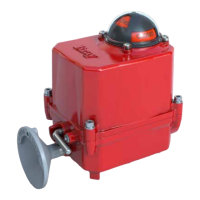

 To Next Page