22
CHIMNEY CLEANING
a. Creosote Formation – When any wood is burned slowly, it produces tar and other organic vapors, which combine with expelled
moisture to form creosote. e creosote vapors condense in the relatively cool chimney ue or a newly started re or from a slow-
burning re. As a result, creosote residue accumulates on the ue lining. When ignited, this creosote makes an extremely hot re,
which may damage the chimney or even destroy the house. Despite their high e ciency, pellet stoves can accumulate creosote
under certain conditions.
b. Soot and Fly Ash: Formation and Need for Removal - e products of combustion will contain small particles of y ash. e y
ash will collect in the exhaust venting system and restrict the ow of the ue gases. Incomplete combustion, such as occurs during
startup, shutdown, or incorrect operation of the room heater will lead to some soot formation which will collect in the exhaust
venting system. e exhaust venting system should be inspected at least once every year or ton of pellets burned to determine if
cleaning is necessary.
c. Inspection and Removal – e chimney connector and chimney should be inspected annually or per ton to determine if a creosote
or y ash build-up has occurred. If creosote has accumulated, it should be removed to reduce the risk of a chimney re. Inspect the
system at the stove connection and at the chimney top. Cooler surfaces tend to build creosote deposits quicker, so it is important to
check the chimney from the top as well as from the bottom.
e creosote should be removed with a brush speci cally designed for the type of chimney in use. A quali ed chimney sweep can
perform this service. It is also recommended that before each heating season the entire system be professionally inspected, cleaned and,
if necessary, repaired.
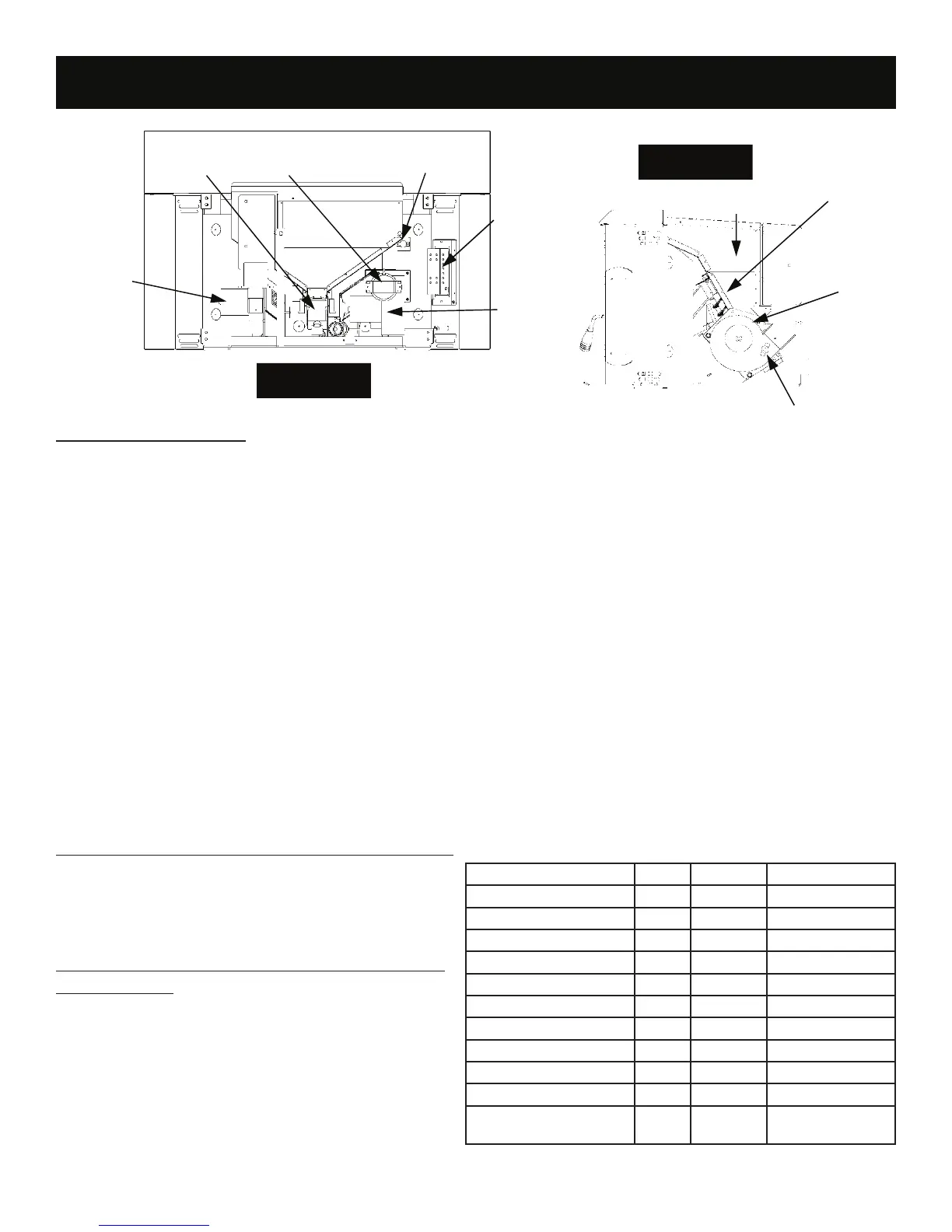
To clean the chimney, detach the vent at the combustion blower transition where it is attached to the blower. (See Fig. 29 for the P24
Insert)
RECOMMENDED MAINTENANCE SCHEDULE
Use this as a guide under average-use conditions.
Gasket around door and door glass should be inspected and
repaired or replaced when necessary (see “REPLACEMENT
PARTS”). is unit’s door uses a 5/8” diameter rope gasket.
REMOVAL AND REPLACEMENT OF BROKEN
DOOR GLASS
While wearing leather gloves (or any other gloves suitable for
handling broken glass), carefully remove any loose pieces of glass
from the doorframe. Dispose of all broken glass properly. Return
the damaged door to your Breckwell Dealer for repair or replace-
ment.
Neither the appliance owner nor any other unauthorized
person(s) should replace the door glass. An authorized Breckwell
dealer must perform all repairs involving door glass.
Daily Weekly Annually or per Ton
Burn Pot Stirred Emptied
Glass Wiped Cleaned
Combustion Chamber Brushed
Ashes Emptied
Interior Chambers Vacuumed
Heat Exchange Tubes Two passes
Combustion Blower Blades Vacuumed / Brushed
Convection Blower Impeller Vacuumed / Brushed
Vent System Cleaned
Gaskets Inspected
Hopper (end of season) Emptied and vacu-
umed
MAINTENANCE
FIGURE 28a
FIGURE 28b
COMB.
BLOWER
AUGER
MOTOR
AIR
SWITCH
CONTROL
BOARD
CONV.
BLOWER
HIGH TEMP
THERMODISC
COMB.
BLOWER
POF
THERMODISC
PELLET
HOPPER
AUGER
SHAFT


 To Next Page