EasyManua.ls Logo

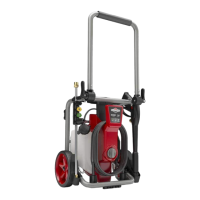
Briggs & Stratton Electric Pressure Washer - User Manual

Briggs & Stratton Electric Pressure Washer
64 pages
Print Icon
To Next Page IconTo Next Page
Loading...
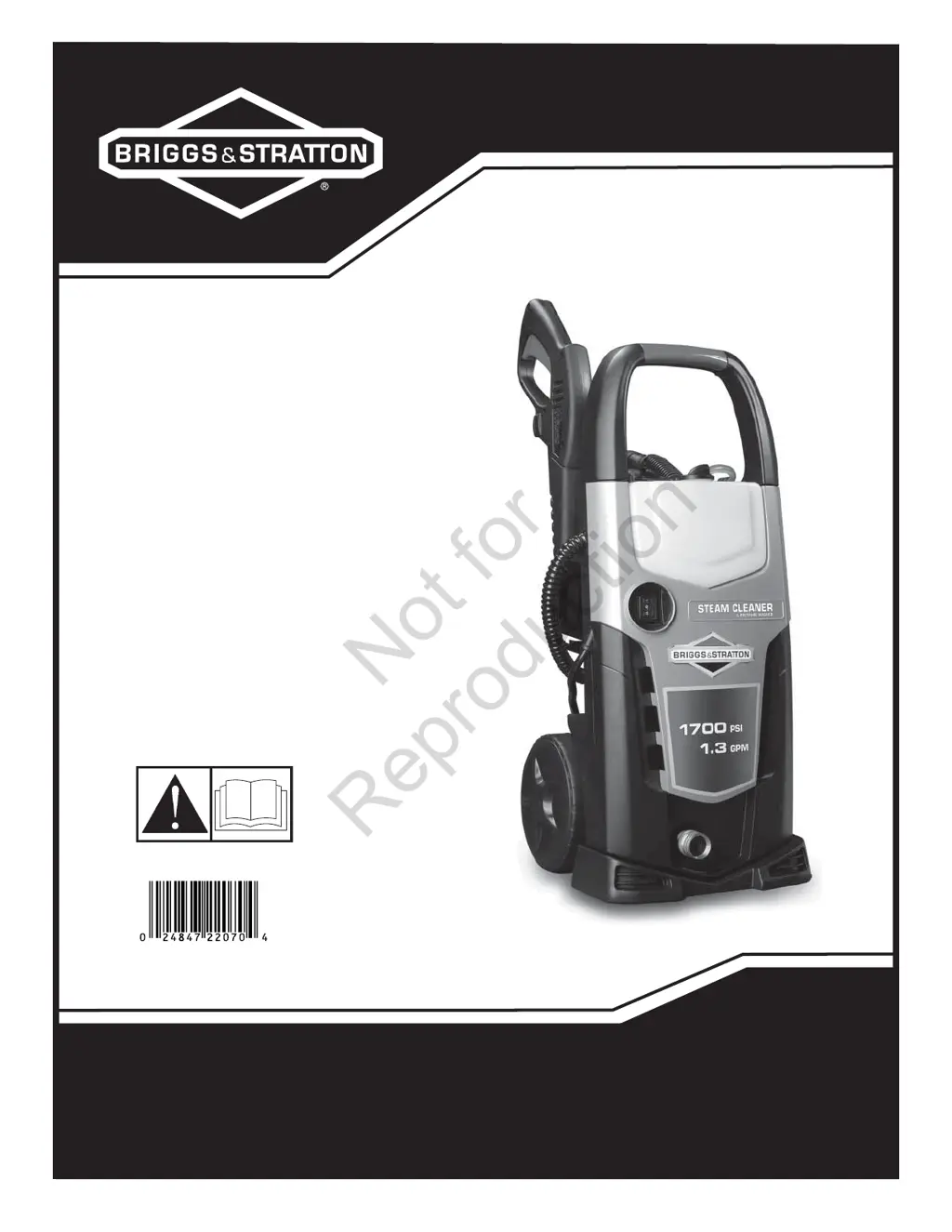
Electric
Pressure Washer
OPERATOR’S
MANUAL
This pressure washer is rated in accordance to the Pressure Washer Manufacturers Association
(PWMA) standard PW101-2010 (Testing and Rating Performance of Pressure Washers).
BRIGGS & STRATTON POWER PRODUCTS GROUP, LLC
MILWAUKEE, WISCONSIN, U.S.A.
Manual No. 315650GS Revision -
Not for
Reproduction

Table of Contents

Questions and Answers

  • L
    lmcmahonJul 25, 2025
    Why does my Briggs & Stratton Pressure Washer have low water volume?
    • T
      Thomas BellJul 25, 2025
      Low water volume in your Briggs & Stratton Pressure Washer can arise from several causes. Check if the water inlet is blocked and clear it if necessary. Ensure you have an adequate water supply to the unit. Inspect the inlet hose for kinks or leaks; straighten the hose or patch any leaks found. A clogged inlet hose strainer could also be the culprit, so clean it. If your water supply is over 100°F, switch to a cooler supply. Also, examine the high-pressure hose for blockages or leaks, clearing any obstructions or replacing the hose if needed. A leaking gun or an obstructed nozzle can also reduce water volume; replace the gun or clean the nozzle. If none of these steps work, the pump might be faulty, and you should contact a Briggs & Stratton service facility.
  • J
    Jeffrey LewisJul 30, 2025
    What to do if detergent fails to mix with spray in my Briggs & Stratton Electric Pressure Washer?
    • R
      robertmccartyJul 30, 2025
      If detergent fails to mix with the spray in your Briggs & Stratton Pressure Washer, it could be due to a few reasons. First, ensure that the adjustable nozzle is in the low-pressure position by pulling it back. Also, the in-line detergent filter might be dirty; flush it with clean water. Finally, if a turbo nozzle extension is installed, replace it with an adjustable nozzle extension.
  • K
    Katelyn ScottAug 3, 2025
    How to fix detergent not mixing with spray in my Briggs & Stratton Pressure Washer?
    • M
      meyerjamesAug 3, 2025
      If the detergent is not mixing with the spray in your Briggs & Stratton Pressure Washer, the siphon tube might be clogged or cracked; try cleaning or replacing it. Ensure the siphon tube is fully inserted into the detergent tank, so the end touches the bottom. Also, make sure you're using the low-pressure (black) spray tip instead of a high-pressure one.
  • M
    merceramandaAug 7, 2025
    Why is my Briggs & Stratton Electric Pressure Washer losing pressure?
    • D
      douglas18Aug 8, 2025
      A loss of pressure in your Briggs & Stratton Pressure Washer can occur for several reasons. The water inlet might be blocked, so clear the inlet. You may have an inadequate water supply, so ensure adequate water flow. Check for a kinked or leaking inlet hose; straighten the hose or patch any leaks. The inlet hose strainer could be clogged, so inspect and clean it. If the water supply exceeds 100°F, use a cooler water supply. The high-pressure hose may be blocked or leaking; clear any blockages or replace the hose. A leaking gun can also cause this issue, so replace the gun if necessary. An obstructed nozzle can also cause loss of pressure, so clean the nozzle. Lastly, the pump itself might be faulty, in which case you should contact a Briggs & Stratton service facility.
  • J
    Jill GibbsAug 12, 2025
    Why is my Briggs & Stratton Pressure Washer not producing pressure?
    • R
      rachel10Aug 12, 2025
      A failure to produce pressure in your Briggs & Stratton Pressure Washer can occur for several reasons. The water inlet might be blocked, so clear the inlet. You may have an inadequate water supply, so ensure adequate water flow. Check for a kinked or leaking inlet hose; straighten the hose or patch any leaks. The inlet hose strainer could be clogged, so inspect and clean it. If the water supply exceeds 100°F, use a cooler water supply. The high-pressure hose may be blocked or leaking; clear any blockages or replace the hose. A leaking gun can also cause this issue, so replace the gun if necessary. An obstructed nozzle can also cause this issue, so clean the nozzle. Lastly, the pump itself might be faulty, in which case you should contact a Briggs & Stratton service facility.
  • T
    thomasbakerAug 15, 2025
    Why is my Briggs & Stratton Pressure Washer chattering?
    • R
      Renee DennisAug 16, 2025
      Chattering in your Briggs & Stratton Pressure Washer may be caused by: 1. A blocked water inlet. Clear the inlet. 2. An inadequate water supply. Provide adequate water flow. 3. A kinked or leaking inlet hose. Straighten the inlet hose or patch any leaks. 4. A clogged inlet hose strainer. Check and clean the inlet hose strainer. 5. Water supply that is over 100°F. Provide a cooler water supply. 6. A high-pressure hose that is blocked or leaking. Clear any blockages in the high-pressure hose or replace it. 7. A leaking gun. Replace the gun. 8. An obstructed nozzle. Clean the nozzle. 9. A faulty pump. Contact a Briggs & Stratton service facility.
  • A
    acrosbyAug 20, 2025
    What to do if the steam function fails on my Briggs & Stratton Pressure Washer?
    • J
      Joseph WilliamsAug 20, 2025
      If the steam function on your Briggs & Stratton Pressure Washer isn't working, first, ensure the unit is plugged into a grounded 120V/15A electrical circuit. Then, verify the steam function is turned on by pressing the master ON/OFF switch to the Steam ON position. Check that there is water in the water tank, filling it with clean distilled water if needed. Inspect the siphon hose for cuts or leaks, replacing it if faulty. Ensure the siphon hose is fully inserted into the water tank, touching the bottom, and unlock the trigger.

Summary

Operator Safety Guidelines

Equipment Description

Overview of the electric pressure washer's capabilities and specifications.

Important Safety Information

Crucial instructions and warnings for safe operation and maintenance.

Safety Symbols and Meanings

Explanation of hazard symbols and signal words used in the manual.

Electrical Safety Features

Details on GFCI, automatic shut-off, and motor overload protection.

Assembly and Setup Procedures

Preparation for Assembly

Lists necessary tools and items not included with the pressure washer.

Unpacking and Contents

Instructions for unpacking the unit and identifying all included parts.

Prior to Operation

Steps to take before starting the electric pressure washer for the first time.

Assemble Main Unit

Step-by-step guide for assembling the main body components of the washer.

Lubricate O-Rings

Instructions on lubricating o-rings for proper installation and seal improvement.

Connect Hoses and Water Supply

Guide for attaching garden hose and high-pressure hose to the unit.

Connect Wand and Spray Tips

Instructions on connecting the wand and selecting appropriate spray tips.

Checklist Before Starting Pump Motor

Final checks to ensure the unit is ready for operation.

Servicing of Double-Insulated Appliance

Information on maintenance requirements for double-insulated products.

Operating Your Pressure Washer

How to Start Your Electric Pressure Washer

Step-by-step guide to safely start and operate the pressure washer.

How to Stop Your Electric Pressure Washer

Procedures for safely shutting down and stopping the pressure washer.

How to Use the Spray Tips

Guidance on selecting and using different spray tips for various tasks.

Applying Detergent

Instructions for correctly applying detergent using the pressure washer.

How to Use the Steam Function

Steps for operating the unit's steam cleaning function.

Maintenance and Care

General Maintenance Recommendations

Tips for improving performance and extending the life of the pressure washer.

Electric Pressure Washer Maintenance

Procedures for cleaning debris and checking components before use.

Checking Hoses and Connections

Inspects high pressure hose, steam hose, and siphon tubes for damage.

Spray Tip and Gun Maintenance

Guidance on cleaning spray tips and maintaining the spray and steam guns.

Pump and Motor Maintenance

Information regarding the maintenance needs of the pump and motor assemblies.

After Each Use Procedures

Steps to follow after every use to prevent damage and ensure longevity.

Winter or Long Term Storage

Initial Storage Procedures

Steps for preparing the unit for storage, including flushing and draining.

Protecting the Pump

Advice on using PumpSaver to prevent freeze damage and lubricate seals.

Final Storage Procedures

Guidelines for storing the unit in a clean, dry, and protected environment.

Troubleshooting Common Issues

Pump Performance Problems

Addresses issues like low pressure, erratic pressure, and low volume.

Unit Fails to Start

Troubleshooting steps for when the unit does not start when the trigger is squeezed.

Detergent Mixing Issues

Solutions for when detergent fails to mix properly with the spray.

Steam Function Fails to Operate

Steps to diagnose and fix problems with the steam function.

Warranty Information

Limited Warranty Policy

Details on the terms, conditions, and duration of the product warranty.

About Your Warranty

Explanation of warranty coverage, exclusions, and purchaser responsibilities.

Product Specifications

Briggs & Stratton Electric Pressure Washer Specifications

General IconGeneral
BrandBriggs & Stratton
ModelElectric Pressure Washer
CategoryPressure Washer
LanguageEnglish

Related product manuals