1018189 Rev. C
16
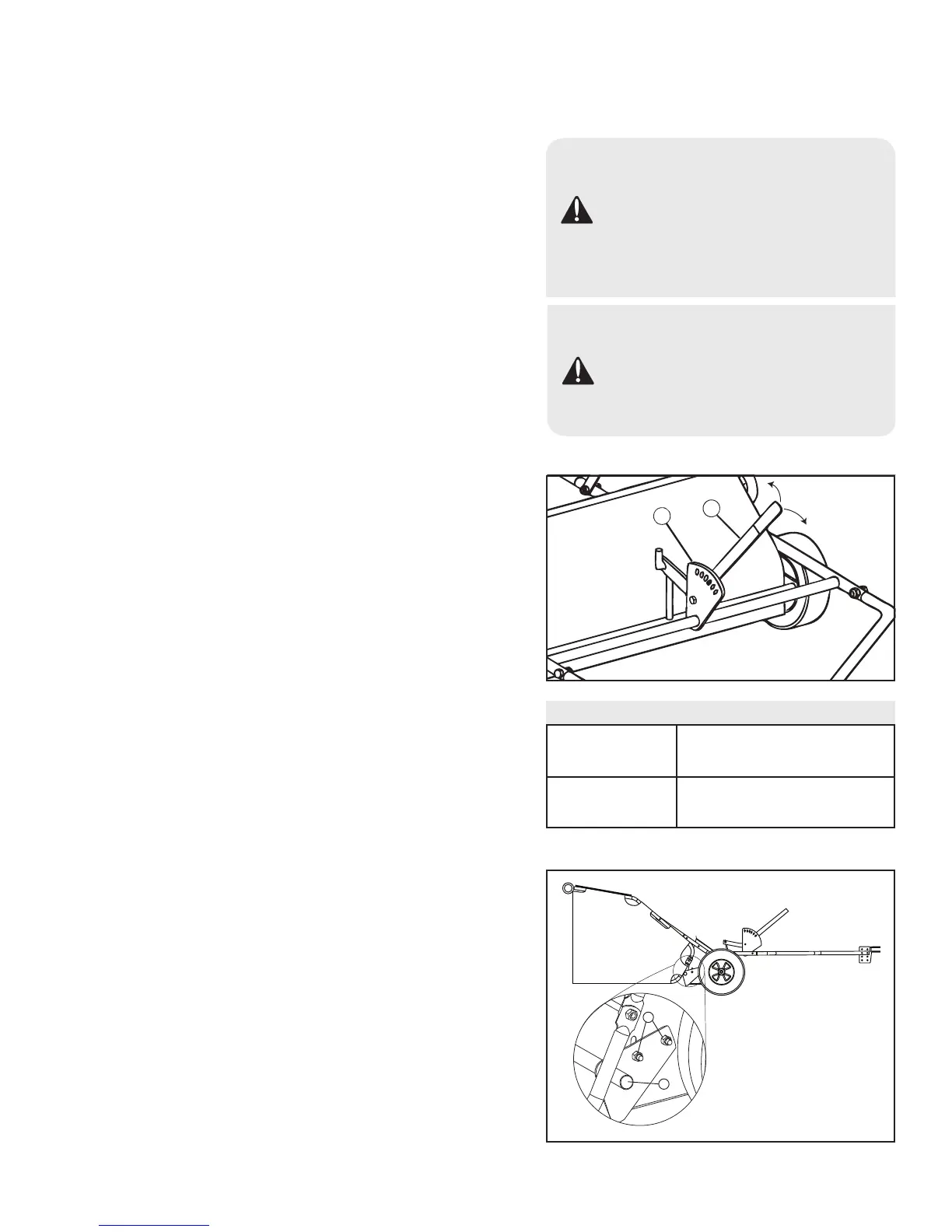
LEVELING HAMPER
After the brush height has been set, the tow tubes may require adjustment
Picture Note: Right front view shown.
to level the tow tubes to the ground. This can be accomplished by removing
the clevis and adjusting the clevis up or down (refer to step 5). After the tow
tubes are approximately level, the hamper stop assembly may have to be
adjusted so the hamper assembly clears the ground.
1. Loosen two nuts (9) slightly, securing each side of hamper stop
bracket (34) to brush housing. The rear bracket mounting holes in
the brush housing are slotted, allowing the bracket to be pivoted
up or down for adjustment.
2. Tap the hamper stop tube (34) up or down to adjust the resting
position of the hamper so that it is approximately level.
Tighten hardware.
TRANSPORTING YOUR SWEEPER
OPERATING YOUR SWEEPER
Determining Weight for Cart
The following maximum loaded weight capacity is the average
weight of the sweeper plus the weight loaded in the hamper and
dethatcher attachment.
CAUTION: Avoid injury! If additional weight is
required when towing, add weight at or forward
of the rear wheels. Adding weight behind the
rear wheels can affect vehicle steering.
Refer to your towing vehicle manual.
ADJUSTING BRUSH HEIGHT
NOTE: Setting brush height too low for sweeping conditions causes
excessive wheel slippage. For maximum performance, adjust brush
height as high as possible for the material and conditions.
1. Pivot lift handle (A) away from lock plate (B) to disengage lock pin in
handle from index hole in lock plate.
2. Move lift handle forward (towards the towing vehicle) to lower brush
height, or back (toward the housing) to raise the brush height. Align
lock pin with appropriate index hole in lock plate and release lift
handle to secure height adjustment.
Normal lawn sweeping is accomplished when the brushes sweep at the
same height as the mower cutting height.
Brush Height Sweeping Conditions
25mm (1 in.) to
50mm (2 in.)
Mowed lawns under normal conditions, or light
leaves.
50mm (2 in.) to
75mm (3 in.)
High grass, heavy leaves or heavy grass clippings.
To adjust the sweeper for transport:
1. Park vehicle on a hard, level surface and set parking brake.
2. Pivot lift handle (A) away from lock plate (B) to disengage
lock pin handle from index hole in lock plate.
3. Move lift handle back (toward the housing) to raise the brush
height.
4. Align the lock pin with the farthest index hole in lock plate (B)
and release lift handle (A) to secure height adjustment.
A
B
Farthest index hole
Towing capacity will vary with weight of towing vehicle and operator.
Add the weight of your machine to operator weight to find the maximum
capacity for towing.
Example:
If Towing vehicle weighs: 400 lbs.
Add your weight: 200 lbs.
Combined weight equals: 600 lbs.
To maintain stability in this example, you cannot safely tow more than
600 lbs. without first adding additional ballast to the towing vehicle.
A
B
CAUTION: Avoid injury! Excessive towed load
can cause loss of traction and loss of control on
slopes. Stopping distance increases with speed
and weight of towed load.
Total towed weight must not exceed combined
weight of towing vehicle, ballast and operator.
Pull to
disengage
A
B
Lowers brush height
Raises brush height
Model Weight Capacity with Dethatcher
STS-42BHDK 102 lbs. dry
222 lbs. with wet grass
9
34
================================================================================================
OPERATION
DETERMINING WEIGHT FOR CART
----------------------------------------------
LEVELING HAMPER
----------------------------------------------
The following maximum loaded weight capacity is the average weight of the
sweeperplustheweightloadedinthehamper&dethatcherattachment.
ADJUSTING BRUSH HEIGHT
----------------------------------------------
Normal lawn sweeping is accomplished when the brushes sweep at the
same height as the mower cutting height.
NOTE: Setting brush height too low for sweeping conditions causes
excessive wheel slippage. For maximum performance, adjust
brushheight as high as possible for the material and conditions.
1.Pivotlifthandle(A)awayfromlockplate(B)todisengagelockpinin
handlefromindexholeinlockplate.
2.Movelifthandleforward(towardsthetowingvehicle)tolowerbrush
height,orback(towardthehousing)toraisethebrushheight.Align
lock pin with appropriate index hole in lock plate and release lift
handle to secure height adjustment.
After the brush height has been set, the tow tubes may require
adjustment to level the tow tubes to the ground. This can be
accomplished by removing the clevis and adjusting the clevis up or
down(refertostep5).Afterthetowtubesareapproximatelylevel,
the hamper stop assembly may have to be adjusted so the hamper
assembly clears the ground.
1. Loosentwonuts(9)slightly,securingeachsideofhamperstop
bracket(34)tobrushhousing.Therearbracketmountingholesin
thebrushhousingareslotted,allowingthebrackettobepivotedup
or down for adjustment.
2. Tapthehamperstoptube(34)upordowntoadjusttherestingposition
of the hamper so that it is approximately level. Tighten hardware.
Towing capacity will vary with weight of towing vehicle and
operator.
Addtheweightofyourmachinetooperatorweighttondthemaximum
capacity for towing.
Example:
IfTowingvehicleweighs: 400lbs.
Addyourweight: 200lbs.
Combinedweightequals: 600lbs.
To maintain stability in this example, you cannot safely tow more than
600 lbs. without rst adding additional ballast to the towing vehicle.
Model
STS-42BHDK
Weight Capacity with Dethatcher
102lbs.dry
222lbs.withwetgrass
CAUTION: AVOID INJURY!
Excessive towed load can cause loss of
traction and loss of control on slopes.
Stopping distance increases with speed
and weight of towed load.
Total towed weight must not exceed
combinedweightoftowingvehicle,ballast
and operator.
CAUTION: AVOID INJURY! If additional
weightisrequiredwhentowing,add
weight at or forward of the rear wheels.
Adding weight behind the rear wheels
can affect vehicle steering. Refer to your
towing vehicle manual.
LEVELING HAMPER
After the brush height has been set, the tow tubes may require adjustment
Picture Note: Right front view shown.
to level the tow tubes to the ground. This can be accomplished by removing
the clevis and adjusting the clevis up or down (refer to step 5). After the tow
tubes are approximately level, the hamper stop assembly may have to be
adjusted so the hamper assembly clears the ground.
1. Loosen two nuts (9) slightly, securing each side of hamper stop
bracket (34) to brush housing. The rear bracket mounting holes in
the brush housing are slotted, allowing the bracket to be pivoted
up or down for adjustment.
2. Tap the hamper stop tube (34) up or down to adjust the resting
position of the hamper so that it is approximately level.
Tighten hardware.
TRANSPORTING YOUR SWEEPER
OPERATING YOUR SWEEPER
Determining Weight for Cart
The following maximum loaded weight capacity is the average
weight of the sweeper plus the weight loaded in the hamper and
dethatcher attachment.
CAUTION: Avoid injury! If additional weight is
required when towing, add weight at or forward
of the rear wheels. Adding weight behind the
rear wheels can affect vehicle steering.
Refer to your towing vehicle manual.
ADJUSTING BRUSH HEIGHT
NOTE: Setting brush height too low for sweeping conditions causes
excessive wheel slippage. For maximum performance, adjust brush
height as high as possible for the material and conditions.
1. Pivot lift handle (A) away from lock plate (B) to disengage lock pin in
handle from index hole in lock plate.
2. Move lift handle forward (towards the towing vehicle) to lower brush
height, or back (toward the housing) to raise the brush height. Align
lock pin with appropriate index hole in lock plate and release lift
handle to secure height adjustment.
Normal lawn sweeping is accomplished when the brushes sweep at the
same height as the mower cutting height.
Brush Height Sweeping Conditions
25mm (1 in.) to
50mm (2 in.)
Mowed lawns under normal conditions, or light
leaves.
50mm (2 in.) to
75mm (3 in.)
High grass, heavy leaves or heavy grass clippings.
To adjust the sweeper for transport:
1. Park vehicle on a hard, level surface and set parking brake.
2. Pivot lift handle (A) away from lock plate (B) to disengage
lock pin handle from index hole in lock plate.
3. Move lift handle back (toward the housing) to raise the brush
height.
4. Align the lock pin with the farthest index hole in lock plate (B)
and release lift handle (A) to secure height adjustment.
A
B
Farthest index hole
Towing capacity will vary with weight of towing vehicle and operator.
Add the weight of your machine to operator weight to find the maximum
capacity for towing.
Example:
If Towing vehicle weighs: 400 lbs.
Add your weight: 200 lbs.
Combined weight equals: 600 lbs.
To maintain stability in this example, you cannot safely tow more than
600 lbs. without first adding additional ballast to the towing vehicle.
A
B
CAUTION: Avoid injury! Excessive towed load
can cause loss of traction and loss of control on
slopes. Stopping distance increases with speed
and weight of towed load.
Total towed weight must not exceed combined
weight of towing vehicle, ballast and operator.
Pull to
disengage
A
B
Lowers brush height
Raises brush height
Model Weight Capacity with Dethatcher
STS-42BHDK 102 lbs. dry
222 lbs. with wet grass
9
34
Brush Height
25mm(1in.)to
50mm(2in.)
50mm(2in.)to
75mm(3in.)
Sweeping Conditions
Mowed lawns under normal
conditions,orlightleaves
Highgrass,heavyleavesor
heavy grass clippings.
Right front
view shown



 To Next Page
 Loading...