20
MODEL BW-260
For parts and service, call:
(866) 283-2759
Waldon Equipment, LLC, 201 W. Oklahoma Ave., Fairview, OK 73737
BRAKE INSPECTION & SERVICE
This machine is equipped with dynamic hydraulic braking, conventional hydraulic brakes and a me-
chanical parking brake.
The dynamic hydraulic braking will be in operation any time that the engine is running. When the
foot pedal is released, the hydraulic system provides enough braking action that the conventional
foot pedal break should not have to be used. If the dynamic braking is not sufcient to stop the ma-
chine, check for hydraulic leaks and low hydraulic uid level.
The parking break should be used every time the operator leaves the operators seat, whenever the
machine is being started, when the machine is being prepared for towing and/or whenever any re-
pairs or adjustments are being made.
When the machine is being towed, the coupler at the end of the hitch will activate the mechanical
brakes anytime the driver of the towing vehicle applies his brakes.
The operation of the brakes should be tested daily. Daily before this machine is to be operated,
check the feel of the brake pedal. The pedal should be rm when depressed, If the pedal feels
spongy, there may be air in the system. If the brake pedal goes all the way to the mechanical stop,
there is a leak in the system, the reservoir is low on uid and brake shoes either need adjusting or
need to be replaced. If the brakes don’t feel
right or do not operate correctly they should
be serviced before using this machine.
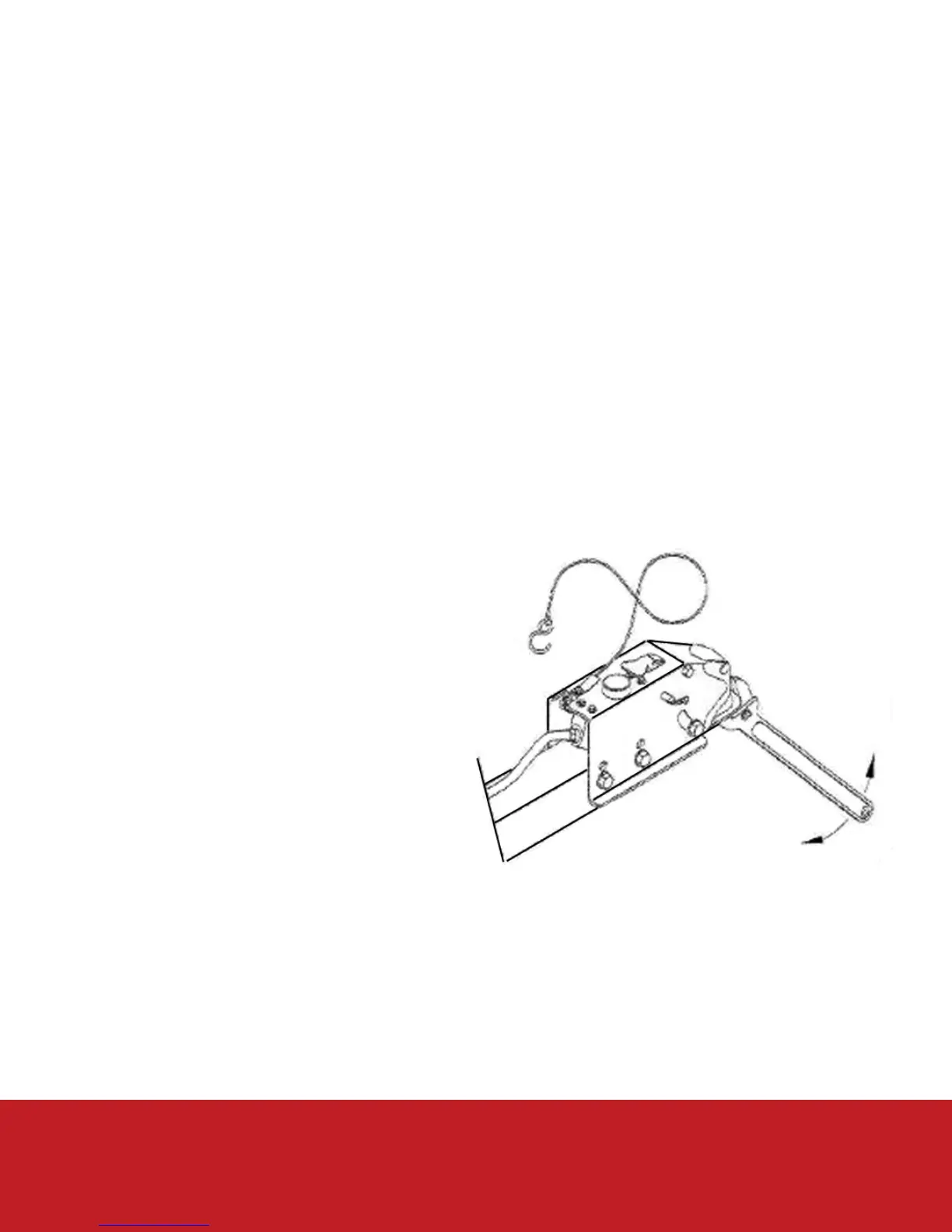
The location for checking and adding brake
uid is the coupler cylinder on the end of the
tow hitch. When checking and adding brake
uid to the braking system, lower the tow
hitch in front of the machine, as if you were
preparing it to be towed. This will put the cyl-
inder reservoir in the best posture for check-
ing and lling brake uid. Check the uid level
periodically, especially if the brake lines show
signs of leakage. If it becomes necessary to
add or change the brake uid, use a uid with
a DOT3 rating. Inspect brake lines every 50
hours (maximum) for leaks and/or damage.
Replace brake hoses every two years.
When checking the brakes uid level or bleeding the brakes, do so at the end of the tow hitch. Low-
er the tow hitch in front of the machine, so that the reservoir in the ball coupler is relatively level. Use
a wrench on the end of the ball coupler to pump uid from the reservoir through the braking system.
From here on follow the standard automotive procedures for bleeding brakes.


 To Next Page