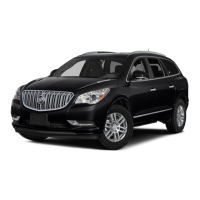
Buick Envista Owner Manual (GMNA-Localizing-U.S./Canada/Mexico-18181221) - 2025
Driving and Operating 135
Driving Information
D
river Behavior
Driving is an important responsibility. Driver
behavior, the driving environment, and
the vehicle's design all affect how well
avehicle performs.
Being aware of these factors can help in
understanding how the vehicle handles and
what can be done to avoid many types of
crashes, including arollover crash.
Most serious injuries and fatalities to unbelted
occupants can be reduced or prevented by
the use of seat belts. In arollover crash, an
unbelted person is significantly more likely
to die than aperson wearing aseat belt. In
addition, avoiding excessive speed, sudden or
abrupt turns, impaired driving, and aggressive
driving can help make trips safer and avoid the
possibility of acrash.
Driving Environment
Be prepared for driving in inclement weather,
at night, or during other times where visibility
or traction may be limited, such as on curves,
slippery roads, or hilly terrain. Unfamiliar
surroundings can also have hidden hazards.
Vehicle Design
U
tility vehicles have asignificantly higher
rollover rate than other types of vehicles. This
is because they have a higher ground clearance
and anarrower track or shorter wheelbase
than passenger cars, which makes them more
capable for off-road driving. While these design
characteristics provide the driver with abetter
view of the road, these vehicles do have a higher
center of gravity than other types of vehicles.
Autility vehicle does not handle the same as
avehicle with alower center of gravity, like
acar, in similar situations.
Safe driver behavior and understanding of the
environment can help avoid arollover crash in
any type of vehicle, including utility vehicles.
Driving for Better Fuel Economy
Driving habits can affect fuel mileage. Here
are some driving tips to get the best fuel
economy possible:
•
Set the climate controls to the desired
temperature after the engine is started, or
turn them off when not required.
•
Avoid fast starts and accelerate smoothly.
•
Brake gradually and avoid abrupt stops.
•
A
void idling the engine for long periods
of time.
•
When road and weather conditions are
appropriate, use cruise control.
•
Always follow posted speed limits or drive
more slowly when conditions require.
•
Keep vehicle tires properly inflated.
•
Combine several trips into asingle trip.
•
Replace the vehicle's tires with the same
TPC Spec number molded into the tire's
sidewall near the size.
•
Follow recommended
scheduled maintenance.
Distracted Driving
Distraction comes in many forms and can take
your focus from the task of driving. Exercise
good judgment and do not let other activities
divert your attention away from the road.
Many local governments have enacted laws
regarding driver distraction. Become familiar
with the local laws in your area.
To avoid distracted driving, keep your eyes
on the road, keep your hands on the steering
wheel, and focus your attention on driving.



 To Next Page
 Loading...