(B) Tire Ply Material: The type of cord and
number of plies in the sidewall and under
the tread.
(C) Tire Identification Number (TIN): The
letters and numbers following the DOT (Department
of Transportation) code is the Tire Identification
Number (TIN). The TIN shows the manufacturer
and plant code, tire size, and date the tire was
manufactured. The TIN is molded onto both sides
of the tire, although only one side may have the
date of manufacture.
(D) Maximum Cold Inflation Load Limit:
Maximum load that can be carried and the
maximum pressure needed to support that load.
(E) Tire Inflation: The temporary use tire
or compact spare tire should be inflated to
60 psi (420 kPa). For more information on tire
pressure and inflation see Inflation - Tire Pressure
on page 392.
(F) Tire Size: A combination of letters and
numbers define a tire’s width, height, aspect
ratio, construction type, and service description.
The letter T as the first character in the tire
size means the tire is for temporary use only.
(G) TPC Spec (Tire Performance Criteria
Specification): Original equipment tires designed
to GM’s specific tire performance criteria have
a TPC specification code molded onto the sidewall.
GM’s TPC specifications meet or exceed all
federal safety guidelines.
Tire Size
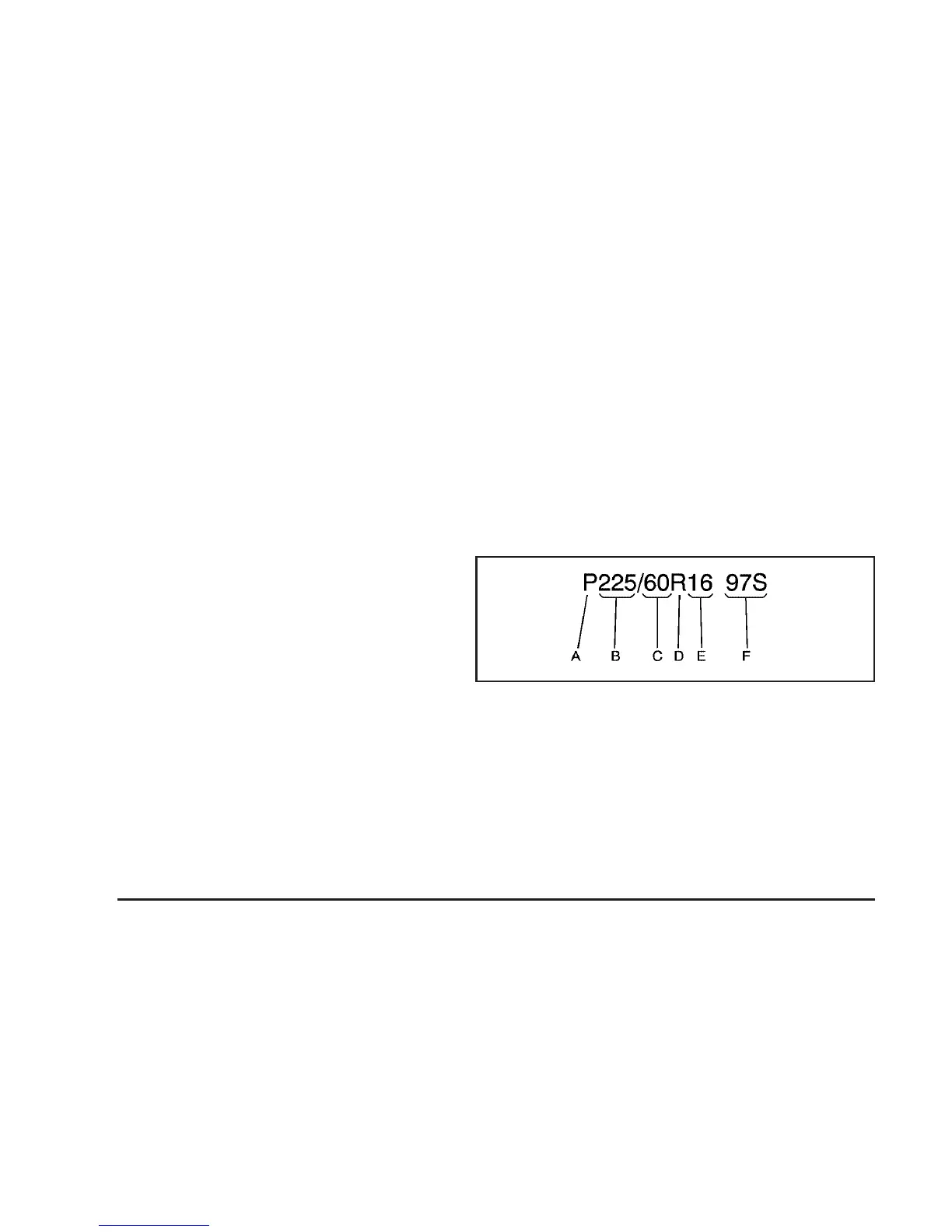
The following illustration shows an example of a
typical passenger vehicle tire size.
(A) Passenger (P-Metric) Tire: The United
States version of a metric tire sizing system.
The letter P as the first character in the tire size
means a passenger vehicle tire engineered
to standards set by the U.S. Tire and Rim
Association.
388














 To Next Page