8
ADJUSTMENTS
• Once the secondary drive chain tension is set,
finalize tension adjustment of primary drive
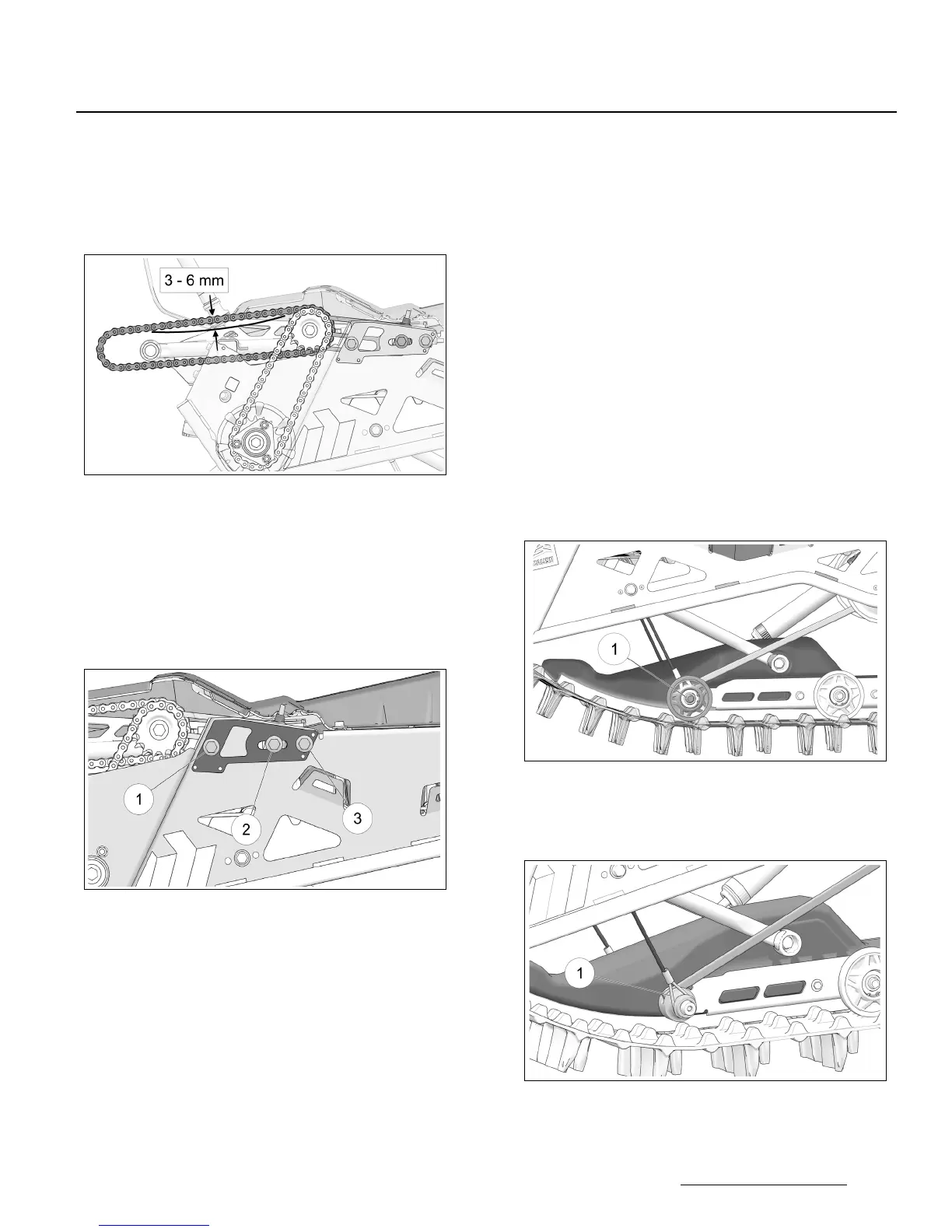
chain. Apply pressure at center of the two drive
sprockets. The chain should have 3-6 mm (1/8
-1/4 in.) of play. Re-adjust until the right
amount of play is obtained. See Figure 11.
Figure 11
CAUTION: After having adjusted the primary drive
chain and before tightening the mounting bolts,
double-check the secondary drive chain tension.
Re-adjust tension if chain deflection does not
meet requirement.
• Re-tighten chain tensioner mounting bolts (1),
(2) and (3) to 90 N-m [67 lb-ft] of torque.
See
Figure 12.
Figure 12
• Drive chain tension set too high can cause
premature wear on drive sprockets and on the
chains themselves. Chains are less likely to
come off and are also less likely to skip on the
sprockets.
CAUTION: A chain tension that is set too high will
result in a loss of power and excessive
mechanical stress put on drive system
components. A chain tension set too high is not
recommended.
• A lower tension in the drive chains increases
the risk of chains coming off or skipping on the
drive sprockets.
NOTE: Once the chain tension adjustments are done,
double-check to make sure that the tension
settings are according to specification.
SUSPENSION ADJUSTMENT
The suspension can be adjusted to fit the rider’s
weight, personal preferences or type of use made
of the vehicle.
NOTE: Camso recommends that the suspension
spring adjustment be made in a workshop/
garage before using the motorcycle.
• Loosen the wheel assembly bolt (1) located
next to the grooved bushing where the long
end of suspension spring sits and remove the
wheel. See
Figure 13.
Figure 13
• Depress suspension to allow removal of limiter
cable loop (1) from groove in spring support
bushing. See
Figure 14.
Figure 14


 To Next Page