
 Need help?
Do you have a question about the Camus Hydronics DynaFlame Series and is the answer not in the manual?
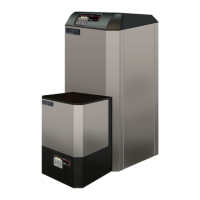
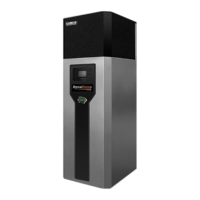
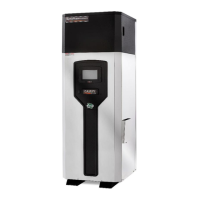
Describes the DynaFlame boiler styles and features.
Explains the DynaFlame's operation principle and modulation capabilities.
Provides essential installation and servicing guidelines for safe operation.
Details steps to inspect the appliance for shipping damage and internal connections.
Outlines the step-by-step process of the boiler's heating cycle.
Describes the sequence of events during burner ignition and flame establishment.
Specifies installation compliance with national and local codes and standards.
Outlines warranty conditions for installation and operation.
Specifies minimum clearance requirements for safe installation near combustible materials.
Guides on selecting the proper location and installation procedures for the appliance.
Provides fundamental principles for venting the DynaFlame appliance according to its category.
Details venting requirements for non-condensing DynaFlame models based on vent category.
Outlines venting requirements for condensing DynaFlame models based on vent category.
Lists approved materials for venting DynaFlame appliances, including specific types.
Details the proper placement of air inlet and vent caps for rooftop installations.
Provides guidance on venting into masonry chimneys, emphasizing liner requirements.
Outlines venting requirements for non-condensing DynaFlame units using conventional systems.
Details venting requirements for condensing DynaFlame units using conventional systems.
Tables and diagrams detailing required sidewall clearances for vent terminals.
General requirements for connecting the gas supply to the appliance.
Step-by-step instructions for installing gas piping, including shutoff valves and traps.
Explains the function and types of air/gas ratio control valves used in the appliance.
Details how differential air pressure is measured and its role in appliance operation.
Provides procedures for verifying the incoming gas supply pressure.
Specifies required gas supply pressures and lockup pressures for proper operation.
Describes how to measure and interpret differential air and gas pressures.
Describes the burner assembly, its materials, and operation.
Provides guidelines and recommendations for preventing freeze damage to the appliance.
Offers warnings and installation advice for systems involving chilled water and heating coils.
Describes the construction and operating requirements of the primary heat exchanger.
Provides guidance for operating the appliance in low water temperature applications.
Details the CHRM's function, installation, and water flow requirements.
Crucial recommendations for maintaining water chemistry to prevent damage.
Details minimum voltage requirements and electrical connections for various models.
Explains the role and operation of the VFD in controlling the combustion air fan.
Describes the function of the differential air pressure switch for fan operation proof.
Explains the function of the blocked flue switch for safety shutdown.
Details the high limit aqua-stat control for limiting maximum discharge water temperature.
Lists and explains various alert and lockout codes generated by the appliance.
Introduces the Honeywell SOLA controller and its capabilities for managing boiler operations.
Provides access to various configuration settings for the DynaFlame appliance.
Parameters for identifying the boiler, software version, and installation type.
Settings for configuring pump control, output, and run time for different zones.
Instructions for setting up the lead lag system for multiple boilers.
Describes the hot surface igniter, its installation, and maintenance.
Details the flame sensor, its function, and proper installation to ensure reliable flame detection.
Explains the function and construction of the combustion air fan assembly.
Information on the vent transition adapter and requirements for Category II or IV appliances.
Step-by-step checks to ensure the appliance is installed correctly before startup.
Procedures for testing the burner's ignition, flame, and combustion settings.
Routine checks performed by the owner/operator on a monthly basis.
Checks performed by owner/operator every six months, including safety controls.
Comprehensive annual service performed by a qualified technician.
Instructions for inspecting the venting system for leaks, corrosion, and blockages.
Addresses condensation management, pH levels, and material compatibility.
Procedures for inspecting and cleaning the burner assembly.
Step-by-step guide for removing, cleaning, and reinstalling the burner.
Maintenance recommendations for the combustion air fan.
Advice on preventing freeze damage, especially for outdoor installations.
General requirements for installing heating boilers, including piping systems and expansion tanks.
Critical factors for pipe diameter and length to ensure proper flow.
Importance of controlling water velocity for heat exchanger longevity and performance.
Important considerations for water heater installations, including tempering and mixing valves.
Pro-rated warranty coverage for heat exchangers based on years of service.
Warranty coverage for the burner assembly against material or workmanship defects.
 General
| Type | Condensing Boiler |
|---|---|
| Fuel Type | Natural Gas or Propane |
| Efficiency | Up to 95% AFUE |
| Heat Exchanger Material | Stainless Steel |
| Modulation Ratio | 5:1 |


 To Next Page