EasyManua.ls Logo

Canyon Pedelec - User Manual

Canyon Pedelec
27 pages
Print Icon
To Next Page IconTo Next Page
Loading...
PURE
CYCLING
MANUAL
PEDELEC
1
2
3
4
5
6
7
8
9
10
11
f
15
16
17
18
19
20
21
22
23
24
I
II
a
b
c
d
e
A
B
III
IV
12
13
14
C
D
Your pedelec and this translation of the original operating instructions together with the com-
prehensive world-specic Canyon bicycle manual and the system instructions of the drive
manufacturer correspond to the requirements of the standard EN 15194:2017 for pedelecs or, respec
-
tively, DIN EN 17404:2019-07 (dra) for EPAC mountain bikes, the standard EN ISO 4210-2 and the
Machinery Directive 2006/42/EC.
Attention! Assembly instructions in the Quick Start Guide, which comes attached to the
pedelec. You can also nd the Quick Start Guide on our website, www.canyon.com
Read pages 2 to 13 of this manual before your first ride. Perform the functional check on
pages 14 to 17 of this manual before every ride!
Question and Answer IconNeed help?

Do you have a question about the Canyon Pedelec and is the answer not in the manual?

Summary

Components Overview

Bicycle Components

Lists and describes individual bicycle parts.

Electric Drive Components

Identifies the electric drive system's main components.

Handlebar Components

Details the various components mounted on the handlebar.

Translation Notes and Safety

Purpose and Scope of Translation

Explains the context and purpose of this translated manual.

Safe Riding Practices

Provides essential guidelines for safe riding practices and rider conduct.

General Safety and Intended Use

Legal Regulations and Environmental Responsibility

Addresses legal compliance and responsible riding in natural environments.

Defining Bike Categories

Explains how bikes are categorized for testing and stress requirements.

Intended Use by Bike Category

Category 1 e: Road Racing Bikes

Details intended use for category 1e bikes on hard-surface roads.

Category 2 e: Urban and Trekking Bikes

Details intended use for category 2e bikes on well-maintained roads.

Intended Use by Bike Category Continued

Category 3 e: Rough Terrain Bikes

Details intended use for category 3e bikes on rough terrains with light jumps.

Category 4 e: High-Stress Terrain Bikes

Details intended use for category 4e bikes on very rough terrains with moderate jumps.

Before Your First Ride Preparations

Rider Familiarization and Initial Setup

Advises new riders to start with low assistance and practice in safe areas.

Legal Compliance and Equipment Check

Emphasizes checking local laws and ensuring the pedelec is properly equipped.

First Ride Adjustments

Saddle and Handlebar Adjustment

Guides on proper frame size and saddle/handlebar adjustment for rider comfort.

Clipless Pedal Practice

Instructs on practicing with clipless pedals before riding.

Before Every Ride Checks

Wheel and Axle Security Checks

Ensures quick-release levers and thru-axles are properly closed for safety.

Battery and Display System Checks

Verifies battery charge, secure mounting, and display functionality.

Pre-Ride Inspections

Tyre Pressure and Wheel Trueness

Checks tyre condition, pressure, and wheel trueness for safe riding.

Brake System Functionality Test

Tests brake lever operation and hydraulic cable integrity.

Assembly with Canyon Torque Wrench

Using the Canyon Torque Wrench

Details the proper use of the torque wrench for secure component assembly.

Battery Installation and Removal

Removing and Installing the Integrated Battery

Provides step-by-step instructions for removing and installing the integrated battery.

Display and Brake Lever Adjustments

KIOX Display Removal and Mounting

Explains how to remove and mount the KIOX display for security.

Adjusting Integrated Brake Levers

Guides on adjusting brake lever position and tilt for rider comfort and control.

Seat Clamping and Gear System Setup

Seat Clamping - PRECEDE:ON

Details the process for adjusting the seat post height on the PRECEDE:ON model.

Setting Pedal Cadence for Enviolo

Explains how to set the desired pedal cadence for the enviolo system.

Enviolo Gear System Rear Wheel

Removing and Mounting the Rear Wheel

Provides instructions for safely removing and remounting the rear wheel.

Enviolo Belt Tension and Calibration

Checking and Adjusting Belt Tension

Guides on checking and adjusting the drive belt tension for optimal performance.

Calibrating the enviolo AUTOMATIQ System

Details the procedure for recalibrating the enviolo AUTOMATIQ system.

Riding the Pedelec

Riding with Drive Assistance

Explains how to use and manage the pedelec's drive assistance system.

Pedelec Riding Strategies

Range and Battery Life Information

Provides tips and factors affecting the pedelec's range and battery life.

Riding Without Drive Assistance

Explains how to ride the pedelec without motor assistance.

Rechargeable Battery Handling

Storage and Charging Precautions

Details safe practices for storing and charging the rechargeable battery.

Battery Management and Lighting

Battery Replacement and Disposal Guidelines

Addresses battery replacement, proper disposal, and charging habits.

Activating and Controlling Lights

Explains how to activate and adjust the pedelec's lighting system.

Lighting and Child Trailer

Adjusting the Front Light Orientation

Guides on adjusting the front light for optimal visibility and to avoid dazzling others.

Trailer Mounting and Regulations

Provides instructions for mounting a child trailer and relevant regulations.

Pedelec Transport Guidelines

Transport by Car

Offers advice on securely transporting the pedelec inside or outside a car.

Transport by Public Transport

Details regulations and considerations for transporting the pedelec via public transit.

Transport by Plane

Advises on specific packing and labelling for air travel due to batteries.

After an Accident Checks

Post-Accident Pre-Ride Checks

Outlines critical checks to perform after an accident before riding again.

Post-Accident Inspection and Care

Detailed Inspection and Damage Assessment

Guides on thorough inspection for any deformation or damage after an incident.

Washing and Cleaning Procedures

Provides methods and precautions for cleaning the pedelec safely and effectively.

Servicing and Inspection Schedule

Servicing and Inspection Schedule

Outlines the importance of regular servicing and inspection by experts.

Pedelec Safety and Maintenance

Canyon Safety Check Recommendations

Recommends periodic safety checks, especially for lower annual mileage riders.

Battery End-of-Life Management

Battery End-of-Life and Disposal

Explains how to handle rechargeable batteries that have reached the end of their service life.

Summary

Components Overview

Bicycle Components

Lists and describes individual bicycle parts.

Electric Drive Components

Identifies the electric drive system's main components.

Handlebar Components

Details the various components mounted on the handlebar.

Translation Notes and Safety

Purpose and Scope of Translation

Explains the context and purpose of this translated manual.

Safe Riding Practices

Provides essential guidelines for safe riding practices and rider conduct.

General Safety and Intended Use

Legal Regulations and Environmental Responsibility

Addresses legal compliance and responsible riding in natural environments.

Defining Bike Categories

Explains how bikes are categorized for testing and stress requirements.

Intended Use by Bike Category

Category 1 e: Road Racing Bikes

Details intended use for category 1e bikes on hard-surface roads.

Category 2 e: Urban and Trekking Bikes

Details intended use for category 2e bikes on well-maintained roads.

Intended Use by Bike Category Continued

Category 3 e: Rough Terrain Bikes

Details intended use for category 3e bikes on rough terrains with light jumps.

Category 4 e: High-Stress Terrain Bikes

Details intended use for category 4e bikes on very rough terrains with moderate jumps.

Before Your First Ride Preparations

Rider Familiarization and Initial Setup

Advises new riders to start with low assistance and practice in safe areas.

Legal Compliance and Equipment Check

Emphasizes checking local laws and ensuring the pedelec is properly equipped.

First Ride Adjustments

Saddle and Handlebar Adjustment

Guides on proper frame size and saddle/handlebar adjustment for rider comfort.

Clipless Pedal Practice

Instructs on practicing with clipless pedals before riding.

Before Every Ride Checks

Wheel and Axle Security Checks

Ensures quick-release levers and thru-axles are properly closed for safety.

Battery and Display System Checks

Verifies battery charge, secure mounting, and display functionality.

Pre-Ride Inspections

Tyre Pressure and Wheel Trueness

Checks tyre condition, pressure, and wheel trueness for safe riding.

Brake System Functionality Test

Tests brake lever operation and hydraulic cable integrity.

Assembly with Canyon Torque Wrench

Using the Canyon Torque Wrench

Details the proper use of the torque wrench for secure component assembly.

Battery Installation and Removal

Removing and Installing the Integrated Battery

Provides step-by-step instructions for removing and installing the integrated battery.

Display and Brake Lever Adjustments

KIOX Display Removal and Mounting

Explains how to remove and mount the KIOX display for security.

Adjusting Integrated Brake Levers

Guides on adjusting brake lever position and tilt for rider comfort and control.

Seat Clamping and Gear System Setup

Seat Clamping - PRECEDE:ON

Details the process for adjusting the seat post height on the PRECEDE:ON model.

Setting Pedal Cadence for Enviolo

Explains how to set the desired pedal cadence for the enviolo system.

Enviolo Gear System Rear Wheel

Removing and Mounting the Rear Wheel

Provides instructions for safely removing and remounting the rear wheel.

Enviolo Belt Tension and Calibration

Checking and Adjusting Belt Tension

Guides on checking and adjusting the drive belt tension for optimal performance.

Calibrating the enviolo AUTOMATIQ System

Details the procedure for recalibrating the enviolo AUTOMATIQ system.

Riding the Pedelec

Riding with Drive Assistance

Explains how to use and manage the pedelec's drive assistance system.

Pedelec Riding Strategies

Range and Battery Life Information

Provides tips and factors affecting the pedelec's range and battery life.

Riding Without Drive Assistance

Explains how to ride the pedelec without motor assistance.

Rechargeable Battery Handling

Storage and Charging Precautions

Details safe practices for storing and charging the rechargeable battery.

Battery Management and Lighting

Battery Replacement and Disposal Guidelines

Addresses battery replacement, proper disposal, and charging habits.

Activating and Controlling Lights

Explains how to activate and adjust the pedelec's lighting system.

Lighting and Child Trailer

Adjusting the Front Light Orientation

Guides on adjusting the front light for optimal visibility and to avoid dazzling others.

Trailer Mounting and Regulations

Provides instructions for mounting a child trailer and relevant regulations.

Pedelec Transport Guidelines

Transport by Car

Offers advice on securely transporting the pedelec inside or outside a car.

Transport by Public Transport

Details regulations and considerations for transporting the pedelec via public transit.

Transport by Plane

Advises on specific packing and labelling for air travel due to batteries.

After an Accident Checks

Post-Accident Pre-Ride Checks

Outlines critical checks to perform after an accident before riding again.

Post-Accident Inspection and Care

Detailed Inspection and Damage Assessment

Guides on thorough inspection for any deformation or damage after an incident.

Washing and Cleaning Procedures

Provides methods and precautions for cleaning the pedelec safely and effectively.

Servicing and Inspection Schedule

Servicing and Inspection Schedule

Outlines the importance of regular servicing and inspection by experts.

Pedelec Safety and Maintenance

Canyon Safety Check Recommendations

Recommends periodic safety checks, especially for lower annual mileage riders.

Battery End-of-Life Management

Battery End-of-Life and Disposal

Explains how to handle rechargeable batteries that have reached the end of their service life.

Overview

This document serves as a comprehensive manual for Canyon pedelecs, providing essential information on their function, usage, maintenance, and safety. It is an additional set of instructions that, along with the world-specific Canyon bicycle manual and drive manufacturer's system instructions, complies with standards EN 15194:2017 (for pedelecs), DIN EN 17404:2019-07 (draft for EPAC mountain bikes), EN ISO 4210-2, and the Machinery Directive 2006/42/EC.

Function Description:

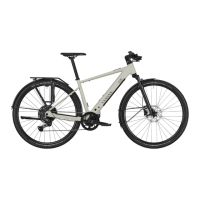
A pedelec, or Pedal Electric Cycle (EPAC), is a bicycle equipped with an auxiliary motor that provides assistance only when the rider pedals. The motor switches off when pedaling stops. A pushing aid function offers assistance up to 6 km/h (3.7 mph) for hill starts or when pushing the pedelec, even without pedaling. The level of assistance and speed are gear-dependent.

The pedelec's functions are operated via buttons on a control unit on the handlebar or a remote switch on the frame (down tube or top tube). These controls allow selection of various assistance modes and display cycle computer functions and remaining battery capacity. The drive system activates upon pedaling, with sensors measuring pedaling movements and controlling assistance based on the selected mode, speed, and pedal force. Assistance ceases at speeds above 25 km/h (15.5 mph).

Important Technical Specifications:

  • Maximum Permitted Overall Weight: Generally, 130 kg, but specific models may vary, indicated on a frame sticker. This includes the weight of the pedelec, cyclist, luggage, and approved trailer with load.
  • Pedal Assistance Cut-off Speed: 25 km/h (15.5 mph).
  • Pushing Aid Speed: 6 km/h (3.7 mph).
  • Battery: Lithium-ion, with specific models like the BT-E8010 having 36V-14Ah and 504Wh.
  • Torque Values: Specific tightening torques are provided for various components, such as 2 Nm for brake levers, 7-8 Nm for seat post clamping, and 30-40 Nm for axle nuts.
  • Lighting System: Front light with adjustable beam orientation. The light can be activated via the display or manually, with brightness adjustable via a remote switch.
  • Gear System: Enviolo AUTOMATIQ, a continuously variable gear system without discrete steps. It automatically adjusts the gear ratio to maintain the rider's desired pedaling cadence.
  • Frame Categories: Pedelecs are classified into categories (1e, 2e, 3e, 4e, 5e) based on intended use and terrain, from hard-surface roads to challenging mountain trails. This classification defines testing requirements and maximum load.

Usage Features:

  • First Ride: Before the first ride, riders should familiarize themselves with the pedelec's unique characteristics, starting with the lowest drive assistance level in a traffic-free area. It's crucial to practice braking, cornering, and riding on various terrains.
  • Brake System: Modern brakes are powerful; practice gradual deceleration. The left brake lever typically operates the front brake.
  • Gears: Familiarize yourself with the gear system in a traffic-free area. Avoid pedaling with excessive force when shifting. The enviolo AUTOMATIQ system allows cadence setting directly on the Bosch display.
  • Battery Handling: The rechargeable battery must be charged before the first ride and should be properly mounted and locked. It's recommended to charge the battery in dry rooms with smoke/fire detectors, away from bedrooms, on a non-inflammable surface.
  • Display: Check the display for correct values and any error messages before riding.
  • Frame Fit: Ensure proper frame size, saddle height, and handlebar adjustment for safety and comfort.
  • Pedals: If using clipless pedals, practice engaging and disengaging them while stationary.
  • Suspension: For models with suspension, check air pressure in the fork and rear shock.
  • Carbon Components: Handle carbon parts with special care due to their material properties.
  • Parking: When parking, ensure the pedelec is stable to prevent damage from falling over. Remove the display to protect against theft.
  • Riding Habits: Be mindful of higher speeds and quieter operation compared to conventional bicycles. Anticipate actions of other road users. Shift gears frequently and maintain a smooth cadence (over 60 crank rotations per minute).
  • Range Extension: To maximize range, regularly check tire pressure, shift to lower gears when stopping or starting, avoid unnecessary stops, reduce luggage, store the battery at optimal temperatures, and avoid deep discharge.
  • Child Trailer: Some category 2e models (e.g., Precede:ON, Pathlite:ON) are approved for Croozer trailers, requiring a specific thru axle with integrated hitch.

Maintenance Features:

  • Pre-Ride Checks: Before every ride, check quick-release levers/thru axles, battery connections, control unit, and drive system are properly plugged. Verify battery charge, display functionality, and tire condition/pressure.
  • Battery Charging: Charge the battery at ambient temperatures of 15-25°C. Allow hot batteries to cool and cold batteries to warm up before charging. Use only the supplied charger. Unplug the battery once charged.
  • Cleaning: Clean the pedelec with a soft water jet, sponge, or brush. Avoid high-pressure or steam cleaning, which can damage seals and bearings. Polish coating and metal surfaces with hard wax.
  • Chain/Belt Maintenance: Inspect and grease the chain regularly. For belt drives, check tension using the Gates Carbon Drive™ mobile app or a tension gauge.
  • Servicing: Regular maintenance by an expert is recommended. A "first service" addresses initial bedding-in processes, and an "annual service" ensures sustained functioning.
  • Component Replacement: Use only original spare parts for replacements to maintain safety and warranty.
  • Post-Accident Check: After an accident, thoroughly check the battery, display, wheels, handlebar, stem, chain/belt, and saddle for damage or misalignment. Damaged carbon or bent aluminum components should be replaced, not repaired.
  • Storage: For long periods of non-use (e.g., winter), remove the rechargeable battery and store it in a dry room at 5-20°C with 50-70% charge, recharging every two months if unused.
  • Battery Disposal: Dispose of end-of-life rechargeable batteries according to disposal regulations, not with normal household rubbish.
  • Transport: When transporting by car, remove the battery and display, securing them appropriately. Protect connections from water and dirt. Be aware of the pedelec's heavier weight when loading onto carriers. For air travel, observe hazardous goods regulations for lithium-ion batteries.

Safety Warnings:

  • Always read the comprehensive Canyon bicycle manual and drive manufacturer's instructions.
  • Do not modify or manipulate the pedelec ("tune") as this voids warranty and liability insurance.
  • Do not ride under the influence of drugs, medication, or alcohol.
  • Do not ride with a second person or without both hands on the handlebar.
  • Observe legal regulations for cycling with pedelecs in your country.
  • Always wear a properly adjusted helmet and suitable clothing.
  • Do not step on pedals before sitting in the saddle and gripping the handlebar to avoid uncontrolled starts.
  • Charge batteries in dry rooms with smoke/fire detectors, away from bedrooms, on non-inflammable surfaces.
  • Do not use defective batteries or chargers.
  • Keep batteries away from fire and heat.
  • Do not short-circuit batteries.
  • Do not expose batteries or chargers to blazing sun.
  • Do not discharge batteries completely.
  • Do not clean with high-pressure water or steam.
  • Do not work on the pedelec with the battery or display installed, as unintentional drive activation poses a risk of injury.
  • Improperly closed quick-releases or attachments can cause components to come loose.
  • Be aware that wet conditions reduce brake performance and tire grip.
  • Do not clamp carbon frames or seat posts in workstand jaws.
  • Do not hang heavy objects on the handlebar.
  • Do not wear long skirts or ponchos that could get caught in wheels or the drive system.
  • Do not touch rotating wheels or disc brakes during servicing.
  • Do not position the pedelec upside down during maintenance.

Canyon Pedelec Specifications

General IconGeneral
BrandCanyon
ModelPedelec
CategoryBicycle
LanguageEnglish

Related product manuals