CAP 413 Radiotelephony Manual
Chapter 4 Page 10
1.8 Aerodrome Traffic Circuit
1.8.1 Designated Positions in the Traffic Circuit
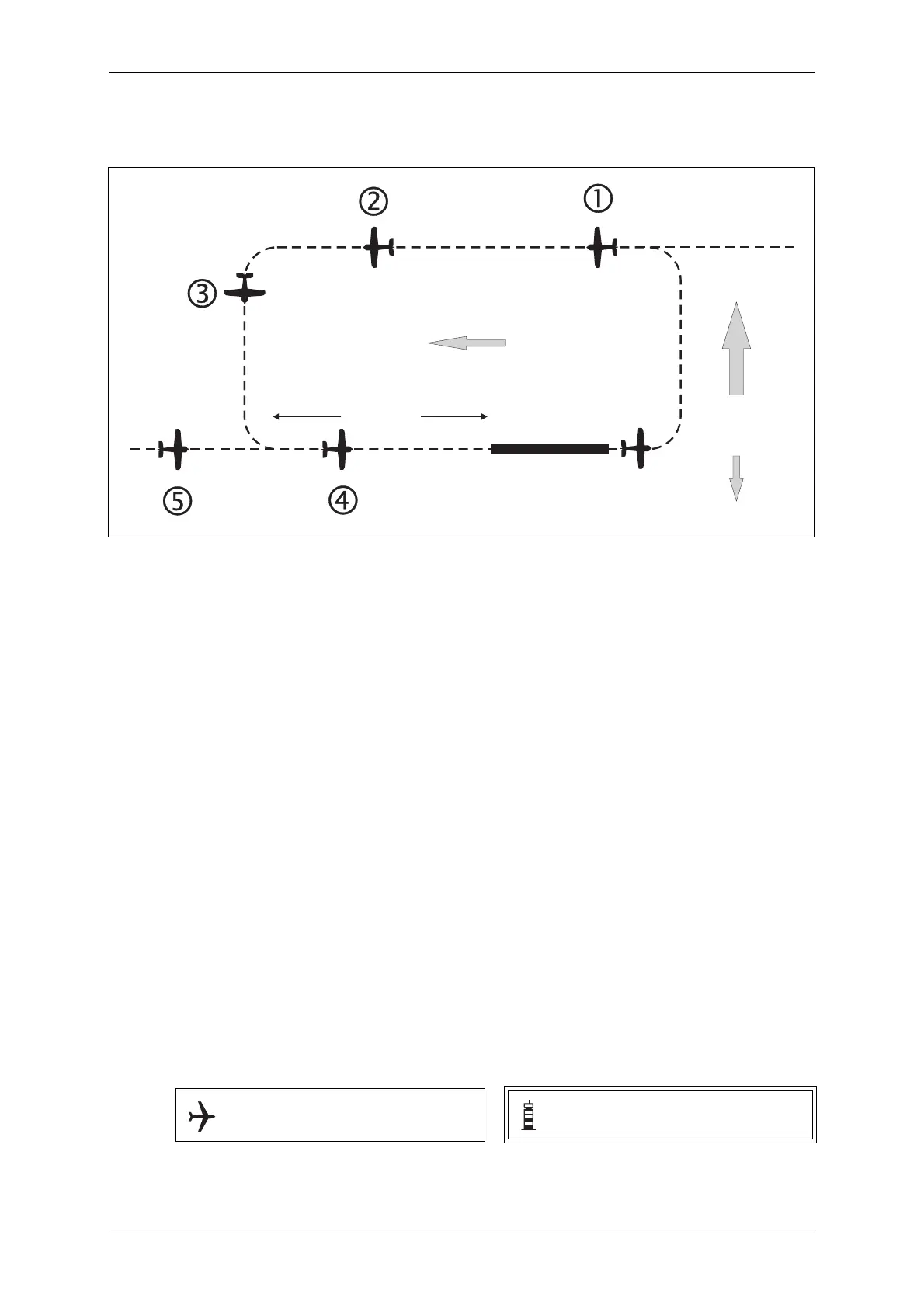
Typical Left-Hand Circuit
NOTE 1: For light aircraft operations, circuit dimensions may be reduced but the relative
RTF reporting points are maintained.
NOTE 2: For details of the standard overhead joining procedure see Aerodrome Traffic
Circuit (Chapter 4 Paragraph 1.8.3) and RTF Reports at Unattended Aerodromes
(Chapter 4 Paragraph 6.1).
NOTE 3: For details of military visual circuit patterns see Chapter 11 paragraph 1.4
1.8.2 Requests for circuit-joining instructions should be made in sufficient time for a
planned entry into the circuit taking other traffic into account. Where ATIS is
established, receipt of the broadcast should be acknowledged in the initial call to an
aerodrome. When the traffic circuit is a right-hand pattern it shall be specified. A left-
hand pattern need not be specified although it is essential to do so when the circuit
direction is variable.
Figure 1 Designated positions in the traffic circuit
Position 1 Aircraft reports on 'Downwind' leg.
Position 2 Aircraft reports 'Late downwind' if it is on the downwind leg, has been unable
to report 'Downwind' and has passed the downwind end of the runway.
Position 3 Aircraft reports 'Base' leg (if required).
Position 4 Aircraft reports ‘Final’. Clearance to land issued here.
Position 5 Aircraft reports 'Long final' (between 8 and 4 miles) when aircraft is on a
straight in approach.
Walden Tower, G-ABCD, request join G-ABCD, Walden Tower, pass your
message
RUNWAY IN USE
SURFACE WIND
LIVE SIDE
DEAD SIDE
4 miles or less
Beyond 4 miles
31 March 2011



 To Next Page