26
Examples of cooking power setting
(the values below are indicative)
1 to 2
Melting
Reheating
Sauces, butter, chocolate, gelatine
Dishes prepared beforehand
2 to 3
Simmering
Defrosting
Rice, pudding, sugar syrup
Dried vegetables, fish, frozen products
3 to 4 Steam Vegetables, fish, meat
4 to 5 Water
Steamed potatoes, soups, pasta,
fresh vegetables
6 to 7
Medium cooking,
Simmering
Meat, liver, eggs, sausages, pancakes
7 to 8 Cooking Potatoes, fritters, waffles
9
Frying, roasting, Boiling
water
Steaks, omelettes, fried dishes, water
B
Frying, roosting
Boiling water
scallops, steaks
Boiling significant quantities of water
MAINTENANCE AND CLEANING
Switch-off the appliance before cleaning.
Do not clean the hob if the glass is too hot due to risk of burns.
• Remove light marks with a damp cloth with washing up liquid diluted in a little water. Then rinse with cold
water and dry the surface thoroughly.
• Highly corrosive or abrasive detergents and cleaning equipment are likely to cause scratches and must be
absolutely avoided.
• Do not ever use any steam-cleaner or pressure washer.
• Do not use any object that may scratch the ceramic glass.
• Ensure that the pan is dry and clean. Ensure that there are no grains of dust on your ceramic hob or on the
pan. Sliding rough saucepans will scratch the surface.
• Spillages of sugar, jam, jelly, etc. must be removed immediately. You will thus prevent the surface being
damaged.
TROUBLESHOOTING
The hob or the cooking zone doesn’t start-up:
• The connection to the network is wrong.
• The protection fuse has disconnected.
• The locking function is activated.
• The sensitive keys are covered with grease or water.
• An object is put on a key.
The control panel displays [ ]:
• There is no pan on the cooking zone.
• The pan is not compatible with induction.
• The bottom diameter of the pan is too small.
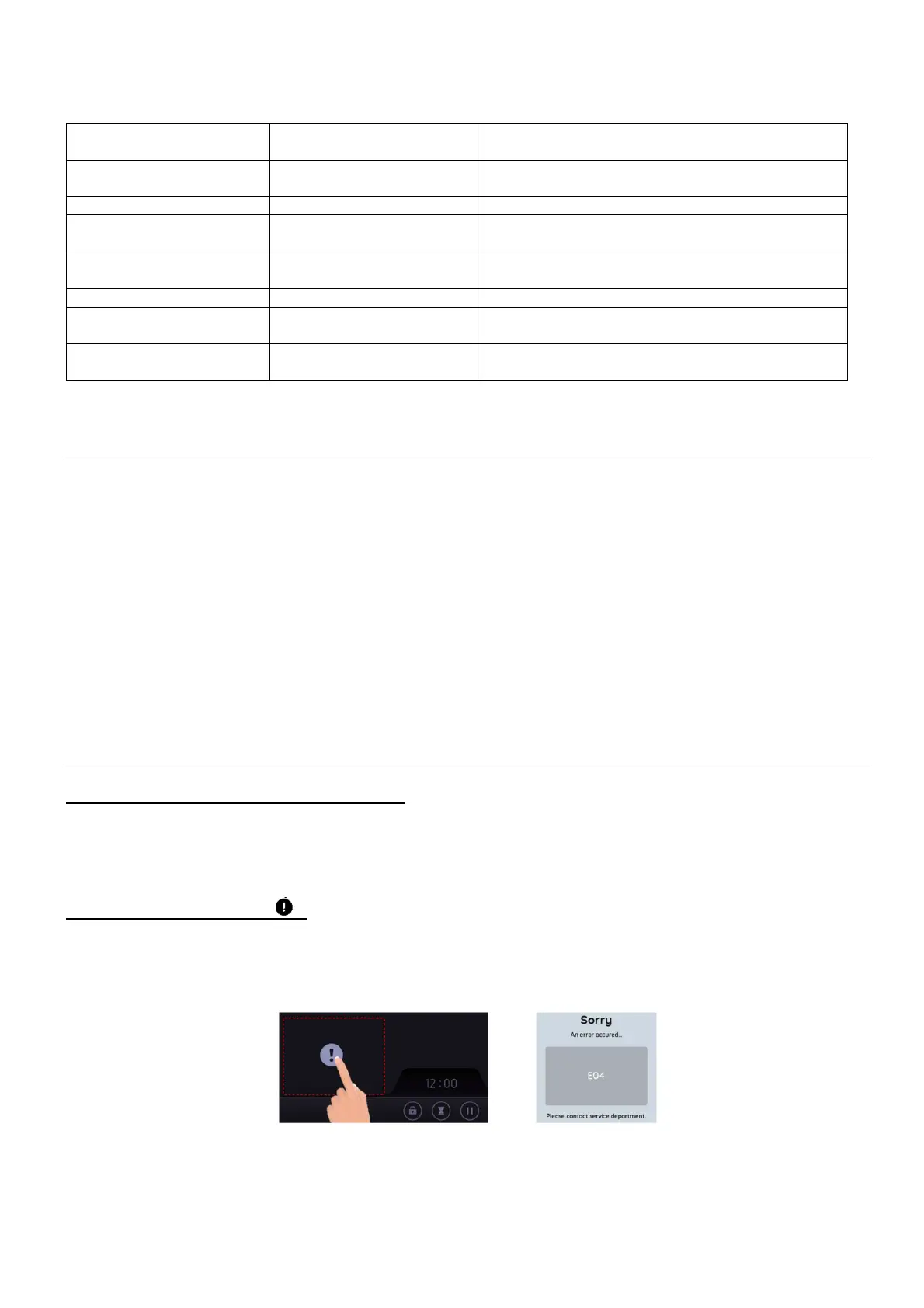
o Example:


 To Next Page