Need help?
Do you have a question about the Caple RI733 and is the answer not in the manual?
Guides users on how to operate the appliance's temperature controls.
Provides specific advice for cleaning the refrigerator compartment's drain hole.
Explains how to control the fridge's temperature settings.
Details the function and replacement of the fridge's internal light.
Lists items suitable for storage in the refrigerator's door compartments.
Details food placement within the main fridge shelves and crisper.
Provides checks for when the appliance is not operating at all.
Offers solutions for inadequate cooling or long freezing times.
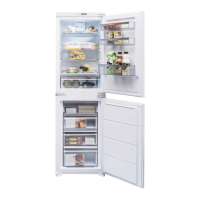
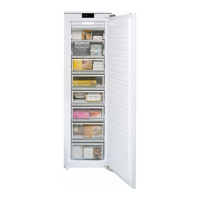
This document provides an instruction manual and installation guide for an integrated fridge freezer, specifically model R1733, manufactured by Caple. The manual emphasizes safe and efficient operation, maintenance, and proper installation for domestic use.
The Caple integrated fridge freezer is designed for the storage and preservation of fresh and frozen foods. It features separate compartments for refrigeration and freezing, allowing for optimal temperature control for different food types. The appliance operates on a compression-type refrigeration system, utilizing a refrigerant that is hermetically sealed within the circuit. It is built to be integrated into kitchen cabinetry, providing a seamless look within the kitchen design. The appliance is designed to function within a room temperature range of +10°C to 38°C, ensuring reliable performance in various environments.
The fridge freezer is equipped with a thermostat for temperature control, allowing users to adjust the cooling levels for both the fridge and freezer compartments. To switch on the appliance, the temperature dial is turned to the right, activating the compressor until the desired temperature is reached. A medium setting is generally recommended, with users encouraged to observe and adjust based on their specific needs, such as the quantity of food stored, room temperature, and frequency of door openings. To switch off the appliance, the dial is turned as far left as possible.
For the freezer compartment, it is recommended to leave the appliance standing for at least 12 hours before initial switch-on to stabilize the refrigerant circulation. After this period, the freezer should be switched on by turning the temperature dial to the right. If equipped with a super freeze switch, it should be activated. The freezer door should remain closed for approximately 4 hours to allow the temperature to drop to the necessary level before filling with frozen food. When freezing fresh food, specific guidelines should be followed, including placing food in the top drawer initially and moving it to lower drawers after about 24 hours. The super freeze switch, if used, should be turned off after 24 hours. Users are advised to avoid storing bottle liquids or explosive substances in the freezer.
The fridge compartment operates automatically once the appliance is plugged in and switched on. Temperature settings range from "Lowest setting" (slight cooling) to "Highest setting" (lowest temperature). Internal lighting, if present, automatically illuminates when the fridge door is opened and turns off when closed. Food should be arranged according to temperature zones within the fridge: coldest areas are typically over the salad crisper and against the back wall, while warmer areas are in the front upper part and on the door. Foods should not be packed too tightly to allow for proper air circulation. A storage table is provided to guide users on appropriate packaging and storage times for various fresh foods in the freezer.
Regular cleaning and maintenance are crucial for the appliance's longevity and efficient operation. Before any cleaning or defrosting, the appliance must be unplugged from the mains supply. The exterior can be cleaned with furniture polish or an enamel protecting product, while the door seal should be cleaned with warm water. The interior of both the fridge and freezer compartments should be cleaned regularly with lukewarm water and vinegar, then dried thoroughly with a soft cloth. Abrasive or acidic cleaning agents should not be used. The drain hole in the fridge should be cleared periodically using cotton buds to prevent blockages.
Defrosting the freezer compartment is recommended once or twice a year, or when ice layers become too thick. The fridge compartment defrosts automatically. To defrost the freezer, users should remove the power plug, transfer all frozen food to a cool, dry room wrapped in newspaper and blankets, and then remove drawers. Ice layers should be carefully scraped off using plastic or wooden scrapers, avoiding sharp metal tools that could damage the internal walls. If the appliance has a drip duct, a bowl should be placed underneath to catch dripping water. Placing a bowl of warm water inside the freezer can speed up the defrosting process. After defrosting, the interior should be thoroughly cleaned, dried, and aired before plugging the appliance back in and refilling it with frozen food.
For models with internal lighting, instructions are provided for replacing the light bulb, emphasizing the use of a bulb with the correct wattage (Max. 15W) and voltage. The condenser at the back of the appliance, if accessible, should be cleaned regularly with a soft brush or duster to remove dust and dirt, which can impede heat release and increase energy consumption. The rating plate, containing essential technical data, should not be damaged or removed as it is vital for servicing. In case of any suspected fault, users are advised to first consult the troubleshooting guide in the manual before contacting customer service.
 General
| Door hinge | Right |
|---|---|
| Reversible doors | Yes |
| Number of shelves/baskets | 3 |
| Interior light | Yes |
| Lamp type | LED |
| Number of Shelves | 3 |
| Star rating | 4-star |
| Climate Class | SN, N, ST, T |


 To Next Page