• Connect machine to cold water supply (see Table 1
• Also recommended to have hot water access nearby machine for cleaning.
B.4.1 Machine Specification Sheet
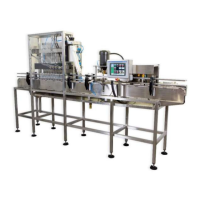
Your Cask ACS will require the following utilities.
208/230 volts, 50/60 Hz, 40 amps, 3 phase
Electrical connection to be hardwired inside panel by certified electrician
Require a 7.0 peak HP, 50 gal/200L tank c/w refrigerated dryer and autofloat drain for Depal
and ACS combined operation.
Cask recommend compressor is CompAir L05 FS – 200 (23.66 CFM-0.67 mᶟ/min).
½” cold water line – garden hose connection (testing)
½” hot water line – nearby machine (CIP)
20psi from plant system connected to machine with 3/8” barbed fitting
Drainage is required from the canning table to drain (standard 1 ¼” waste pipe connection)
1.5 – 2” beer line from dispense tank.
Beer supplied to machine at a temperature of 32 to 35.6 F (0 to 2 C).
To unload the equipment on arrival
Table 1 ACS Machine Specifications
B.5 Unloading Cans
The cans come stacked up to 8’9” high on Pallets (Figure 6 - A).
The cans are very fragile and are subject to denting and damage in handling so be very careful.
Verify straps are undamaged before moving full pallet.
Resist impulse to touch stack or cans as damage will result.
Each pallet footprint is 44” x 56”.
A single truck load of cans contains up to 25 pallets of cans.
Storage – Can be stacked 4 high, height permitting. One container load of cans on pallets require roughly 374
square feet of floor space.
The lids for an entire container load of cans are on a single pallet (Figure 6 - B).


 To Next Page