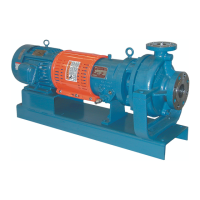
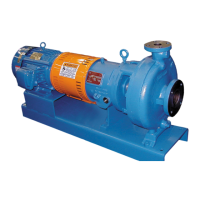
The Products of Dean Pump Division are subject to thorough and
rigorous quality control and inspection procedures throughout the
whole of the manufacturing process to assure proper operation in
full conformity with established performance standards. On
completion of inspection, each unit is sprayed internally with rust
inhibitor (if material is subject to atmospheric corrosion), sealed
against the entrance of dirt, and tagged with a signed certificate of
inspection prior to shipment. Each pump when shipped is ready to
perform the service for which it was designed with minimum
maintenance and expense if properly installed and operated in
accordance with the instructions furnished.
PRODUCT INSPECTION AND TEST
1
Read the instruction manual completely before installing, filling,
operating, or maintaining this equipment.
Obtain, read and heed the MSDS (Material Safety Data Sheet) for
the fluids being handled before attempting to fill, operate or main-
tain this equipment. Obtain instructions from the Safety Engineer
responsible for your facility before performing any work on the
pumping equipment and systems.
Proper storage while not in use and proper installation and startup
are essential for successful pump operation. Misuse or improper
storage, installation or operation of pumps may result in serious loss
or damage. Dean Pump Division is not responsi ble for any loss or
damage resulting from causes beyond its control, and is not liable
for charges for work performed or materials furnished to repair such
loss or damage.
All installation, operation, and maintenance must be done by thor-
oughly qualified personnel in strict accordance with this manual and
must comply with all local, state and Federal codes. Only Dean
authorized service parts must be used in the repair of these pumps.
RECEIVING PUMP
When the pump is received from the transportation company it
should be promptly inspected for damage and such damage noted
on the bill of lading before it is signed. Claims for shipping damage
must be filed against the carrier.
Care must be exercised in unloading and handling the pump.
STORAGE
Pumps must be properly covered and protected against mois ture,
dirt, and physical damage during storage prior to installa tion.
If prolonged storage is anticipated, do the following:
1) Seal the suction opening of the pump with a blind flange,
gasket, and bolts.
2) Fill through the discharge opening of the pump with a
corrosion inhibiting liquid that is also compatible with the liq-
uid that will later be pumped. Evaluation of compatibility
must include consideration of the temperature at which the
system will later operate. Remove the seal vent plug while fill-
ing to assure that all air is purged from the mechanical seal
cavity. When the liquid flows through the vent connection,
replace the seal vent plug. If liquid does not flow from this
connection, fill through this connection until all air is purged.
3) Continue filling through the discharge opening until the
pump is completely filled.
4) Seal the discharge opening with a blind flange, gasket, and
bolts.
5) Remove the barrier oil fill plug. Fill the barrier cavity with a
corrosion inhibiting liquid that is compatible with the barrier
liquid that will be used later for pump operation. When this
liquid starts to flow out of the overflow pipe, replace the fill
plug.
6) Remove the bearing end cover (28) and fill the center pock-
et of the end cover with the grease described under “PUMP
LUBRICATION”. Replace and secure the end cover.
7) Apply a heavy protective coating to all exposed machined
surfaces. A rust preventive must be used to protect all steel
and iron parts.
8) Rotate the pump shaft “by hand” each month. Wear heavy
gloves when rotating the shaft, to protect your hands.
When you are ready to place the pump in service;
1) Remove the bearing end cover (28). Remove and discard
about one half of the grease that is in the end cover. Replace
and secure the end cover (see assembly instructions). Be sure
to comply with all government regulations in the disposal of
the grease.
2) Remove the barrier oil drain plug, drain and discard the stor-
age liquid. Remove the barrier oil fill plug. Flush all remains
of the storage liquid from the barrier cavity. Replace the fill
and drain plugs. Use a flush liquid that is compatible with the
barrier fluid to be used. Be sure to comply with all govern-
mental regulations in disposal of the storage liquid and the
flush liquid.
3) Remove and discard the discharge bolts, nuts, blind flange,
and gasket. Remove the casing drain plug and the seal vent
plug. Drain and discard the storage liquid. Remove and
discard the suction bolts, blind flange, and gasket. Stand the
pump up on its suction flange to allow residual liquid to
drain. Flush all remains of the storage liquid from the pump.
Use a flush liquid that is compatible with the pumpage, as
any flush liquid remaining in the pump when it is placed in
operation, will be exposed to the operating temperatures
and pressures. Vapor pressure is “one” of the critical
properties to be considered. Be sure to comply with all
environmental regulations in disposal of the storage liquid,
flush liquid, and gaskets.
WARNING
HAZARDOUS SITUATIONS MAY OCCUR UNLESS THIS EQUIPMENT IS APPLIED, INSTALLED, OPERATED,
AND MAINTAINED BY THOROUGHLY QUALIFIED PERSONNEL IN STRICT ACCORDANCE WITH THE
INSTRUCTION MANUAL AND ALL APPLICABLE DRAWINGS AND CODES.


 To Next Page
 Loading...