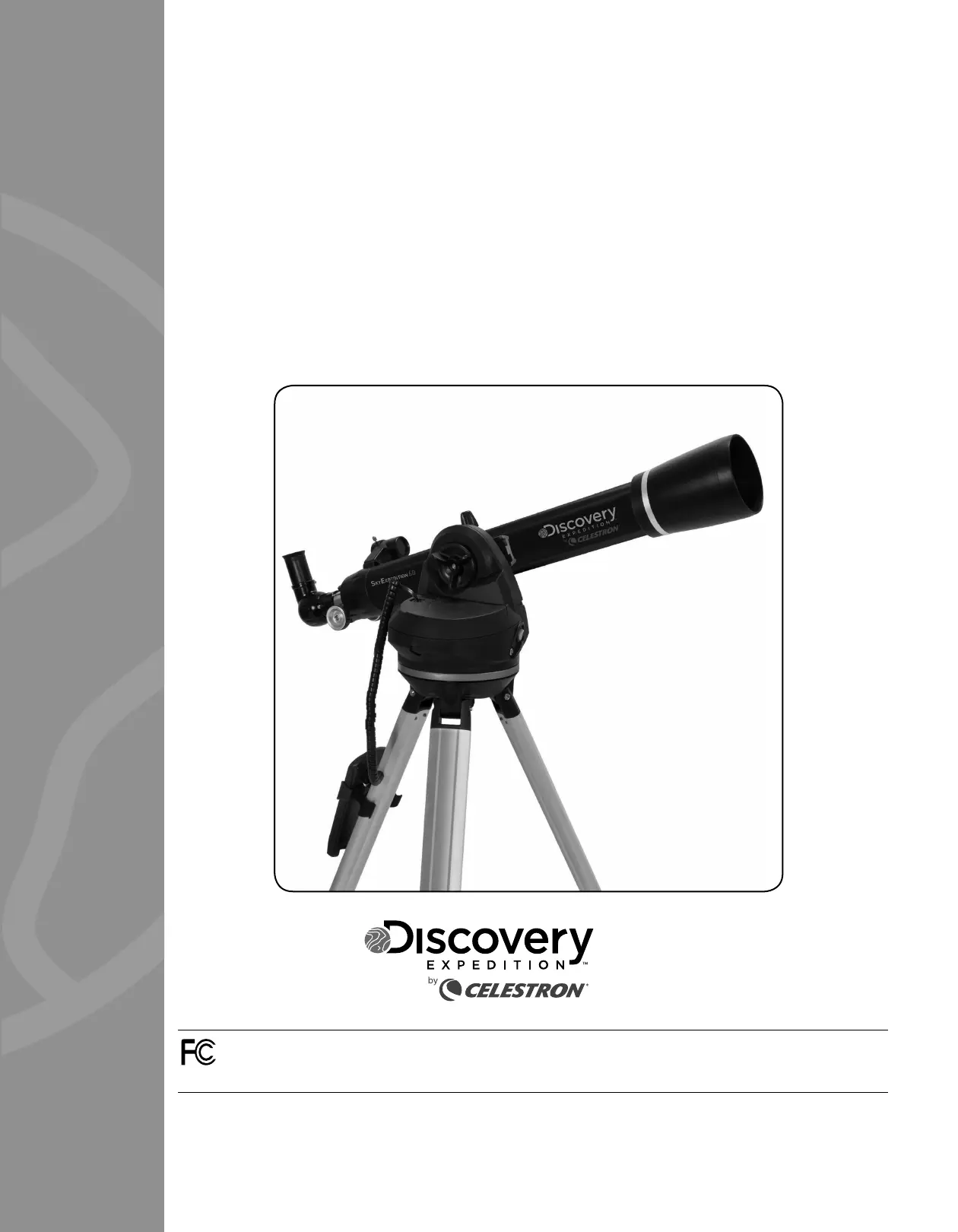
GENERAL OBSERVING HINTS
When using any optical instrument, there are a few things to
remember to ensure you get the best possible image.
• Never look through window glass. Glass found in household
windows is optically imperfect, and as a result, may vary
in thickness from one part of a window to the next. This
inconsistency can and will affect the ability to focus your
telescope. In most cases you will not be able to achieve a truly
sharp image, while in some cases you may actually see a
double image.
• Never look across or over objects that are producing heat
waves. This includes asphalt parking lots on hot summer days
or building rooftops.
• Hazy skies, fog, and mist can also make it difficult to focus
when viewing terrestrially. The amount of detail seen under
these conditions is greatly reduced.
Note: Your telescope was designed for terrestrial observation
as well as celestial observation.
ADDITIONAL INFORMATION
Reference material on Telescope Basics, Astronomy Basics,
Celestial Observing and Telescope Maintenance can be found on
the Celestron website at www.celestron.com/downloads.
WARRANTY
Your telescope has a Two Year Limited Warranty. For detailed
information and to register your new product, please visit
www.celestron.com.
©2011 Discovery Communications, LLC. Discovery Expedition and related logos are trademarks of Discovery
Communications, LLC, used under license. All rights reserved.
©2011 Celestron • 2835 Columbia Street • Torrance, CA 90503 U.S.A.
Telephone: 310.328.9560 • Fax: 310.212.5835 • All rights reserved.
This device complies with Part 15 of FCC Rules. Operation is subject to the following two conditions: (1) This device may not
cause harmful interference, and (2) This device must accept any interference received, including interference that may cause
undesired operation.



 To Previous Page