28
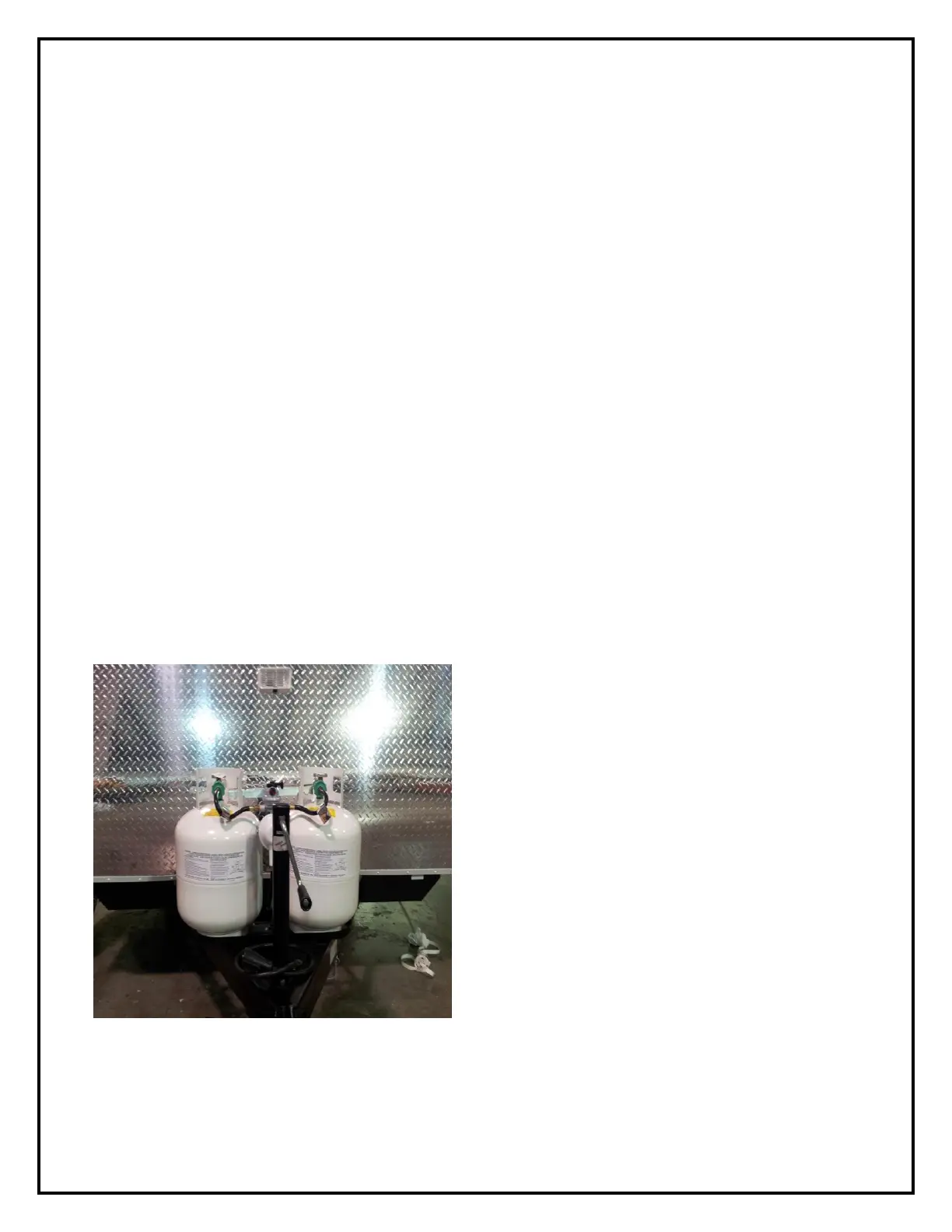
PROPANE AT LOW TEMPERATURES
Propane systems can and do freeze up in very
cold weather. It is a common misconception
that the regulator or the propane itself freezes.
Actually, it is moisture or water vapor that gets
trapped in the system or absorbed by the
propane that freezes and causes the problem.
Where does the water come from? From a
variety of sources. The propane can be
saturated with water when it comes out of the
gas plant or refinery unless care is taken to see
that it is thoroughly dehydrated. The propane
can absorb water while it is transported if the
tank cars contain water; or the propane storage
tanks may have water in them because moist
air has been trapped in the tank because a
valve was left open.
When this water freezes, the ice can build-up
and partially or totally block the propane
supply. There are a number of things you can
do to prevent this freeze up.
1. Be sure the propane tank is totally moisture-
free before it is filled.
2. Be sure the tank is not overfilled. This is
also a safety consideration.
3. Keep the valves on empty tanks closed.
4. Have the gas tanks purged by the propane
service station if freeze-up occurs.
5. Have the propane service station inject an
approved antifreeze or de icer into the tank(s).
6. Be sure you have the proper propane blend
for your traveling area. If you have the proper
propane blend, it is very unlikely that the
propane is at fault.
If, despite precautions, you do experience
freeze-up, try melting the ice by warming the
regulator with a cloth soaked in warm water if
available or regular tap water. DO NOT USE
AN OPEN FLAME. If the problem persists,
ask your propane supplier to service the tank
or regulator as required.


 To Next Page