32
FRESH WATER SYSTEM
Your RV is outfitted with a system designed to
provide fresh (potable) water service from an
onboard water tank or a city water connection
with a fresh water tank fill located on the
outside of the trailer. When connecting to the
city water hookup, use only a non-toxic water
hose, available at most RV supply stores. Since
water pressures at campgrounds and household
hookups vary, you should install an inline
pressure regulator at the water supply faucet.
This will protect both the RV water system and
supply hose from excessively high water
pressure.
CAUTION: The pump is not equipped with a
dry tank shut-off switch. Turn the pump switch
OFF if water in tank becomes depleted or when
system is not in use.
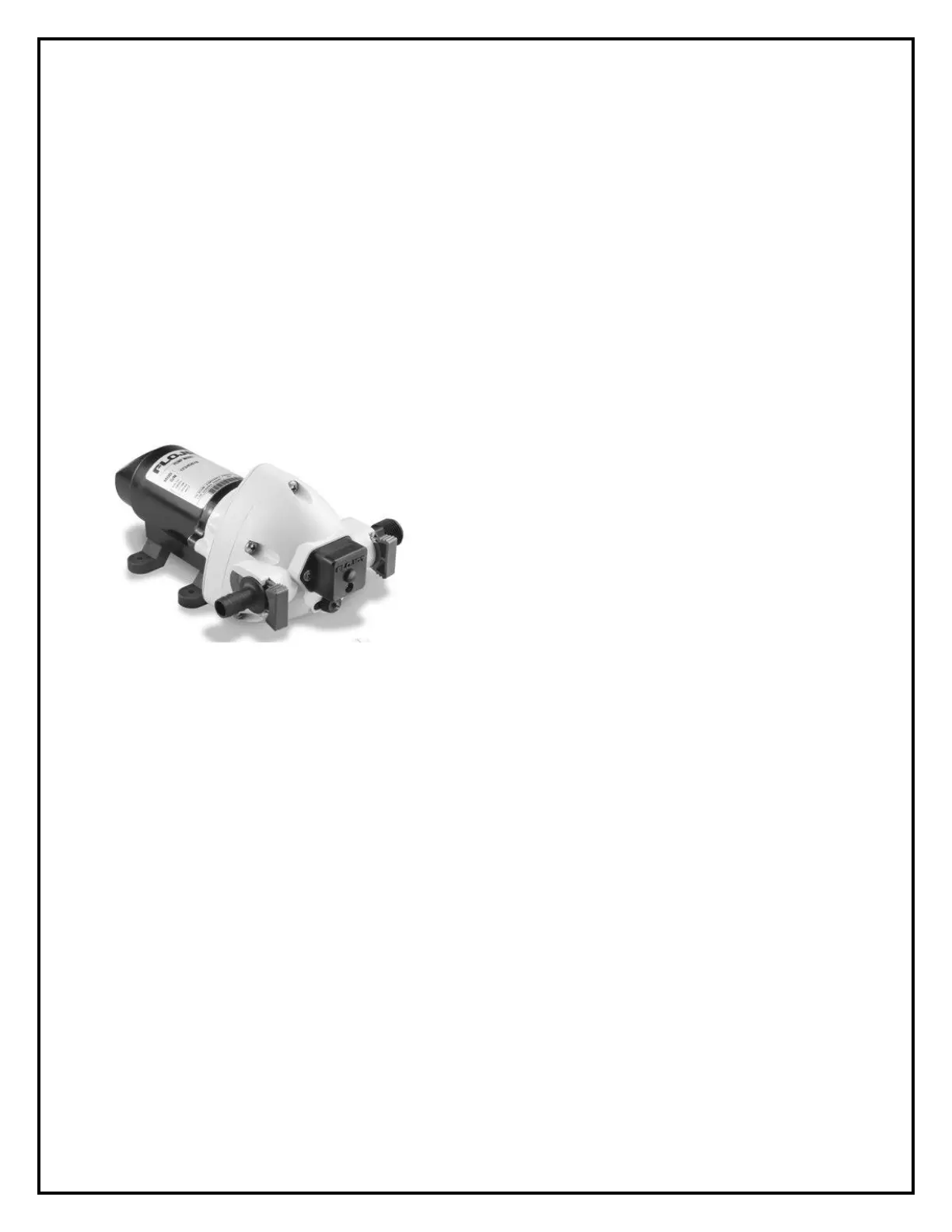
The pump operates when water pressure within
outlet plumbing drops below a predetermined
pressure. A drop in pressure occurs when a
faucet or a toilet valve is opened. When the
faucet is closed the pump shuts off as soon as
the system is re-pressurized.
Turn the pump ON to pressurize the water
system. When the faucet is opened, the water
may sputter for a few seconds. This is normal
and no cause for alarm. The water flow will
become steady when all air is bled from the
water lines. If a faucet is open slightly, allowing
water to flow slowly, the pump may pressurize
the plumbing faster than the water is released,
causing the pump to cycle on and off.
A built-in check valve prevents back flow and
protects the pump and fresh water tank from
excessive city water system pressures. The
pump operates at 2.8 GPM and 45 PSI. At free
flow the pump draws approximately 4 amps. A
fuse located in the power center protects the
water pump circuit.
When traveling, always turn OFF the water
pump.
This will reduce the possibility of water flowing
during travel. If the pump cycles on and off
when no water is being used, you may have a
partly open faucet, a leak in the water system or
an empty water tank.
Never attempt to service the pump without first
turning off the power and opening all faucets to
relieve pressure in the water system. Consult
the installation and operation manual for full
details in the Owner’s Information Package.
WATER TANK FILL
The fresh water system should be sanitized at
the initial filling, after a period of storage or if
contaminated.
Fill tank slowly. Do not overfill. Do not leave
unattended while filling. Structure damage may
occur.
Filling the fresh water tank:
1. Close water tank drain petcock located on the
outside of the water tank.
2. Remove cap on fresh water fill inlet.
3. Using a 3/8" hose adapter, fill the water tank
through the exterior fill spout slowly at a low
volume until water overflows out the vent. Do
not force water into spout since air in the tank
must be released during filling. Do not put the
potable water hose into the mouth of the fill
use a 3/8" Plastic Hose Adapter For Filling
Water Tank
4. Set pump control switch to ON.
5. Open each faucet one by one until water flows
evenly, and no air bubbles are evident.
6. Top off water tank through the exterior fill
spout to replace water used in filling the water
heater and purging the water lines of air.
7. Replace cap


 To Next Page