
 Need help?
Do you have a question about the Check Point QUANTUM SPARK 1500 and is the answer not in the manual?
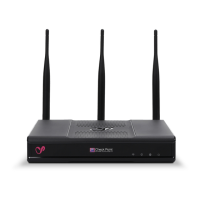
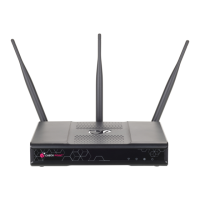
Details the Quantum Spark 1500 appliance series, including its features and capabilities.
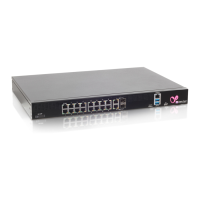
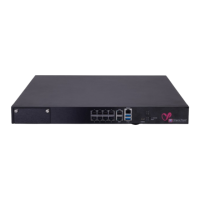
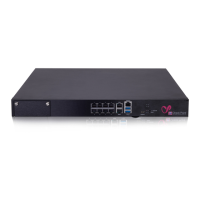
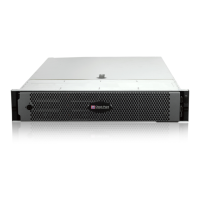
Describes the Quantum Spark 1600 and 1800 Security Appliances and their enterprise-grade security features.
Outlines the step-by-step process for getting started with the appliance setup and configuration.
Provides instructions on connecting the necessary cables to the appliance for initial setup.
Explains how to use the default SSID for WiFi connection setup.
Details the Zero Touch Cloud Service for managing initial gateway deployments.
Guides on deploying configuration files using USB or SD cards for quick appliance setup.
Explains how to view configuration logs after a successful USB drive configuration.
Addresses issues when the configuration file fails and the appliance is not fully configured.
Provides a workflow for resolving errors with configuration files on a USB drive.
Steps to automatically connect the appliance to Cloud Services via an activation link.
Steps to manually connect the appliance to Cloud Services via the WebUI.
Lists requirements for configuring a guest network, such as a wireless network.
Details the steps to configure a guest network, including hotspot settings.
Instructions on how to toggle the Software Blades between ON and OFF states.
Steps to view and edit the settings for individual Software Blades.
Details on viewing management connection status and adjusting trust settings.
Steps to configure proxy details for license activation if required.
Instructions for registering the appliance and activating its license.
Procedure to temporarily block a device from network activity.
Details network statistics like bandwidth usage, traffic, and top consumers.
Provides information on infected devices, high-risk applications, and security events.
Opens popup windows showing CPU, memory, and disk usage history.
Opens a popup window displaying route information like source, destination, and gateway.
Tests Cloud Services connectivity using Gaia Clish command.
Details configuration options for WAN, LAN, Bonds, USB/Serial, and ADSL/VDSL interfaces.
Describes various connection types for IPv6, including Static, DHCPv6, PPPoE, and Bridge.
Selects the operation mode for the bond, such as 802.3ad, Round Robin, XOR, or High Availability.
Instructions to enable or disable the wireless network and its VAPs.
Steps to add, configure, or edit wireless networks (SSIDs) and their security settings.
Explains DFS feature for WiFi6, detecting radar signals and switching channels.
Configures static IP assignments for known hosts using MAC addresses.
Guides on creating and editing network switches for LAN ports.
Enables using the WAN port for internal LAN connections.
Configures the appliance to monitor traffic using Automatic Learning or user-defined networks.
Configuration options for the DHCP server within a bridge interface.
Associates multiple IP addresses with a single network interface.
Steps to define a network interface for Hotspot functionality.
Guides on customizing the Hotspot portal's title, message, and logo.
Defines IP addresses, ranges, or networks to exclude from the Hotspot.
Steps to enable user authentication for access control.
Sets the duration for which a user remains logged in before session ends.
Enables MAC filtering by adding MAC addresses to the LAN MAC Filter allowlist.
Instructions to add, edit, or delete MAC addresses from the allowlist.
Guides on enabling 802.1x authentication for LAN interfaces.
Steps to define DNS servers and configure the domain name.
Procedure to create a backup file of appliance settings.
Steps to restore appliance settings from a backup file.
Guides on using the Software Upgrade Wizard for appliance firmware updates.
Details the different administrator roles and their permissions.
Instructions for creating, editing, and deleting local administrators.
Configuration for allowing remote administrators access via RADIUS server.
Steps to allow administrator access from any IP address.
Steps to allow administrator access from specified IP addresses.
Procedure to assign a Web portal certificate to the appliance.
Steps to manually set the appliance's date and time.
Procedure to synchronize appliance clocks with an NTP server.
Configures Dynamic DNS to update the provider with IP addresses for host name access.
Enables remote connection to the appliance via WebUI or CLI through Check Point Cloud Service.
Opens popup windows showing CPU, memory, and disk usage history.
Opens a popup window displaying route information like source, destination, and gateway.
Tests Cloud Services connectivity using Gaia Clish command.
Configures Border Gateway Patrol (BGP) dynamic routing settings.
Configures Open Shortest Path First (OSPF) dynamic routing settings.
Controls which external routes a routing protocol accepts.
Explains the columns in the routing table: Destination, Source, Service, Next Hop, Metric, Protocol, Rank.
Details limitations regarding default routes and static routes with VPN Tunnels.
Covers creating, managing, and uploading appliance certificates.
Details limitations for cluster configuration, such as switches, bridges, and Bond interfaces.
Lists requirements before configuring a cluster, like deleting bridges/switches.
Shows information about the cluster interfaces, including name and status.
Procedure for manually failing over between primary and secondary cluster members.
Guides on setting default access policy control level and configuring Firewall Blade.
Details options for setting the default Access Policy: Strict, Standard, or Off.
Defines how to handle applications and URL categories for traffic control.
Describes sources for user identification: AD Query, Browser-Based Authentication, Identity Collector.
Steps to enable and configure the User Awareness blade.
Explains how to manage the Firewall Rule Base, including creating and editing rules.
Provides steps to create new manually defined access rules for the policy.
Steps to import updatable objects for use in firewall policy rules.
Selects the type of server for object definition.
Enters server name, IP address, and selects applicable options.
Selects zones from which the server is accessible.
Instructions to disable NAT by setting 'Hide internal networks' to OFF.
Describes fields for managing NAT rules: Original Source, Destination, Service, Translated.
Steps to enable and configure VoIP inspection settings in the WebUI.
Details on configuring on-premise devices for VoIP traffic inspection.
Enables Smart Accel for services to bypass network inspection.
Enables Smart Accel for assets to bypass network inspection.
Describes sources for user identification: AD Query, Browser-Based Authentication, Identity Collector.
Steps to enable and configure the User Awareness blade.
Activates QoS and configures the default QoS policy.
Configures manual QoS policy rules for bandwidth control.
Enables and configures SSL inspection to inspect encrypted traffic.
Steps to deploy SSL inspection by selecting and downloading the CA certificate.
Configures exceptions to bypass SSL inspection for specific traffic.
Activates IPS, Anti-Virus, Anti-Bot, and Threat Emulation blades.
Steps to configure a custom policy for threat prevention with tracking and actions.
Configures exception rules for traffic not inspected by IPS, Anti-Virus, and Anti-Bot.
Details columns in the Infected Devices table: Icon, Object name, IP/MAC address, Incident type, Severity, Protection name, Last incident.
Configures settings for newly downloaded protections like Active, Detect, or Inactive.
Scans incoming files for viruses and configures mail settings.
Sets up file type policy and HTTP connection emulation handling mode.
Configures the Anti-Spam blade to log emails but not block them.
Sets actions for spam emails: Block, Flag subject, or Flag header.
Enables RSA key authorization for SSH login instead of password-based authentication.
Introduces options for remote access VPN like Check Point VPN clients and SSL VPN.
Details methods to configure remote access users: Local, RADIUS, and AD users.
Ensures Site to Site VPN blade is ON and remote site is configured.
Enters host name/IP and preshared secret for VPN authentication.
Ensures Site to Site VPN blade is ON and remote site is configured with certificates.
Steps to configure Two-Factor Authentication for VPN users.
Procedure to add new local users with remote access permissions.
Populates users and groups from Active Directory or RADIUS servers.
Configures Office Mode network settings for remote access VPN clients.
Assigns a VPN certificate for authentication.
Enables or disables the appliance's ability to create VPN tunnels with remote sites.
Configures default access policy for traffic from remote VPN sites.
Configures remote site details: name, connection type, authentication, and encryption domain.
Changes default settings for encryption and authentication details.
Enables permanent tunnels, disables NAT, configures encryption, and certificate matching.
Filters the list of VPN tunnels by entering criteria in the Type to filter box.
Specifies interfaces for incoming/outgoing VPN traffic and determines the best path.
Selects a tunnel health monitoring method: Tunnel test or DPD.
Steps to add a CA certificate to the trusted CA list.
Steps to create a signing request, export it, and upload the signed certificate.
Procedure to create a new certificate signing request.
Reinitializes certificates, especially when IP addresses change.
Replaces the internal CA certificate with a new one.
Enforces access control and shows user-based logs.
Describes sources for user identification: AD Query, Browser-Based Authentication, Identity Collector.
Procedure to create a new local user with remote access permissions.
Adds a new local users group with remote access permissions.
Details the different administrator roles and their permissions.
Instructions for creating, editing, and deleting local administrators.
Configuration for allowing remote administrators access via RADIUS server.
Defines primary and secondary RADIUS server details for authentication.
Defines Active Directory domain details for user information and VPN authentication.
Defines a custom application using URL strings or regular expressions.
Lists applications and categories filtered by Common, Custom, Categories, or All.
Steps to add new services, defining name, type, ports, and IP protocol.
Steps to create new service groups by selecting services.
Creates a network object representing a device with a single IP address.
Creates a network object representing a range of IP addresses.
Creates a network object representing a network address and subnet mask.
Creates a network object representing a Domain Name (FQDN).
Steps to create new network object groups by selecting network objects.
Shows the last 100 log records and allows searching and refreshing logs.
Procedure to download the full system log file.
Configures an external Check Point Log Server for storing additional logs.
Configures a gateway to send logs to multiple syslog servers.
Procedure to temporarily block a device from network activity.
Filters the list of VPN tunnels by entering criteria in the Type to filter box.
See 'Viewing Monitoring Data' on page 46.
See 'Viewing Reports' on page 48.
Checks appliance performance, sizing, and health status.
Opens popup windows showing CPU, memory, and disk usage history.
Opens a popup window displaying route information like source, destination, and gateway.
Tests Cloud Services connectivity using Gaia Clish command.
Explains how to upgrade the appliance using a USB drive without a console connection.
Lists file names for upgrading using Gaia Clish commands.
Steps to restore factory default settings using the WebUI.
Procedure to restore factory defaults using the back panel button.
Command to update the default image with options to preserve settings.
Gaia Clish commands to enable or disable the REST API on the gateway.
Details the HTTP Post request structure, port number, and HTTP Headers.
Explains how to specify the API version in HTTP Post requests.
Details the login process for the REST API, including request URL and headers.
Describes how to log out from the current REST API session.
Generates security report data based on selected time frames (Hourly/Daily/Weekly/Monthly).
Allows running a single Gaia Clish command via the REST API.
 General
| Brand | Check Point |
|---|---|
| Model | QUANTUM SPARK 1500 |
| Category | Network Hardware |
| Language | English |


 To Next Page