Seats and Restraints 2-33
Children who are not restrained
properly can strike other people, or can
be thrown out of the vehicle.
Warning
Never hold an infant or a child while
riding in a vehicle. Due to crash
forces, an infant or a child will
become so heavy it is not possible to
hold it during a crash. For example,
in a crash at only 40 km/h (25 mph), a
5.5 kg (12 lb) infant will suddenly
become a 110 kg (240 lb) force on a
person’s arms. An infant should be
secured in an appropriate restraint.
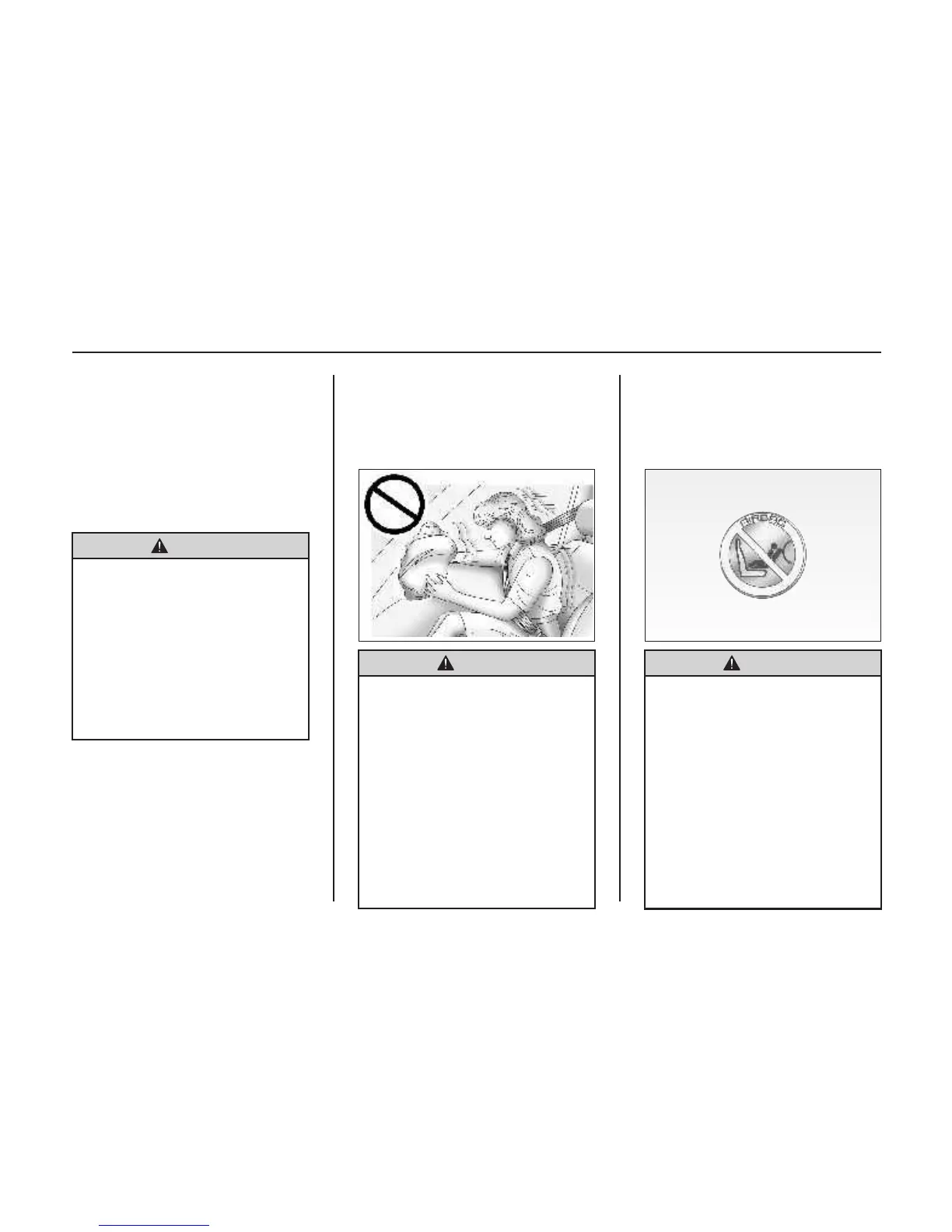
Warning
Children who are up against, or very
close to, any airbag when it inflates
can be seriously injured or killed.
Never put a rear-facing child
restraint in the left front seat. Secure
a rear-facing child restraint in a rear
seat. It is also better to secure a
forward-facing child restraint in a
rear seat. If you must secure a
forward-facing child restraint in the
left front seat, always move the front
passenger seat as far back as it will
go.
Warning
A young child's hip bones are still so
small that the vehicle's regular safety
belt may not remain low on the hip
bones, as it should. Instead, it may
settle up around the child's abdomen.
In a crash, the belt would apply force
on a body area that is unprotected by
any bony structure. This alone could
cause serious or fatal injuries. To
reduce the risk of serious or fatal
injuries during a crash, young
children should always be secured in
appropriate child restraints.
ION
UP-SHIFT LIGHT
The vehicle may have an up-shift light.
When this light comes on, shift to the
next higher gear if weather, road, and
traffic conditions allow.






 To Next Page