2-34 Seats and Restraints
Q: What are the different types of
add-on child restraints?
A: Add-on child restraints, which are
purchased by the vehicle’s owner,
are available in four basic types.
Selection of a particular restraint
should take into consideration not
only the child’s weight, height, and
age but also whether or not the
restraint will be compatible with the
motor vehicle in which it will be
used.
For most basic types of child
restraints, there are many different
models available. When purchasing
a child restraint, besure it is
designed to be used in a motor
vehicle.
The restraint manufacturer’s instru-
ctions that come with the restraint
state the weight and height limita-
tions for a particular child restraint. In
addition, there are many kinds of
restraints available for children with
special needs.
Warning
To reduce the risk of neck and head
injury during a crash, infants need
complete support. In a crash, if an
infant is in a rear-facing child restraint,
the crash forces can be distributed
across the strongest part of an infant's
body, the back and shoulders. Infants
should always be secured in rear-
facing child restraints.
CHILD RESTRAINT
SYSTEMS
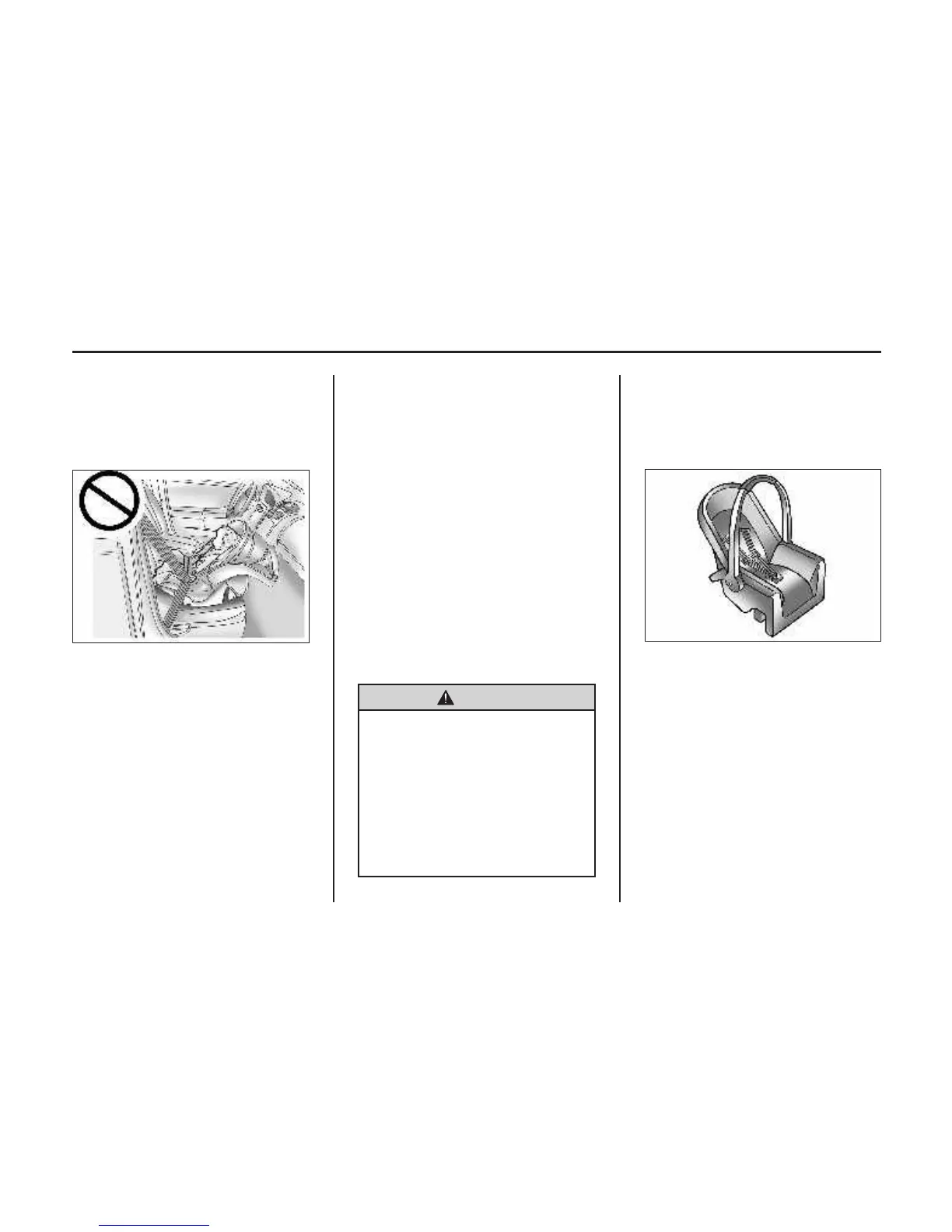
(A) Rear-Facing Infant Seat
A rear-facing infant seat (A) provides
restraint with the seating surface
against the back of the infant.
The harness system holds the infant in
place and, in a crash, acts to keep the
infant positioned in the restraint.
ION
UP-SHIFT LIGHT
The vehicle may have an up-shift light.
When this light comes on, shift to the
next higher gear if weather, road, and
traffic conditions allow.




 To Next Page