.-
2001
Chevrolet Corvette Restoration Kit
• Tire overloading
Inspect the tire pressure when the following conditions apply:
•
The vehicle has been sitting at least 3 hours.
• The vehicle has not been driven for more than 1.6
km
(1
mi).
• The tires are cool.
Inspect
the tires monthly or before any extended trip. Adjust the tire pressure to the specifications on the
tire
label. Install the valve caps or the extensions on the valves. The caps or the extensions keep out dust
and water.
The
kilopascal (kPa)
is
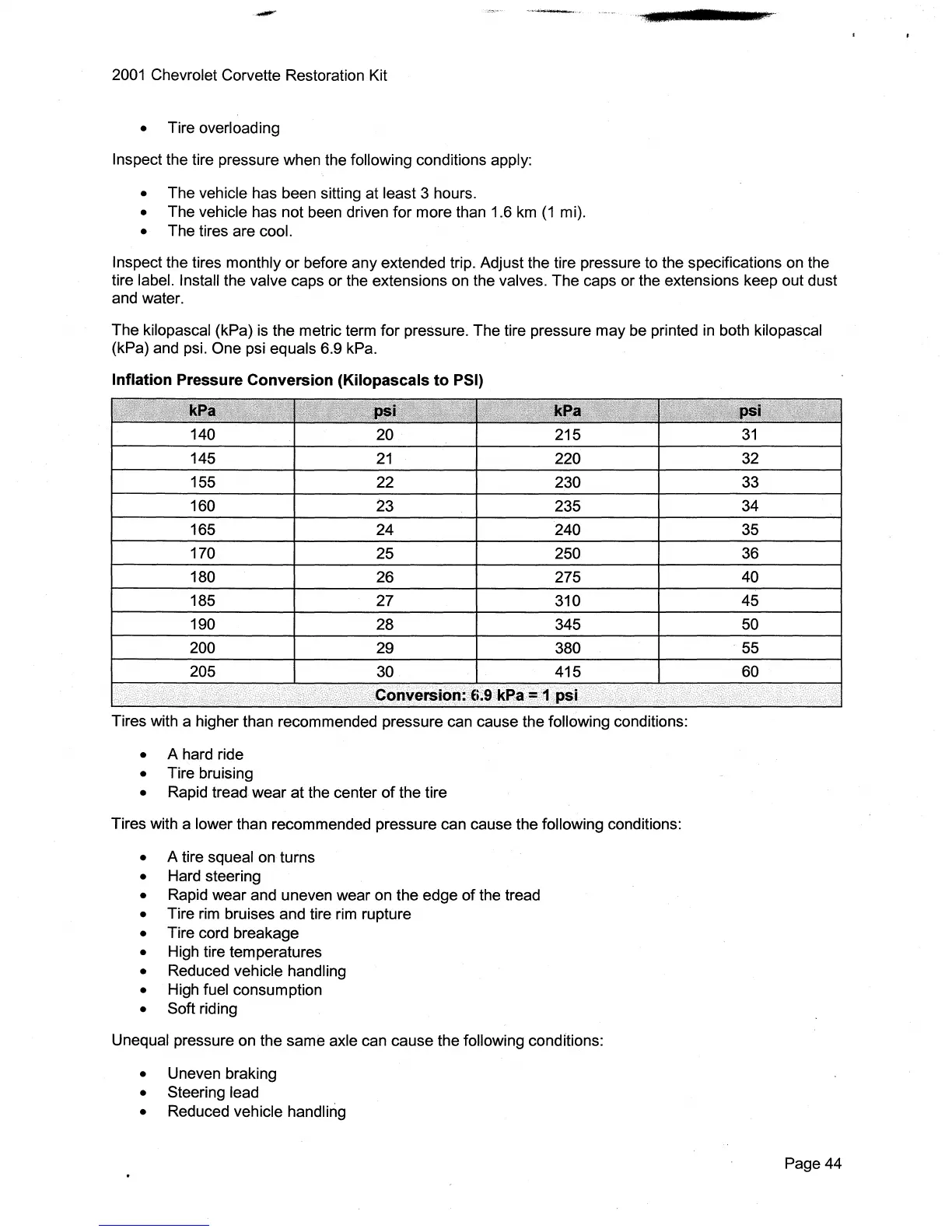
the metric term for pressure. The tire pressure may be printed in both kilo pascal
(kPa) and psi. One psi equals 6.9 kPa.
Inflation Pressure Conversion (Kilopascals to PSI)
140
20
215
31
145
21
32
1
22
230 33
160
235
34
165
24
240 35
170
25 250 36
180 26
275
40
185
27
310
190
28 345 50
200
29 380
55
205
30
415 60
Tires with a higher than recommended pressure can cause the following conditions:
• A hard ride
• Tire bruising
• Rapid tread wear at the center
of
the tire
Tires with a
lower than recommended pressure can cause the following conditions:
• A tire squeal on turns
• Hard steering
• Rapid wear and uneven wear on the edge
of
the tread
• Tire
rim
bruises and tire rim rupture
• Tire cord breakage
• High tire temperatures
• Reduced vehicle handling
•
High fuel consumption
• Soft riding
Unequal pressure on the same axle can cause the following conditions:
• Uneven braking
• Steering lead
•
Reduced vehicle handling
Page 44






 To Next Page