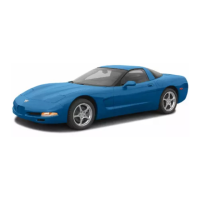
2001 Chevrolet Corvette Restoration Kit
Efficient operation
of
the cooling system requires proper functioning
of
all cooling system components.
The cooling system consists
of
the following components:
Coolant
The engine coolant is a solution made up
of
a 50-50 mixture
of
DEX-COOL and suitable drinking water.
The coolant solution carries excess heat away from the engine to the radiator, where the heat
is
dissipated to the atmosphere.
Radiator
The radiator is a heat exchanger. It consists
of
a core and two tanks. The aluminum core is a tube and fin
crossflow design that extends from the inlet tank to the outlet tank. Fins are placed around the outside
of
the tubes to improve heat transfer to the atmosphere.
The
inlet and outlet tanks are a molded, high temperature, nylon reinforced plastic material. A high
temperature rubber gasket
seals the tank flange edge to the aluminum core. The tanks are clamped to
the core with clinch tabs. The tabs are part
of
the aluminum header at each end
of
the core.
The radiator
also has a drain cock located in the bottom
of
the left hand tank. The drain cock unit includes
the drain cock and drain cock seal.
The radiator removes heat from the coolant passing through it.
The
fins on the core transfer heat from the
coolant
paSSing
through the tubes. As air passes between the fins, it absorbs heat and cools the coolant.
Pressure Cap
The pressure cap seals the cooling system. It contains a blow
off
or
pressure valve and a vacuum or
atmospheric valve. The pressure valve is held against its seat
by
a spring, which protects the radiator
from excessive cooling system pressure. The vacuum valve is held against its seat
by
a spring, which
permits opening
of
the valve to relieve vacuum created in the cooling system as it cools off. The vacuum,
if not
relieved, might cause the radiator and/or coolant hoses to collapse.
The pressure cap allows cooling system pressure to build· up as the temperature increases. As the
pressure builds, the boiling point of the
coolant increases. Engine coolant can be safely run at a
temperature much higher than the
boiling
pOint
of
the coolant
at
atmospheric pressure. The hotter the
coolant is, the faster the heat transfers from the radiator to the cooler, passing air.
The pressure
in
the cooling system can get too high. When the cooling system pressure exceeds the
rating
of
the pressure cap, it raises. the pressure valve, venting the excess pressure.
As the engine
cools down, the temperature
of
the coolant drops and a vacuum is created
in
the cooling
system. This vacuum causes the vacuum valve to open, allowing outside air into the surge tank. This
equalizes the pressure
in
the cooling system with atmospheric pressure, preventing the radiator and
coolant hoses from collapsing.
Coolant Recovery System
The coolant recovery system consists
of
a plastic coolant recovery reservoir and overflow tube. The
recovery reservoir is
also called a recovery tank or expansion tank. It is partially filled with coolant and is
connected to the radiator fill neck with the overflow tube.
Coolant can flow back and forth between the
radiator and the reservoir.
In effect, a cooling system with a coolant recovery reservoir is a closed system. When the pressure
in
the
cooling system gets too high, it will open the pressure valve
in
the pressure cap. This allows the coolant,
which has expanded due to being heated, is allowed to flow through the overflow tube and into the
recovery reservoir. As the engine cools down, the temperature
of
the coolant drops and a vacuum is
created
in
the cooling system. This vacuum opens the vacuum valve
in
the pressure cap, allowing some
of
the coolant
in
the reservoir to be siphoned back into the radiator. Under normal operating conditions,
Page 69











 To Next Page