Chevrolet Corvette Owner Manual (GMNA-Localizing-U.S./Canada/Mexico-
14622938) - 2021 - CRC - 9/22/20
190 Driving and Operating
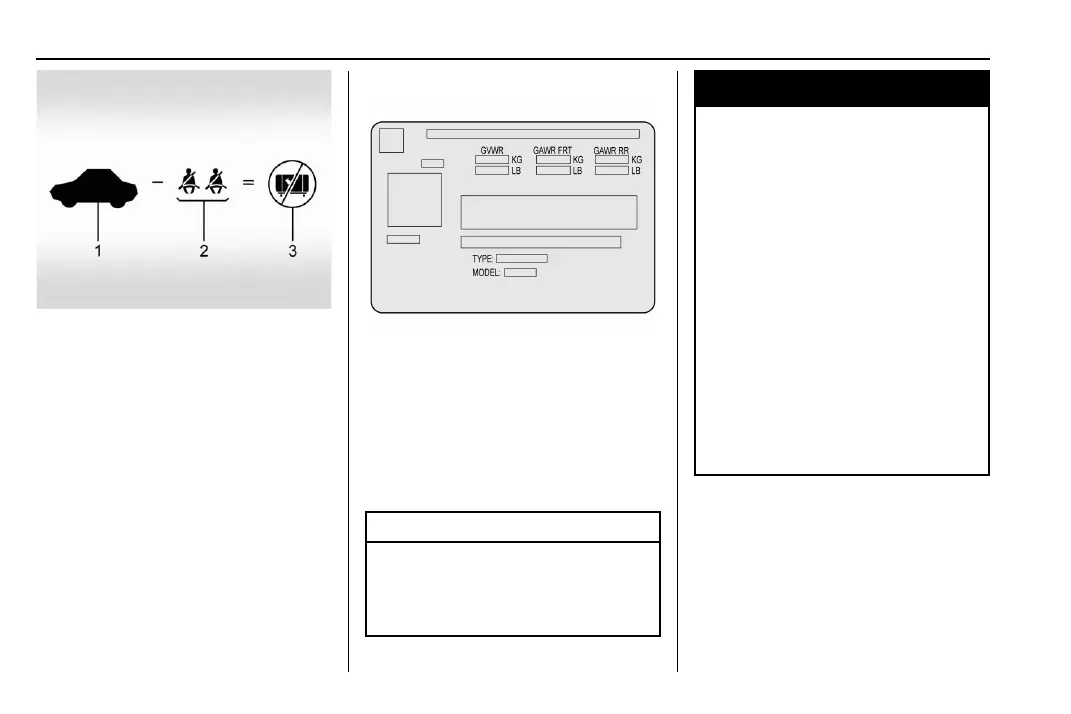
Example 3
1. Vehicle Capacity Weight for Example 3
= 181 kg (400 lbs)
2. Subtract Occupant Weight @ 91 kg
(200 lbs) × 2 = 181 kg (400 lbs)
3. Available Cargo Weight = 0 kg (0 lbs)
Refer to the vehicle's Tire and Loading
Information label for specific
information about the vehicle's capacity
weight and seating positions. The
combined weight of the driver,
passengers and cargo should never
exceed the vehicle's capacity weight.
Certification Label
A vehicle-specific Certification label is
attached to the rear edge of the driver
door. It may show the gross weight
capacity of the vehicle, called the Gross
Vehicle Weight Rating (GVWR). The
GVWR includes the weight of the
vehicle, all occupants, fuel and cargo.
Caution
Overloading the vehicle may cause
damage. Repairs would not be covered by
the vehicle warranty. Do not overload the
vehicle.
{
Warning
Things you put inside your vehicle
can strike and injure people in a
sudden stop or turn, or in a crash.
.
Put things in the rear area of your
vehicle. Try to spread the weight
evenly.
.
Never stack heavier things, like
suitcases, inside the vehicle so
that some of them are above the
tops of the seats.
.
Do not leave an unsecured child
restraint in your vehicle.
.
When you carry something inside
the vehicle, secure it whenever
you can.
Starting and Operating
New Vehicle Break-In
Follow these recommended guidelines
during the first 2 414 km (1,500 mi) of driving
this vehicle. Parts have a break-in period and
performance will be better in the long run.



 To Next Page