EasyManua.ls Logo

CIPU CSPPS702 - User Manual

CIPU CSPPS702
11 pages
Print Icon
To Next Page IconTo Next Page
Loading...
READ AND FOLLOW ALL INSTRUCTIONS IN THIS OWNERS
MANUAL AND ON EQUIPMENT.
This equipment must be installed and serviced by a qualified technician or professional,
in accordance with the National Electrical Code and all applicable local codes and
Ordinances. Improper installation can create electrical hazards which could result in
property damage, serious injury or death. Improper installation will void the warranty.
Notice to Installer
This manual contains important information about the installation, operation and safe
use of this product. Once the p
roduct has been installed this manual must be given to
the owner/ operator of this equipment.
Item #s CSPPS702CSPPS703
Pool Pumps
Question and Answer IconNeed help?

Do you have a question about the CIPU CSPPS702 and is the answer not in the manual?

Overview

The CIPU Pool Pump is a device designed for the circulation and filtration of water in swimming pools and spas. This manual covers two specific models: CSPPS702 and CSPPS703. The pump is designed for residential use and requires adherence to National Electrical Code and all applicable local codes and ordinances for proper installation and safe operation. Improper installation can lead to electrical hazards, property damage, serious injury, or death, and will void the warranty.

Function Description:

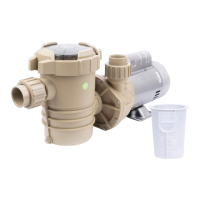
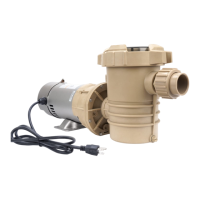
The primary function of the CIPU Pool Pump is to circulate water through a filtration system, ensuring the pool or spa water remains clean and clear. It draws water from the pool/spa, pushes it through a filter (not included with the pump), and returns the filtered water. The pump is equipped with a strainer basket to trap larger debris before it reaches the impeller, protecting the pump from damage.

Important Technical Specifications:

Item CSPPS702 CSPPS703
Input Power 685w 878w
H. Max 32ft 36ft
Q. Max/Min 273L 308L
V 115 115
HZ 60 60
IP IPX5 IPX5

The pump is designed for a 115V, 60Hz electrical supply. An IPX5 rating indicates that the pump is protected against low-pressure water jets from any direction, making it suitable for outdoor installation where it might be exposed to water.

Usage Features:

  • Location: The pump must be located as close as practical to the pool, ensuring easy access for periodic servicing. It should be positioned to allow for free flow of air in a well-ventilated and dry area. The pump must be installed on a firm, flat foundation with the pump bolted securely to it.
  • Suction Line: The pump suction line should be no smaller than 1 1/2" (40mm imperial) or 50mm true metric. The suction line should have as few bends or elbows as possible to minimize resistance.
  • Electrical Connection: The electrical installation must be done by a licensed electrician. Each pump requires a circuit breaker to separate the pump from the electrical supply. The open contact distance of the circuit breaker must be no less than 3mm. The pump is to be supplied by an isolating transformer, or supplied through a residual current device (RCD) with a rated residual current not exceeding 30mA. For models less than 1kW input, the quality shall be of 245 IEC57 (H05RN-F). For models greater than 1kW power input, all installations must comply with local codes, based on IEC 364-7-702 requirements.
  • Priming: Before starting the pump for the first time or after maintenance, it must be primed. This involves filling the filter tank with water and ensuring the pump is full of water before turning it on. The pump will prime and pre-prime, providing filter tank water and sufficient supply from the suction point.
  • Starting the Pump: Once the pump is primed, switch it on. The pump should run smoothly. If it fails to start or runs with unusual noise, refer to the troubleshooting section.
  • Water Level: The water level of the inground swimming pool should be lower than the water inlet of the pump. The adapter for the water inlet of the pump should be installed, and then the connector assembly.

Maintenance Features:

  • Strainer Basket: The strainer basket in the filter tank should be inspected and cleaned at regular intervals. To clean, remove the lid and lift out the basket, remove debris, and hose off with clean water. Lubricate the lid gasket with silicone-based grease if needed. Replace the strainer, re-prime the filter tank, correctly locate the o-ring, replace the lid hand tighten only, and switch on the pump.
  • Winterization: In climates where the pump may be exposed to frost or freezing, care must be taken to ensure the pump is protected from damage. It is recommended that if the pump is not used during winter, it should be drained completely and stored in a dry location. Do not replace the drain plug. Store it in a safe place when not in use. An example would be to store the plug in the filter tank basket.
  • Seals and O-rings: When activating the pump, ensure all seals and o-rings are in operational condition, re-grease if necessary, and replace if unsure of condition. Check that the motor shaft moves freely before re-activation.
  • Electrical Connections: Regularly check the electrical connections to the motor of the pump to ensure they are correctly arranged inside the connection box. Verify that no bits of cable are left inside the box on closing it. Ensure the ground wire is correctly connected.
  • General Safety: Be especially careful that no water enters the motor or electrical parts under voltage. In the event that the planned use is not as specified, adaptations and supplementary technical rules may be necessary. Before starting the pump, verify the calibration of the electrical protection devices of the motor and that the protections against electrical and mechanical contacts are correctly positioned and attached. It is advisable to follow the steps listed below before handling the pump in any way: turn off the voltage to the pump, lock starting devices, verify that there is no voltage in the circuits, including ancillary devices and auxiliary circuits, and wait until motor stops completely. The above list should be considered indicative and not binding for the purpose of safety; specific safety rules may exist in particular regulations.
  • Assembly Instructions: Follow the step-by-step and the corresponding diagrams for assembly. Place the strainer basket in the strainer housing. Be sure that the opening the basket is aligned with the opening in the housing. Secure the lid.
  • Troubleshooting: The manual provides a comprehensive troubleshooting guide for common issues such as low flow, pump not running, pump not priming, motor overload, noise, and motor running hot. Solutions range from cleaning the strainer basket or filter, checking electrical connections, priming the pump, or contacting a qualified electrician or supplier.

Safety Warnings:

  • Hyperthermia: Water temperature in excess of 100°F (37.7°C) may be hazardous to your health. Prolonged immersion in hot water may induce hyperthermia. Hyperthermia occurs when the internal temperature of the body reaches a level several degrees above normal body temperature of 98.6°F (37°C). Effects of hyperthermia include: (1) Unawareness of impending danger. (2) Failure to perceive heat. (3) Failure to receive the need to leave the spa. (4) Physical inability to exit the spa. (5) Fetal damage in pregnant women. (6) Unconsciousness resulting in danger of drowning. The use of alcohol, drugs, or medication can greatly increase the risk of fetal hyperthermia in hot tubs and spas.
  • General Safety: To reduce the risk of injury, do not permit children to use or operate this equipment. When setting up pool water turnovers or flow rates, the operator must consider local codes governing turnover as well as disinfectant feed ratios.
  • Emergency Switch: If this pump is intended for use in other than single-family dwellings, a clearly labeled emergency switch shall be provided as part of the electrical system. The switch shall be readily accessible to the occupants and shall be installed at least 5 feet (1.52 m) away, adjacent to and within sight of this pump.
  • Electrical Shock/Electrocution: Pumps require high voltage which can shock, burn, or cause death. Before working on the pump, always disconnect power to the pool pump at the circuit breaker before servicing the pump. Failure to do so could result in death or serious injury to service person, pool users or others due to electric shock.
  • Improper Sizing/Installation: Pumps improperly sized or installed or used in applications other than for which the pump was intended can result in serious personal injury or death. These risks may include but not be limited to electric shock, fire, flooding, suction entrapment or serious injury or property damage caused by a structural failure of the pump or other system component.
  • Suction Entrapment: Never exceed the maximum stated pump flow rating. Only use a pumping system rated for the corresponding flow. Failure to do so can result in hair or body entrapment which can cause serious personal injury or death. If in doubt about the rating of your system, consult a qualified pool service professional.
  • Anti-Entrapment Drain Cover: Pumps are not a substitute for properly installed and secured pool drain covers. An ANSI/ASME A112.19.8 approved anti-entrapment drain cover must be used for each drain. Pools and spas should utilize a minimum of two drains per pump. Regularly inspect all covers for cracks, damage, and advanced weathering. If a cover becomes loose, cracked, damaged, broken or is missing, close the pool or spa immediately, shut off the pump, post a notice and keep the pool or spa closed until an appropriate VGB 2008 certified cover is properly installed. Covers deteriorate over time due to exposure to sunlight and pool chemicals. These covers must be replaced within seven (7) years from installation (or earlier if the cover becomes damaged in any way).
  • High Suction/Low Suction Lines: High suction or long suction lines will require additional time to prime and can severely affect the performance of the pump. If the pump does not prime, please repeat step 1 and 2 above. Mechanical seals running dry can be damaged rapidly and may need to be replaced. Ensure that there is always adequate water in the filter tank before you start up. If you are unable to prime the pump, please see the troubleshooting guide. Ensure that all suction and discharge valves are open before you start the pump, otherwise will result in damage to the pump.
  • Warranty: If the pump is within the stated warranty period and you experience faults, always contact your supplier. Failure to do this may void warranty. Refer to warranty documentation supplied with pump. All electrical work is to be carried out by a Qualified Electrician; under no circumstances should you attempt repairs on the electrical components of pumps unless you are qualified to do so.

CIPU CSPPS702 Specifications

General IconGeneral
BrandCIPU
ModelCSPPS702
CategorySwimming Pool Pump
LanguageEnglish

Related product manuals