EasyManua.ls Logo

Cisco C190 - User Manual

Cisco C190
14 pages
Print Icon
To Next Page IconTo Next Page
Loading...
Cisco Systems, Inc.
www.cisco.com
Cisco C190 Email Security Appliance
Quick Start Guide
Welcome
Before You Begin
Document Network Settings
Plan the Installation
Install the Appliance in a Rack
Plug In the Appliance
Temporarily Change Your IP Address for Remotes Access
Connect to the Appliance
Power Up the Appliance
Log In to the Appliance
Run the System Setup Wizard
Run the Active Directory Wizard (Optional)
Check for Available Upgrades
Configure Network Settings
Configuration Summary
Question and Answer IconNeed help?

Do you have a question about the Cisco C190 and is the answer not in the manual?

Summary

Welcome and Getting Started

Welcome

Introduction to the Cisco C190 appliance as an SMTP email gateway and its role in network infrastructure.

Before You Begin

Lists items included with the appliance and items required for installation and initial configuration.

Network and System Configuration

Document Network Settings

Pre-installation guide to record essential network and administrator settings for the appliance.

Plan the Installation

Guidance on placing the Cisco C190 appliance at the network perimeter for email security.

Appliance Installation and Connection

Install the Appliance in a Rack

Instructions for physically installing the Cisco C190 appliance using provided rails.

Plug In the Appliance

Steps for connecting the appliance to a power source.

Temporarily Change IP Address for Access

Procedure to temporarily alter computer IP settings for remote configuration access.

IP Configuration for Windows and Mac

Detailed steps for modifying IP settings on Windows and Mac for appliance access.

Connect to the Appliance

Explanation of appliance network ports (Data 1, Data 2, Console) and connection methods.

Appliance Operation and Initial Setup

Power Up the Appliance

Instructions on powering on the appliance and expected initialization behavior.

Log In to the Appliance

Methods for accessing the appliance via web-based or command-line interfaces.

Run the System Setup Wizard

Steps to configure basic settings using the System Setup Wizard.

Run the Active Directory Wizard (Optional)

Guide for configuring LDAP server profiles for Active Directory integration.

Post-Setup and Further Configuration

Check for Available Upgrades

Procedure to check for and evaluate software upgrades for the appliance.

Configure Network Settings

Details on required firewall ports for DNS, SMTP, and other system functions.

Configuration Summary

Overview of key configurations for management, incoming, and outbound email.

Additional Configurations and Resources

Guidance on additional features, message tracking, reporting, and product documentation.

Overview

The Cisco C190 Email Security Appliance is a dedicated hardware device designed to serve as an SMTP email gateway at the network perimeter, providing comprehensive protection against email-borne threats. Its primary function is to secure an organization's email system by filtering spam, malware, phishing attempts, and other malicious content before it reaches internal users. The appliance is intended to be the first device with an IP address directly accessible to the Internet for sending and receiving email, ensuring that all incoming and outgoing email traffic is scrutinized for security vulnerabilities.

Function Description:

The C190 appliance integrates several key security features to safeguard email communications. These include reputation filtering, which assesses the trustworthiness of sender IP addresses; data loss prevention (DLP) to prevent sensitive information from leaving the organization; content scanning to identify and block inappropriate or malicious content; spam detection to filter out unsolicited bulk email; and virus protection to neutralize email-borne viruses and other malware. The appliance also supports advanced malware protection (AMP) scanning, further enhancing its ability to detect and mitigate sophisticated threats. By deploying the C190 at the network perimeter, organizations can establish a robust defense against a wide range of email-related attacks, ensuring the integrity and confidentiality of their email infrastructure.

Important Technical Specifications:

While specific detailed technical specifications like CPU, RAM, and storage are not explicitly listed in the provided document, the manual highlights several critical aspects of the C190's design and connectivity:

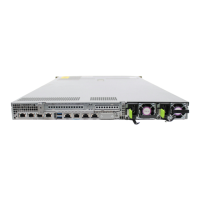
  • Network Ports: The appliance features two Gigabit Ethernet network ports, labeled Data 1 and Data 2. These ports are crucial for connecting the appliance to the network. Data 1 is typically used as the management interface, while Data 2 can be configured for incoming email. The flexibility allows for various network topologies, including connecting both ports to a public network or separating them for public and private network segments.
  • Console Port: A dedicated console port is available for direct connection to a computer, enabling serial access for initial configuration or troubleshooting without requiring network connectivity. This port uses standard serial communication settings: 9600 bits, 8 bits, no parity, 1 stop bit (9600, 8, N, 1), and hardware flow control.
  • Power Supply: The appliance is powered via a standard power cable, connecting to a power supply on the back panel.
  • Physical Form Factor: The C190 is designed for rack-mounting, with a rail kit included for installation in a rack cabinet enclosure. This indicates a standard server-like form factor suitable for data center environments.
  • Operating Environment: The appliance has an ambient temperature limit of 104°F (40°C) to prevent overheating, emphasizing the need for adequate airflow in its operating environment.

Usage Features:

The C190 offers a user-friendly experience through both web-based and command-line interfaces, facilitating easy configuration and management.

  • Web-Based Interface: The primary method for managing the appliance is through a web browser, accessing the management interface via an IP address (e.g., http://192.168.42.42). This interface is used for running the System Setup Wizard, configuring security settings, and monitoring the system.
  • Command-Line Interface (CLI): For advanced users or specific tasks, a CLI is available. It can be accessed locally via the console port or remotely via SSH to the appliance's IP address. The systemsetup command initiates the setup wizard from the CLI.
  • System Setup Wizard: This guided process simplifies initial configuration, covering essential settings such as hostname, email alerts, time zone, NTP server, admin password, SenderBase Network Participation, AutoSupport, default gateway, DNS, and IP addresses for network interfaces (P1 and P2). It also guides users through setting up anti-spam and anti-virus security features.
  • Active Directory Wizard (Optional): For organizations using Active Directory, a dedicated wizard helps configure an LDAP server profile, streamlining user authentication and directory integration.
  • Upgrade Management: The appliance provides notifications for available software upgrades through both the web browser and CLI, allowing administrators to keep the system updated with the latest features and security patches.
  • Message Tracking: A dedicated Message Tracking service in the GUI allows administrators to view detailed information about message delivery and blocking, aiding in troubleshooting and auditing email flow.
  • Reporting: The Email Security Monitor provides comprehensive reports on spam and virus blocking statistics, offering insights into the effectiveness of the security measures and overall email security posture.

Maintenance Features:

The C190 is designed with considerations for ongoing maintenance and operational stability.

  • Power-Up Sequence: The appliance has a specific power-up sequence, requiring a 10-minute initialization period for the system firmware and controller to synchronize. This ensures the appliance reaches an operational state, with solid green LEDs indicating readiness.
  • Configuration Backup: Although not explicitly detailed as a feature, the ability to review and install configurations implies that settings can be saved and potentially restored, which is a common practice for system maintenance.
  • Secure Access: Both web and CLI access require authentication (username admin, password ironport initially), ensuring that only authorized personnel can manage the appliance. The system also uses a self-signed certificate for web access, which, while triggering browser warnings, provides encrypted communication.
  • Network Port Configuration: The flexibility to configure two Gigabit Ethernet ports (Data 1 and Data 2) allows for redundant network paths or segregation of management and data traffic, enhancing network resilience and simplifying maintenance.
  • Firewall Port Requirements: The documentation clearly outlines the necessary firewall ports (SMTP: 25, DNS: 53, HTTP: 80, HTTPS: 443, FTP: 21, LDAP: 389/3268, LDAP over SSL: 636, LDAP with SSL for global catalog queries: 3269, NTP: 123, SSH: 22, Telnet: 23) that must be open for the appliance to function correctly and download feature keys. This information is crucial for network administrators during setup and ongoing maintenance.
  • Proper Shutdown Procedure: The manual emphasizes the importance of shutting down the appliance correctly via the System Administration > Shutdown/Reboot page to prevent corruption of the queue and configuration files, highlighting a critical maintenance step for data integrity.
  • Documentation Access: The provision of online documentation links (including the Quick Start Guide, Installation and Maintenance Guide, and release notes) ensures that administrators have readily available resources for troubleshooting and detailed operational guidance.
  • Cisco Notification Service: Users are encouraged to sign up for the Cisco Notification Service to receive timely updates on security advisories, field notices, end-of-sale/support statements, and software updates, which is vital for proactive maintenance and security management.

Cisco C190 Specifications

General IconGeneral
BrandCisco
ModelC190
CategoryNetwork security
LanguageEnglish

Related product manuals